Introduction
Search is changing rapidly. Users are increasingly getting answers directly from AI-powered platforms such as Google AI Overviews, OpenAI ChatGPT, Microsoft Copilot, and other generative search engines instead of clicking through traditional search results.
As a result, ranking on page one is no longer enough. Brands must now optimize for AI-generated answers, citations, and recommendations. This is where Generative Engine Optimisation (GEO) becomes essential. If you're new to the concept, our complete guide explains what GEO is, how it works, and why it has become a critical part of modern AI search visibility.
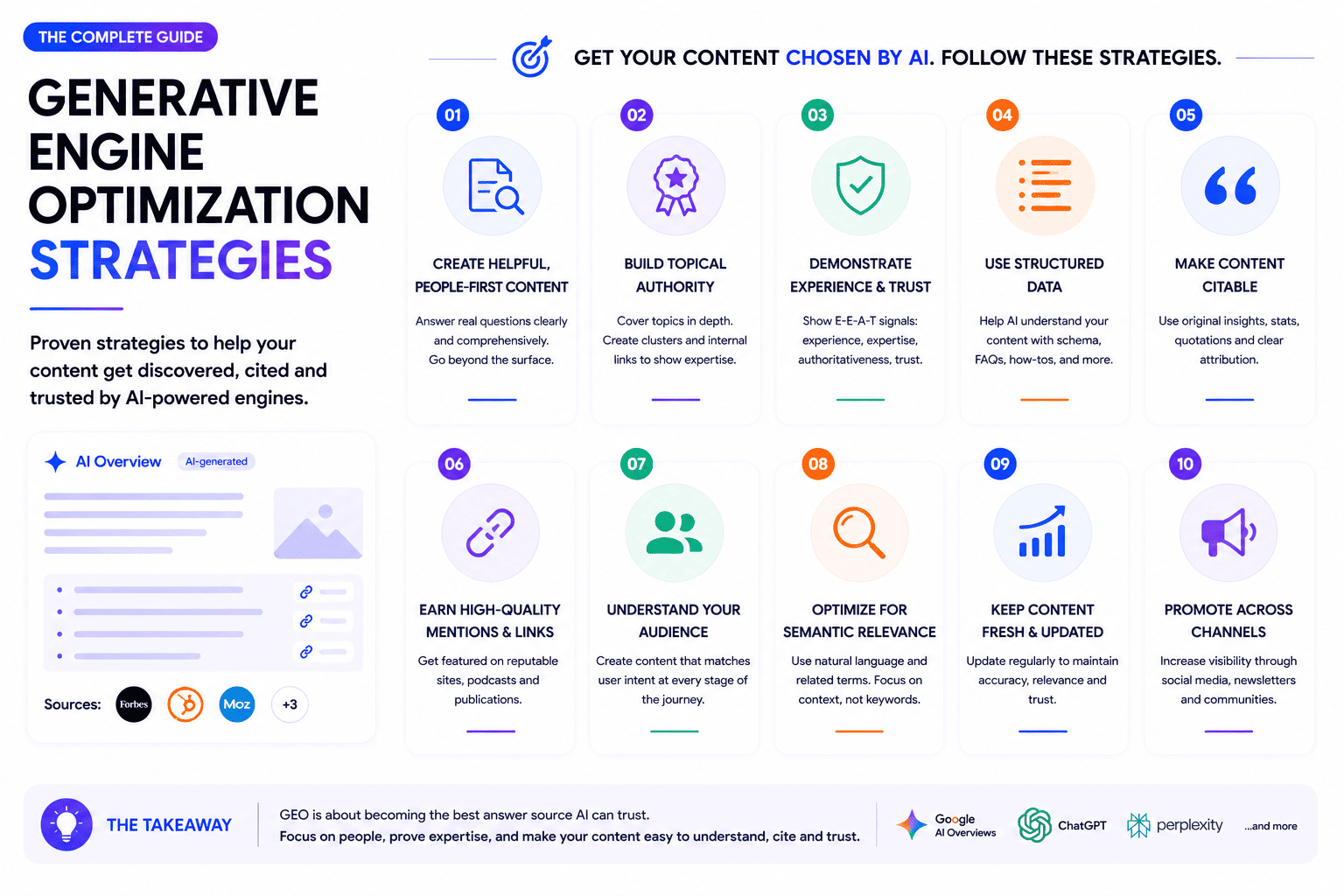
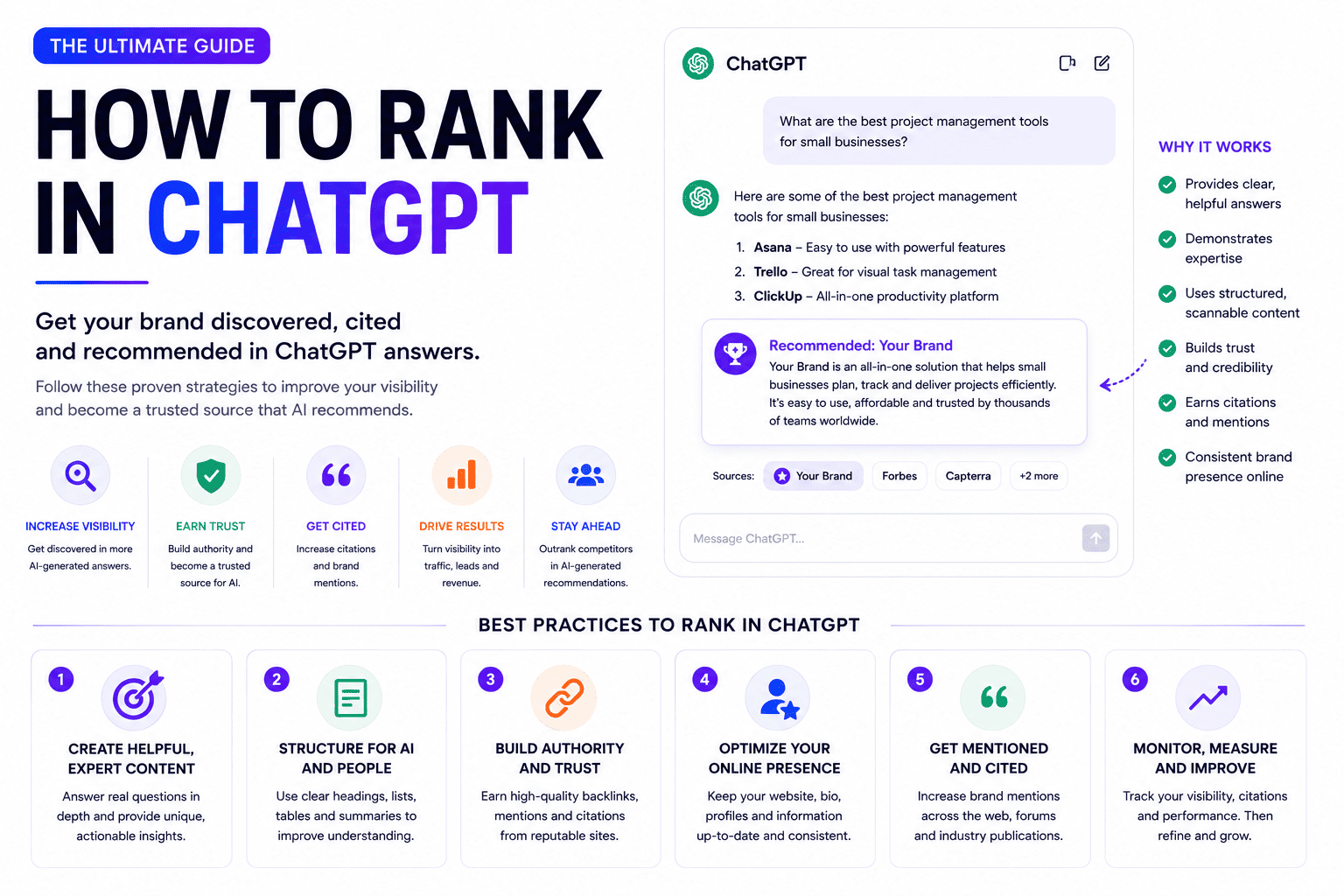
In this guide, we'll explore seven proven GEO strategies that help businesses improve AI visibility, increase citation frequency, and establish authority across emerging AI search experiences.
Why GEO Strategies Differ From Traditional SEO
Traditional SEO focuses on ranking webpages in search engine results pages (SERPs).
GEO focuses on becoming a trusted source that AI systems reference when generating answers.
Key differences include:
| Traditional SEO |
GEO |
| Optimizes for rankings |
Optimizes for citations and mentions |
| Focuses on keywords |
Focuses on entities and context |
| Measures clicks |
Measures AI visibility |
| Targets search engines |
Targets AI answer engines |
| Prioritizes SERPs |
Prioritizes AI-generated responses |
Because AI models synthesize information from multiple sources, GEO requires a broader approach than keyword optimization alone.
Strategy #1: Build Authoritative Source Content
AI systems prioritize trustworthy, well-supported information.
To improve citation potential:
- Publish original research and data
- Include expert opinions and insights
- Add statistics with clear sourcing
- Create comprehensive guides
- Update content regularly
Content that demonstrates expertise, experience, authority, and trustworthiness is significantly more likely to be referenced by AI-generated answers.
Best Practices
- Use credible references
- Include author profiles
- Showcase real-world experience
- Publish unique findings
- Maintain factual accuracy
Strategy #2: Optimise for Conversational Queries
AI search is driven by natural language questions rather than short keyword phrases.
Instead of targeting:
"generative engine optimization"
Target:
- What is generative engine optimization?
- How does GEO differ from SEO?
- What are the best GEO strategies?
- How can businesses improve AI visibility?
Implementation Tips
- Create FAQ sections
- Use question-based headings
- Write in conversational language
- Answer questions directly and clearly
- Cover related follow-up questions
The more effectively your content matches user intent, the easier it becomes for AI systems to extract and cite your information.
Strategy #3: Master Structured Data
Structured data helps AI systems understand content context, entities, and relationships.
Important schema types include:
- Article
- FAQ
- Organization
- Person
- Product
- Review
- HowTo
Why It Matters
Structured data provides machine-readable context that improves content comprehension. Businesses implementing schema for AI Search Optimisation Setup Requirements should understand which markup types have the strongest impact on AI visibility and content interpretation.
Benefits include:
- Better entity recognition
- Enhanced AI understanding
- Increased citation opportunities
- Improved search visibility
While schema alone won't guarantee AI citations, it strengthens the signals AI systems use to interpret content.
Strategy #4: Invest in Entity Building
Modern AI systems understand the web through entities rather than isolated keywords.
An entity can be:
- A brand
- A company
- A person
- A product
- A service
- A location
The stronger your entity footprint, the easier it becomes for AI systems to recognize and trust your brand.
Entity Building Tactics
- Maintain consistent brand information
- Create detailed author profiles
- Develop knowledge graph signals
- Earn mentions across authoritative websites
- Strengthen social and industry presence
AI systems increasingly rely on entity relationships to determine credibility. Strong entity recognition is becoming one of the most important signals for AI Visibility Optimisation: The Complete Guide evaluating authority and trustworthiness.
Strategy #5: Earn Citations Across the Web
AI models often reference information that appears consistently across multiple trusted sources.
This makes digital PR and earned media more valuable than ever.
Focus On
- Industry publications
- Expert interviews
- Research reports
- Guest contributions
- Podcast appearances
- High-authority niche websites
When multiple credible sources reference your expertise, AI engines gain stronger confidence in citing your content.
GEO Tip
Think beyond backlinks.
AI visibility is often influenced by mentions, references, and citations, even when traditional SEO value is limited.
Strategy #6: Create Topical Depth, Not Just Individual Articles
Many websites publish dozens of disconnected articles.
AI systems favor websites that demonstrate deep expertise within a topic.
For example, if your focus is GEO, your content ecosystem should include:
- What is GEO?
- GEO vs SEO
- GEO tools
- GEO metrics
- AI Overviews optimization
- AI search ranking factors
- GEO implementation guides
This creates topical authority that AI systems can easily identify. Unlike traditional SEO, GEO relies heavily on topical depth and entity relationships rather than individual keyword rankings alone.
Build Topic Clusters
Develop interconnected content around:
- Core topics
- Supporting topics
- Related questions
- Industry use cases
- Practical frameworks
Comprehensive topical coverage increases the likelihood of becoming a preferred AI source.
Strategy #7: Prioritise Content Freshness and Technical Performance
AI systems prefer current, reliable information.
Outdated content may be ignored in favor of newer sources.
Keep Content Fresh By
- Updating statistics
- Revising examples
- Refreshing screenshots
- Adding new developments
- Expanding answers
Technical Requirements
Ensure:
- Fast page speed
- Mobile optimization
- Clean site architecture
- Secure HTTPS implementation
- Crawlable content structure
A technically sound website helps both search engines and AI systems access content efficiently.
Putting It All Together
The most successful GEO strategies combine:
✅ Authoritative content
✅ Conversational optimization
✅ Structured data implementation
✅ Strong entity signals
✅ Earned citations and mentions
✅ Topical authority
✅ Fresh, technically optimized content
Brands that embrace these principles today will be better positioned to earn visibility within AI-generated answers tomorrow. For a deeper implementation framework, review these Generative Engine Optimisation best practices that show how to apply GEO principles across content, technical SEO, entities, and authority building.
As AI search continues to evolve, GEO is becoming a critical extension of modern SEO—not a replacement, but an essential addition.
Conclusion
Generative Engine Optimisation is no longer an experimental concept. It is quickly becoming a core component of digital visibility.
By implementing these seven GEO strategies, businesses can improve their chances of appearing in AI-generated responses, earning valuable citations, and building authority across the next generation of search experiences.
The organizations that adapt early will gain a significant advantage as AI-powered search continues reshaping how users discover information online.
Ready to improve your AI visibility? Book a GEO consultation and discover how your brand can earn more citations, mentions, and visibility across AI-powered search platforms.


.png)

.png)