As AI-powered search experiences become more common, marketers are asking a critical question: Is Generative Engine Optimization (GEO) replacing traditional SEO?
The short answer is no.
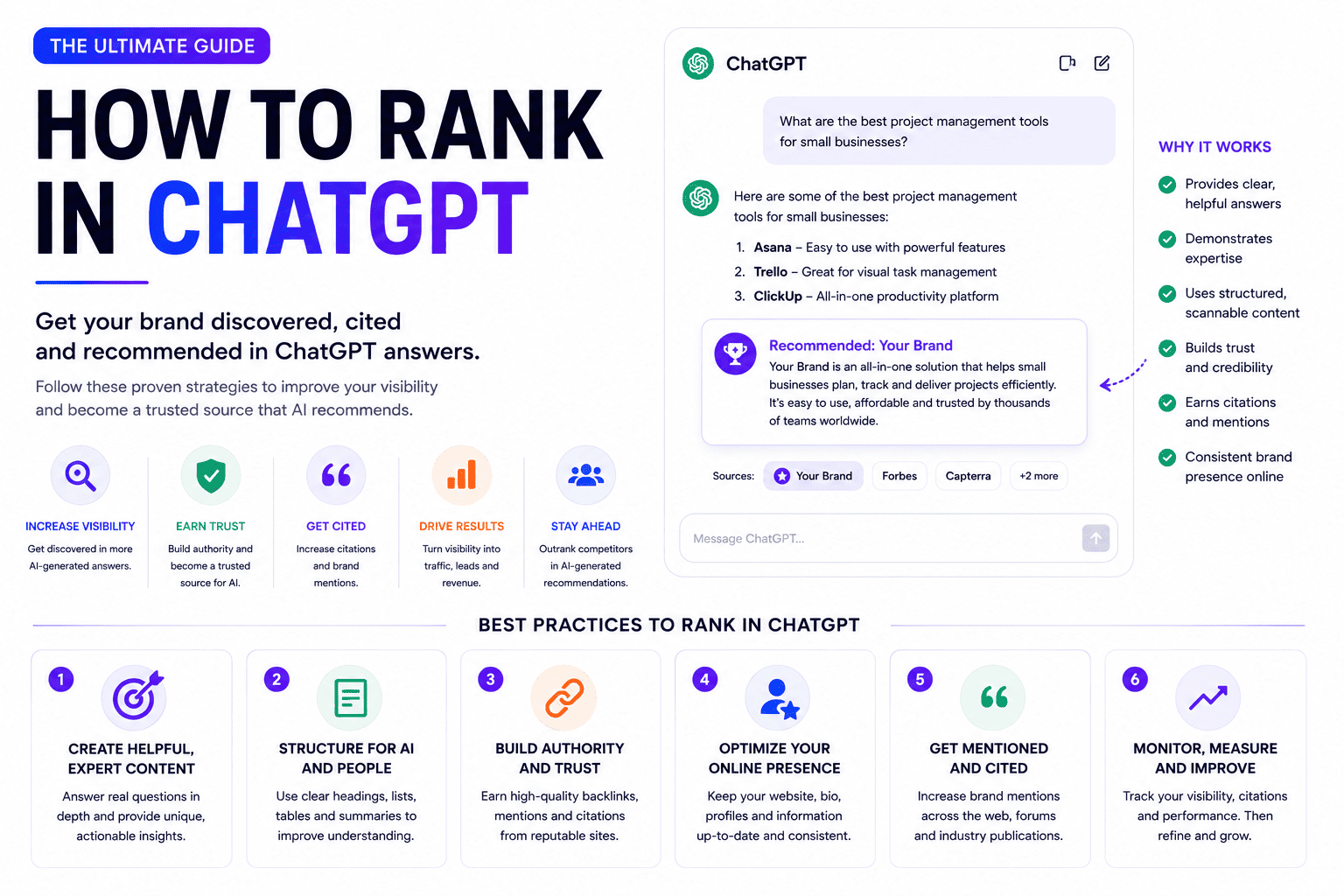
Traditional SEO remains essential for ranking in search engines, while GEO focuses on increasing visibility within AI-generated answers from platforms like Google Search AI Overviews, OpenAI ChatGPT, Microsoft Copilot, and Anthropic Claude.
Rather than competing approaches, GEO and SEO are becoming complementary disciplines. Businesses that combine both are better positioned to capture traffic, brand mentions, and authority across the evolving search landscape
Featured snippet
Is GEO replacing SEO?
No. GEO complements SEO rather than replacing it. Search rankings remain important, while GEO helps increase visibility in AI-generated answers.
The Core Difference
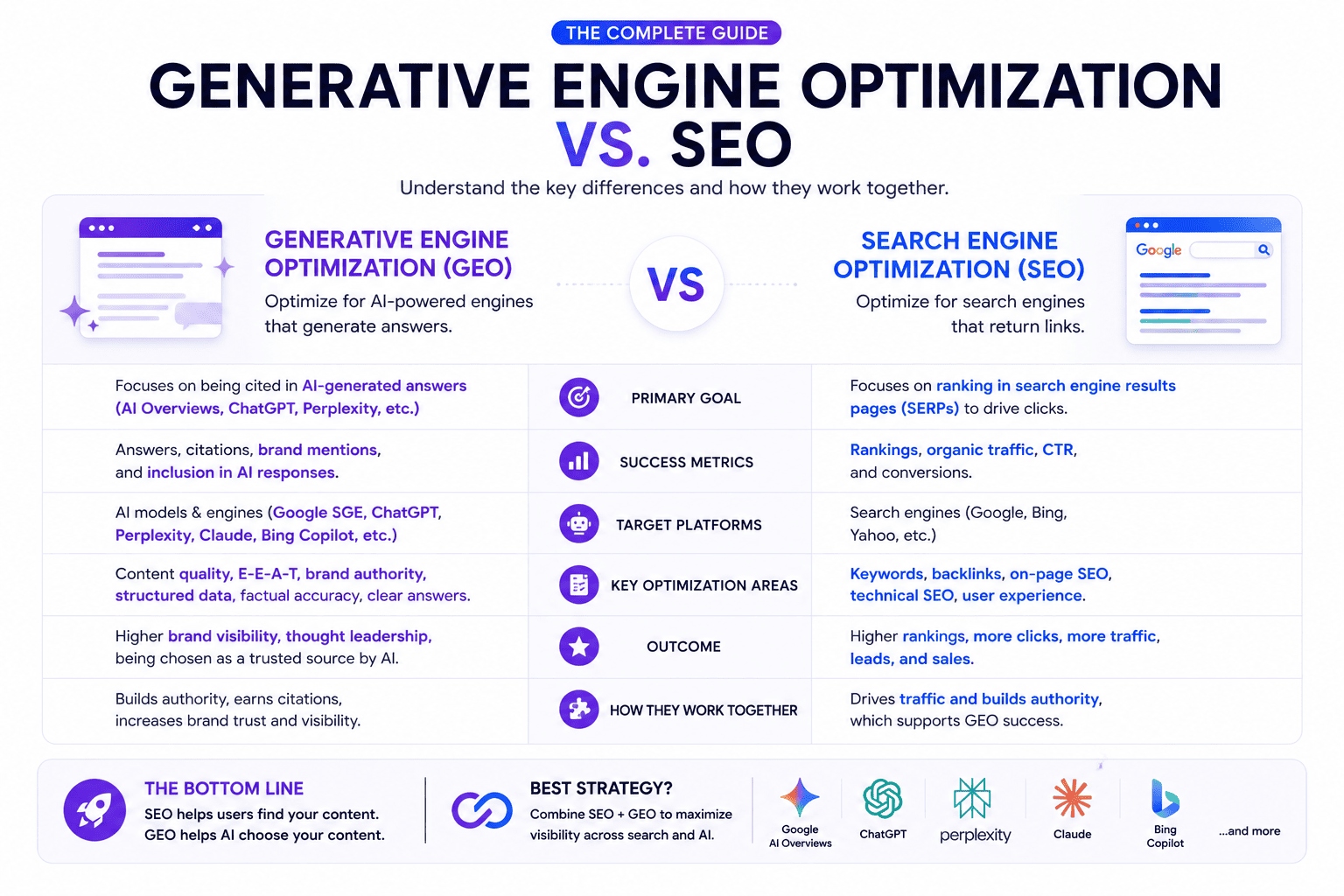
At a high level, SEO helps your website rank in search results, while GEO helps your content become part of AI-generated answers.
| Traditional SEO |
Generative Engine Optimization (GEO) |
| Optimizes for search rankings |
Optimizes for AI citations and mentions |
| Targets search engines |
Targets AI-powered answer engines |
| Focuses on clicks and traffic |
Focuses on visibility and citations |
| Relies heavily on keywords |
Relies on entities and topical authority |
| Success measured through rankings |
Success measured through AI mentions |
| Optimizes SERPs |
Optimizes AI-generated responses |
Traditional SEO aims to win positions on search engine results pages. GEO aims to become a trusted source that AI systems reference when generating answers.
If you're new to the concept, it's helpful to understand the broader principles behind Generative Engine Optimization, including how AI systems discover, evaluate, and cite content across platforms. Learn more in our guide on What Is Generative Engine Optimisation (GEO)? The Complete Guide.
How Google Search vs. Generative AI Works
Understanding the difference starts with understanding how users receive information.
Traditional Search
A user enters a query and receives a list of webpages ranked according to relevance, authority, usability, and hundreds of other ranking signals.
The user chooses which result to click.
Flow:
Query → Search Results → Click → Website
Generative AI Search
A user asks a question and receives a synthesized answer generated from multiple sources.
The AI may cite websites, brands, research papers, and authoritative sources while creating the response.
Flow:
Query → AI Generates Answer → Sources Cited → Optional Click
In this model, being cited can be just as valuable as being clicked.
Keyword Strategy: SEO vs. GEO
Keywords remain important, but their role changes.
Traditional SEO
SEO typically targets:
- Exact-match keywords
- Long-tail keywords
- Search volume opportunities
- Ranking difficulty
Example:
- Best CRM software
- CRM software for startups
- Affordable CRM tools
GEO
GEO focuses more on:
- User intent
- Entities
- Topic relationships
- Semantic relevance
Example questions:
- Which CRM software is best for small businesses?
- What are the top alternatives to Salesforce?
- Which CRM integrates with email marketing tools?
AI models often interpret meaning rather than exact keyword matches, making topical coverage more important than keyword repetition.
Content Format Differences
Content structure matters in both disciplines, but GEO demands additional optimization.
SEO Content
Typically includes:
- Target keyword optimization
- Meta tags
- Internal linking
- Backlinks
- Search intent alignment
GEO Content
Typically includes:
- Direct answers
- Question-and-answer sections
- Expert insights
- Clear entity references
- Fact-based information
- Structured formatting
For example:
SEO-style content:
Long-form content designed to rank for a target keyword.
GEO-style content:
Content structured to answer:
- What is GEO?
- Why is GEO important?
- How does GEO differ from SEO?
This format makes extraction easier for AI systems.
Link Building vs. Citation Building
One of the biggest differences between SEO and GEO lies in authority signals.
SEO Relies on Backlinks
Backlinks remain one of the strongest ranking factors.
The more reputable websites linking to your content, the more authority your site typically gains.
GEO Relies on Citations
AI systems look for:
- Credible sources
- Consistent brand mentions
- Expert contributions
- Industry recognition
- Trusted publications
Instead of asking:
"Who links to this page?"
AI models increasingly ask:
"Which sources consistently discuss this topic?"
This shift makes digital PR, thought leadership, and entity building increasingly valuable.
Measuring SEO vs. GEO Success
Traditional SEO has mature measurement frameworks.
SEO Metrics
- Organic traffic
- Keyword rankings
- Click-through rate
- Conversions
- Backlinks
- Domain authority
GEO Metrics
- AI citations
- Brand mentions in AI responses
- Share of AI visibility
- AI referral traffic
- Entity recognition
- Source inclusion frequency
As AI search evolves, marketers will increasingly monitor both ranking visibility and AI visibility.
Can You Do Both?
Absolutely.
In fact, most businesses should.
The same high-quality content often supports both SEO and GEO when created strategically.
For example:
A comprehensive article can:
- Rank in search results
- Appear in featured snippets
- Be cited in AI Overviews
- Be referenced by AI assistants
- Generate backlinks
- Strengthen entity authority
The most effective content strategy today is not SEO versus GEO.
It's SEO plus GEO.
Recommended Approach for 2026
A balanced strategy should include:
Continue Traditional SEO
- Technical SEO
- Keyword research
- Internal linking
- Backlink acquisition
- Site performance optimization
Add GEO Optimization
- Build topical authority
- Use entity-based content structures
- Create FAQ sections
- Publish original insights and research
- Strengthen brand mentions across trusted sources
- Structure content for AI extraction
Organizations that focus on both ranking and citation visibility will have a stronger presence across search ecosystems.
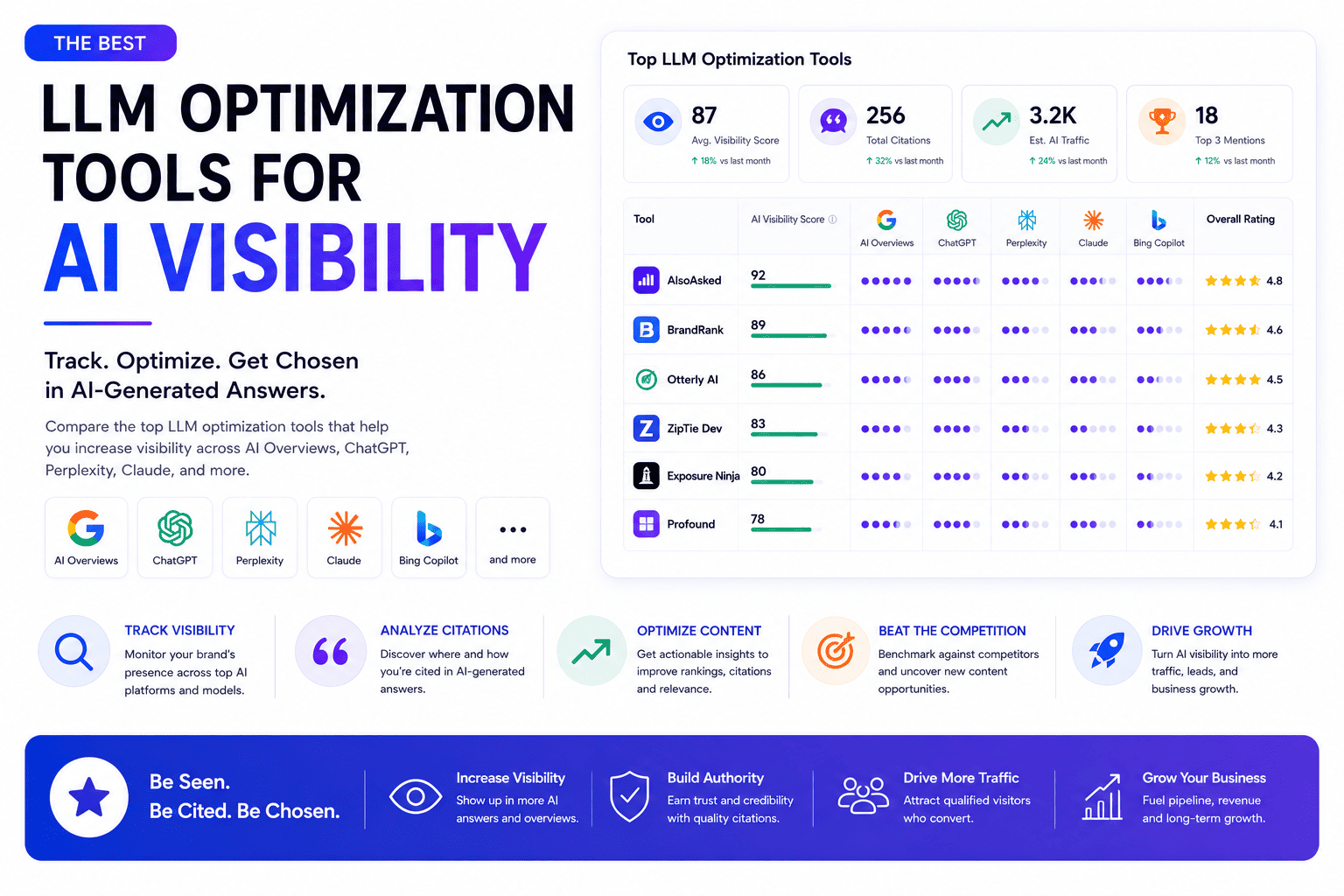
Implementing both SEO and GEO often requires a combination of technical optimization, content strategy, entity building, and AI visibility monitoring. Businesses looking for expert support can explore modern AI SEO services that combine traditional search optimization with emerging AI search strategies.
GEO and SEO Work Better Together
The future of search isn't a choice between GEO and SEO. As AI-powered search platforms continue evolving, many organizations are adopting broader AI search engine optimization frameworks that combine ranking strategies, citation acquisition, and entity authority building.
Traditional SEO helps users discover your content through rankings. GEO helps AI systems discover, understand, and cite your content within generated answers.
As search evolves from lists of links to synthesized responses, businesses that optimize for both humans and AI will gain the greatest competitive advantage.
Instead of replacing SEO, GEO extends it into the next generation of search.
Frequently Asked Questions
Which is more important in 2026: SEO or GEO?
Most businesses need both. SEO drives discoverability through search engines, while GEO increases visibility in AI search experiences.
Does GEO require backlinks?
Backlinks still help establish authority, but GEO places greater emphasis on citations, entity recognition, expertise, and trusted mentions.
Can GEO improve SEO performance?
Indirectly, yes. Strong topical authority, high-quality content, and brand mentions can benefit both GEO and traditional SEO efforts.
What industries benefit most from GEO?
SaaS, healthcare, finance, legal, technology, B2B services, and educational websites are among the sectors seeing significant benefits from GEO strategies.
Ready to future-proof your search strategy? Compare our GEO and SEO plans to build visibility across both traditional search engines and AI-powered answer engines.


.png)

.png)