Artificial intelligence is rapidly changing how people discover information online. Instead of clicking through multiple search results, users increasingly ask questions directly to AI-powered platforms and receive instant answers.
This shift has created a new discipline called Generative Engine Optimisation (GEO).
Businesses that once focused solely on traditional SEO must now optimise their content to be understood, trusted, and cited by AI systems such as ChatGPT, Google AI Overviews, Perplexity AI, Microsoft Copilot, and Claude.
In this guide, you'll learn what Generative Engine Optimisation is, how it differs from traditional SEO, why it's becoming essential, and how to build a successful GEO strategy.
Featured snippet
What Is Generative Engine Optimisation (GEO)?
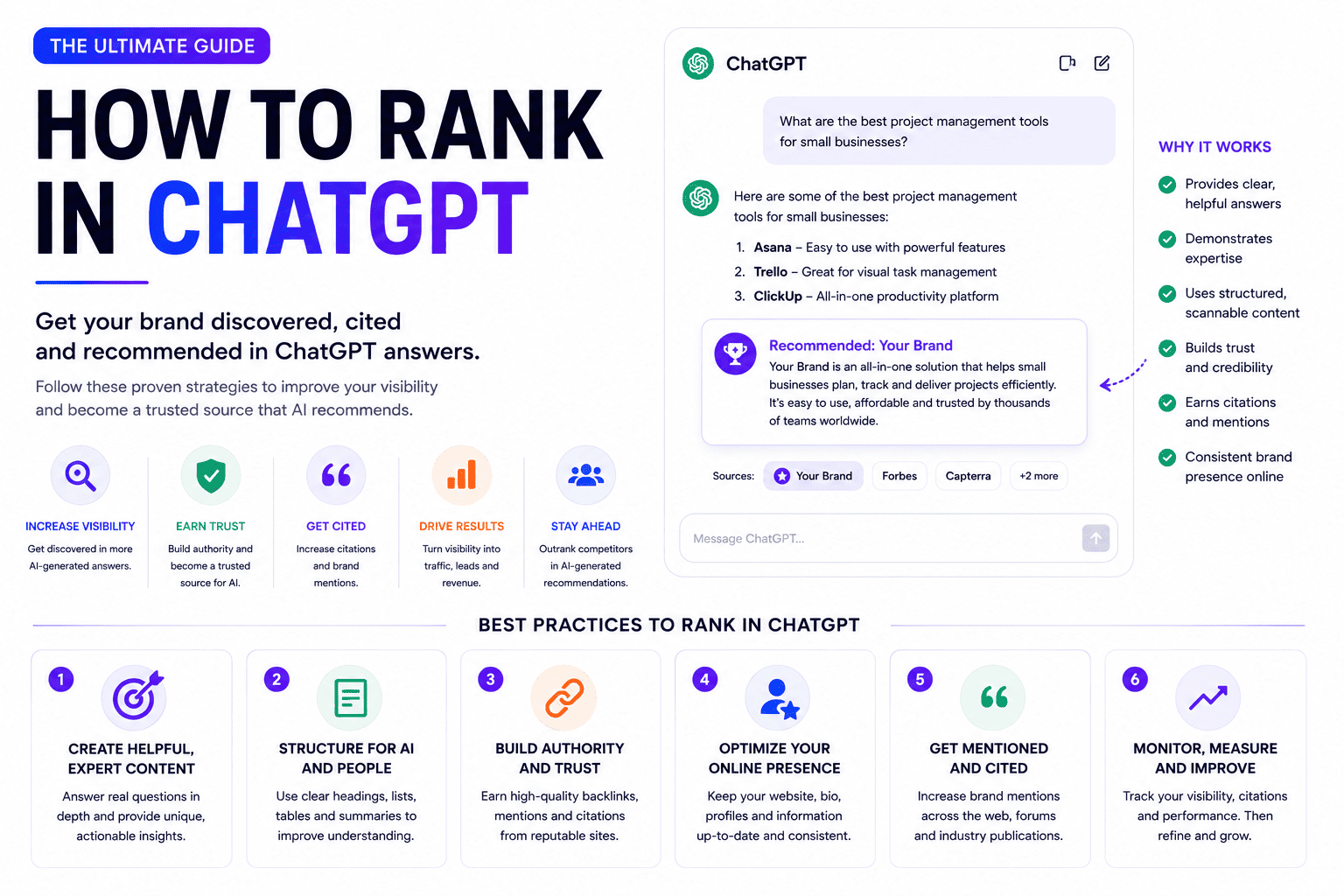
Generative Engine Optimisation (GEO) is the practice of improving your website's visibility within AI-generated answers, summaries, and recommendations produced by large language models (LLMs) and AI-powered search experiences.
Rather than optimising solely for rankings in search engine results pages (SERPs), GEO focuses on helping AI systems:
- Discover your content
- Understand your expertise
- Trust your information
- Reference your brand in generated responses
- Recommend your products, services, or insights
In simple terms:
SEO helps users find your website.
GEO helps AI systems find, understand, and cite your website.
As AI-driven search grows, appearing inside AI-generated responses can become just as valuable as ranking on page one of Google.
How GEO Differs from Traditional SEO
Although GEO builds upon SEO principles, the objectives are different. If you're unsure how these two disciplines work together, read our guide on Generative Engine Optimisation vs Traditional SEO to understand where rankings, AI citations, and entity authority overlap.
| Traditional SEO |
Generative Engine Optimisation |
| Optimises for search rankings |
Optimises for AI citations and mentions |
| Focuses on keywords |
Focuses on semantic meaning |
| Targets clicks |
Targets visibility within AI answers |
| Measures SERP positions |
Measures AI references and inclusion |
| Optimises pages individually |
Optimises entity authority across topics |
| Search engine crawler focused |
AI model and retrieval focused |
Traditional SEO remains important because AI systems often rely on search indexes. However, GEO expands optimisation beyond rankings.
Example
Traditional SEO goal:
"Rank #1 for best CRM software."
GEO goal:
"Be cited when ChatGPT, Perplexity, or Google AI Overviews answer questions about CRM software."
The second objective often requires deeper authority signals than ranking alone.
Why GEO Is Becoming Essential
Several major shifts are driving the rise of GEO. These changes are fundamentally altering digital visibility. Explore the full reasons why Generative Engine Optimisation is becoming essential for modern brands and how AI-driven discovery is reshaping customer journeys.
1. AI Search Is Growing Rapidly
Millions of users now begin their research inside AI-powered interfaces rather than traditional search engines.
Instead of searching:
"Best project management software"
Users ask:
"What project management software is best for remote teams under 50 employees?"
AI systems generate a complete answer rather than presenting ten blue links.
2. AI Overviews Are Changing Search Behaviour
Google increasingly provides direct answers through AI-generated summaries.
Users often obtain information without needing to visit multiple websites.
This means brands must compete not only for rankings but also for inclusion within AI-generated responses.
3. Visibility Is Shifting from Rankings to Mentions
A website may rank highly in Google but still receive limited exposure if AI systems consistently cite competitors.
Future visibility depends on becoming a trusted source that AI models reference repeatedly. This shift is one of several reasons businesses are investing heavily in GEO strategies to maintain visibility as AI search adoption grows.
4. Purchase Decisions Are Influenced by AI
Consumers increasingly ask AI tools for:
- Product recommendations
- Service provider comparisons
- Software suggestions
- Healthcare information
- Financial guidance
If your brand is absent from these conversations, you risk losing market share.
Key GEO Ranking Signals
AI systems evaluate content differently than traditional search algorithms.
The following signals often influence whether content gets cited.
Expertise and Authority
AI models tend to favour sources demonstrating subject-matter expertise.
Ways to improve authority include:
- Publishing expert-led content
- Author biographies
- Industry credentials
- Research-backed articles
- Original insights
Clear Topic Coverage
Content should comprehensively answer user questions.
Instead of targeting one keyword, cover:
- Definitions
- Benefits
- Use cases
- Comparisons
- FAQs
- Common misconceptions
Comprehensive content is easier for AI systems to reference.
Semantic Relevance
AI models understand concepts, entities, and relationships.
Rather than repeating keywords, focus on:
- Related topics
- Contextual explanations
- Natural language
- Entity connections
For example, a GEO article about CRM software should naturally discuss:
- Customer management
- Sales automation
- Lead tracking
- Marketing workflows
- Customer retention
Trust Signals
Trust plays a major role in AI-generated citations.
Important trust indicators include:
- Accurate information
- Sources and references
- Updated content
- Author transparency
- Company credibility
Structured Content
AI systems prefer content that is easy to parse.
Use:
- Clear headings
- Bullet points
- Tables
- FAQs
- Step-by-step explanations
- Schema markup
Well-structured content improves retrieval and understanding.
GEO vs. Answer Engine Optimisation (AEO)
Many marketers confuse GEO and AEO.
While related, they are not identical.
| GEO |
AEO |
| Optimises for AI-generated answers |
Optimises for direct answer visibility |
| Targets LLMs and generative systems |
Targets answer engines and featured answers |
| Focuses on citations and mentions |
Focuses on concise answer extraction |
| Includes entity authority |
Emphasises question-answer formatting |
| Broader AI visibility strategy |
Narrower answer optimisation strategy |
Relationship Between GEO and AEO
Think of AEO as a subset of GEO.
AEO helps content become the answer.
GEO helps content become a trusted source behind the answer.
Modern AI search strategies typically require both.
The Role of AI Models in GEO
Different AI platforms retrieve and generate information differently.
ChatGPT
Can reference web content, publisher partnerships, structured sources, and trusted websites when generating responses.
Google AI Overviews
Often combine traditional search rankings with AI summarisation.
Strong SEO and GEO foundations work together here.
Perplexity AI
Frequently cites sources directly, making authority and content quality especially important.
Microsoft Copilot
Leverages search data and AI generation to answer user queries.
Claude
Prioritises helpful, accurate, and context-rich information when generating responses.
Because each platform behaves differently, GEO strategies should focus on universal trust and authority signals.
How to Build a GEO Strategy
1. Identify High-Value AI Queries
Research questions your audience is likely to ask AI systems.
Examples:
- What is the best accounting software for small businesses?
- How does cloud migration work?
- Which CRM is easiest to implement?
These conversational questions often differ from traditional keyword searches.
2. Create Comprehensive Topic Clusters
Build content around complete topics rather than isolated keywords.
For example:
Main Topic: Generative Engine Optimisation
Supporting content:
- GEO vs SEO
- GEO vs AEO
- GEO ranking factors
- GEO tools
- GEO measurement
- GEO case studies
This strengthens topical authority.
3. Improve Entity Recognition
Ensure AI systems clearly understand:
- Your company
- Your products
- Your services
- Your expertise
Maintain consistency across:
- Website content
- Social profiles
- Industry directories
- Knowledge panels
- Press mentions
4. Add Structured Data
Schema markup helps machines understand content.
Useful schema types include:
- Organization
- Article
- FAQ
- HowTo
- Product
- Local Business
Structured data supports AI interpretation and retrieval.
5. Publish Original Insights
AI systems often prioritise unique information over generic content.
Examples include:
- Proprietary research
- Surveys
- Industry benchmarks
- Case studies
- First-party data
Original data significantly increases citation potential.
6. Strengthen E-E-A-T Signals
Focus on:
- Experience
- Expertise
- Authoritativeness
- Trustworthiness
Demonstrate real-world knowledge and transparent authorship.
7. Monitor AI Visibility
Track:
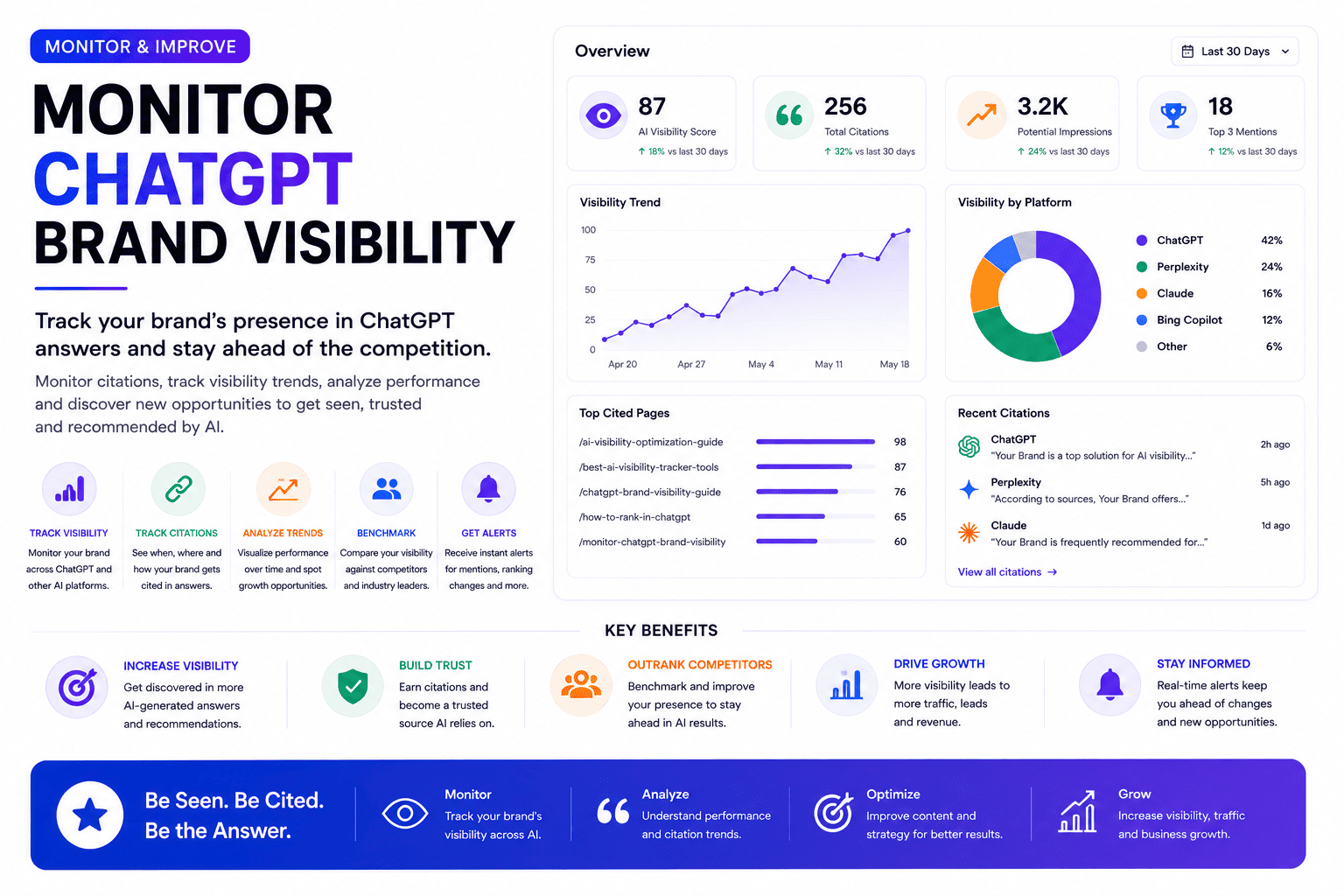
- AI citations
- Brand mentions
- AI Overview appearances
- Perplexity references
- ChatGPT recommendations
- Share of AI voice
These metrics are becoming increasingly important.
How to Measure GEO Success
Unlike traditional SEO, GEO requires new performance indicators.
Visibility Metrics
Monitor:
- AI-generated citations
- Brand mentions
- Source references
- Inclusion in AI Overviews
Traffic Metrics
Evaluate:
- Referral traffic from AI platforms
- Branded search growth
- Assisted conversions
Authority Metrics
Measure:
- Backlinks
- Digital PR mentions
- Expert references
- Industry citations
Conversion Metrics
Track:
- Leads generated
- Demo requests
- Purchases
- Revenue influenced by AI discovery
The ultimate goal is business impact, not just AI visibility.
Common GEO Mistakes
Avoid these common issues:
Publishing Thin Content
AI systems rarely trust shallow content.
Ignoring Entity Building
Brands without strong entity signals struggle to earn citations.
Over-Optimising Keywords
Keyword stuffing is less effective in AI-driven environments.
Neglecting Technical SEO
GEO does not replace SEO.
Strong crawlability, indexing, and site performance remain essential.
Failing to Update Content
Outdated information reduces trust and citation likelihood.
The Future of Generative Engine Optimisation
GEO is likely to become a standard part of digital marketing.
As AI assistants become primary information gateways, brands will compete for:
- AI citations
- Entity authority
- Knowledge graph prominence
- Trusted source status
The companies that adapt early will gain significant visibility advantages.
SEO is not disappearing.
Instead, SEO is evolving into a broader strategy that includes both search engines and generative engines.
Frequently Asked Questions
What is Generative Engine Optimisation (GEO)?
Generative Engine Optimisation (GEO) is the practice of optimising content so AI-powered search systems and large language models can discover, understand, trust, and cite your information in generated responses.
Is GEO replacing SEO?
No. GEO complements SEO rather than replacing it. Strong SEO foundations often improve GEO performance because many AI systems rely on search indexes and authoritative web content.
What is the difference between GEO and AEO?
AEO focuses on becoming the direct answer to user questions, while GEO focuses on becoming a trusted source that AI systems cite and reference across various types of generated responses.
Which platforms are affected by GEO?
GEO applies to AI-powered platforms such as ChatGPT, Google AI Overviews, Perplexity, Microsoft Copilot, Claude, and other generative search experiences.
How can businesses get started with GEO?
Start by creating authoritative content, improving entity recognition, implementing structured data, strengthening E-E-A-T signals, and monitoring AI citations and mentions across major AI platforms.
Conclusion
Generative Engine Optimisation (GEO) is the process of improving your visibility within AI-generated answers across platforms like ChatGPT, Google AI Overviews, Perplexity, Copilot, and Claude.
While traditional SEO focuses on rankings and clicks, GEO focuses on becoming a trusted source that AI systems understand, trust, and cite. For a deeper comparison, see our complete breakdown of GEO vs SEO and why modern brands need both strategies working together.
Successful GEO requires:
- Strong topical authority
- High-quality content
- Entity optimisation
- Structured data
- E-E-A-T signals
- Continuous measurement
As AI search continues to reshape digital discovery, GEO is quickly becoming an essential component of modern search marketing.
Download the GEO Playbook and learn how to increase your visibility across AI search platforms, AI Overviews, and generative engines.

%20The%20Complete%20Guide%20(2026).png)

.png)

.png)