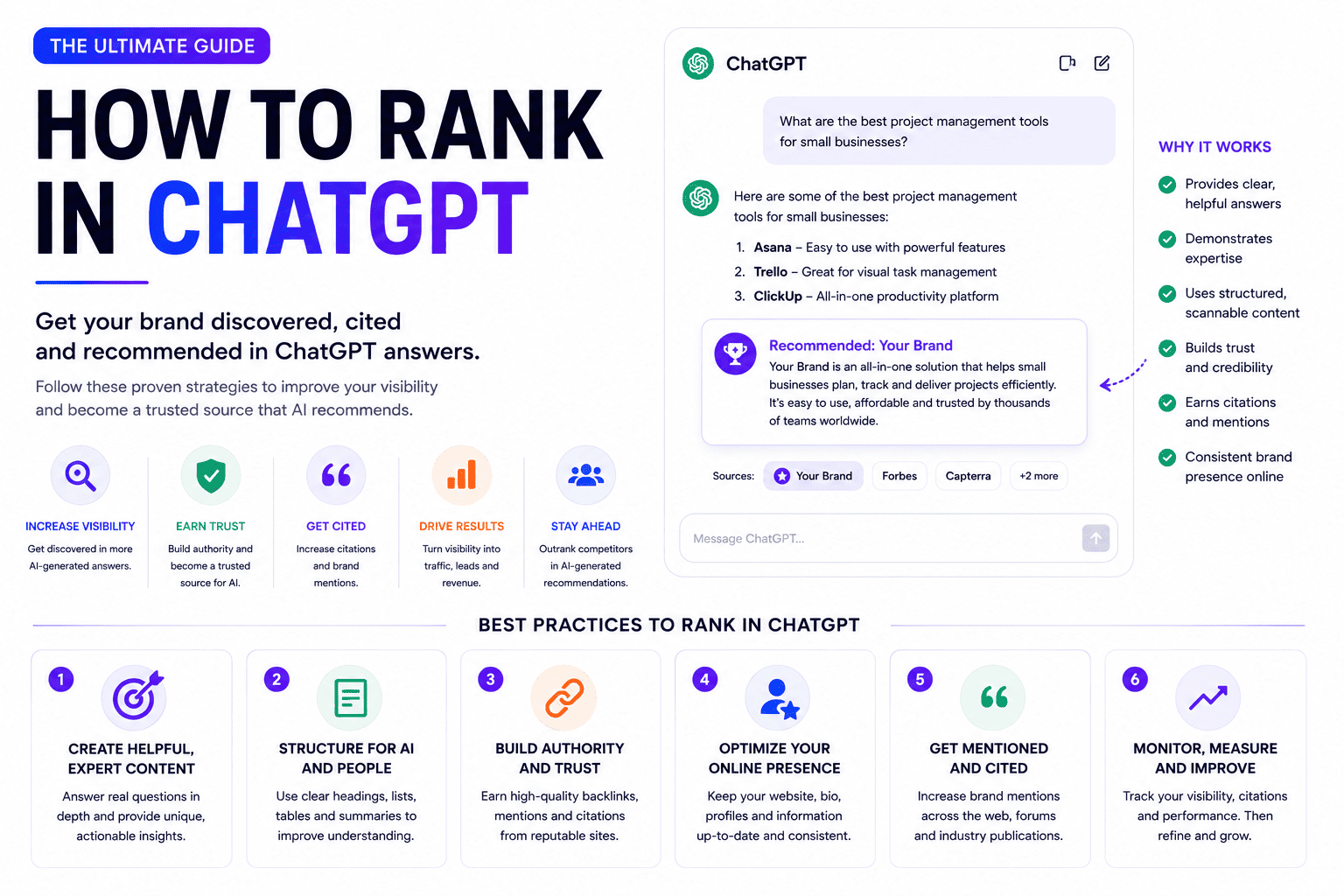
Artificial intelligence is rapidly changing how people discover information online. Instead of relying solely on traditional search engines, users now ask AI assistants such as ChatGPT, Claude, Gemini, and Perplexity AI for recommendations, research, and buying decisions.
This shift has created a new challenge for brands: How do you ensure AI systems mention, cite, and recommend your business?
The answer lies in LLM Optimisation tools.
Before investing in any platform, it's important to understand the broader framework of AI visibility optimisation and how brands improve their presence across AI-generated search experiences. Our complete guide to AI visibility optimisation explains the strategies that underpin successful LLM visibility campaigns.
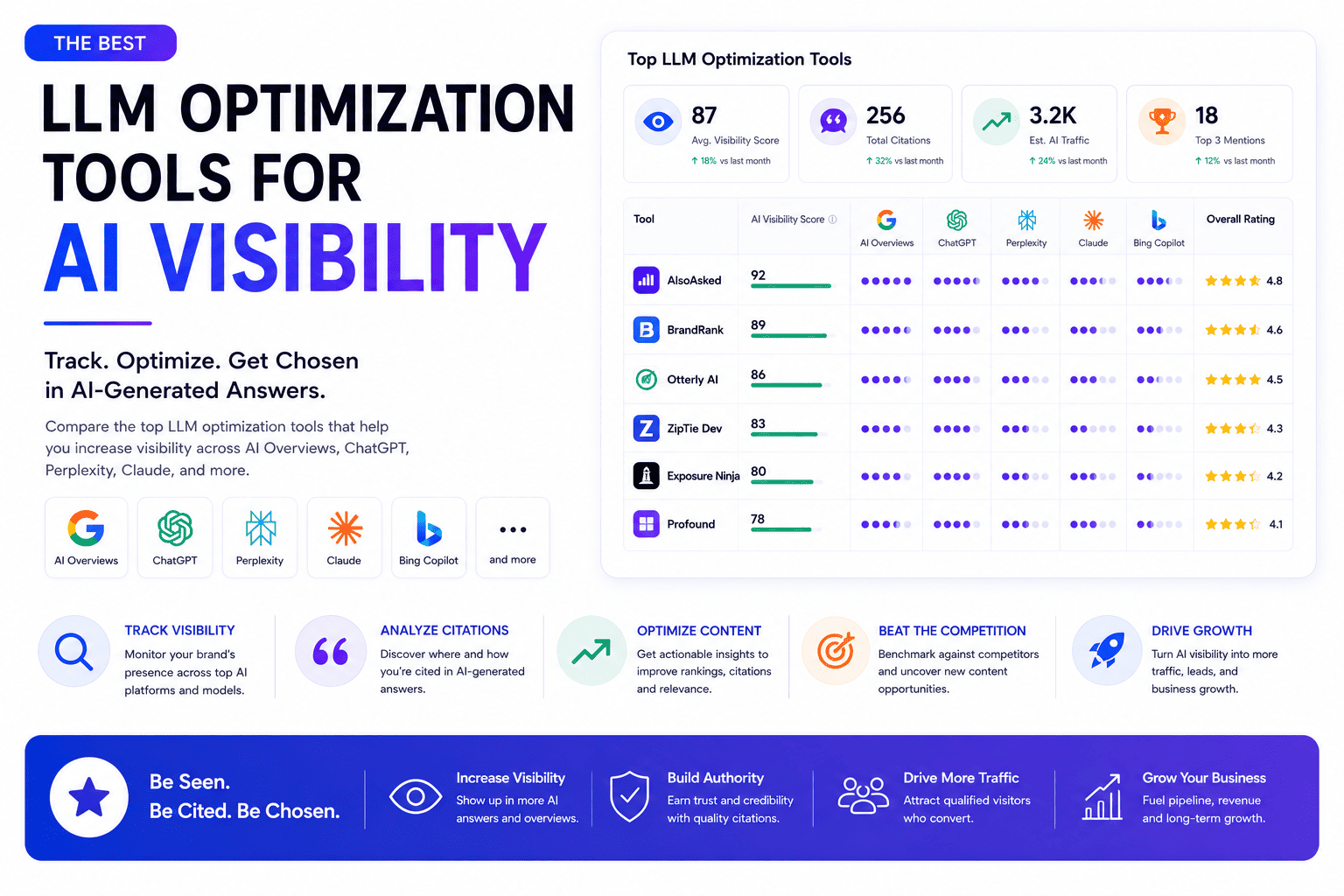
These platforms help businesses understand, measure, and improve their visibility across large language models (LLMs) and AI-powered search experiences. Similar to how SEO tools transformed traditional search optimisation, LLM optimisation platforms are becoming essential for brands that want to stay visible in AI-driven discovery.
In this guide, we'll explore the best LLM optimisation tools available in 2026, compare their features, discuss pricing considerations, and help you choose the right solution for your business.
What LLM Optimisation Tools Actually Do
Many marketers assume these tools are simply SEO platforms with AI dashboards. In reality, the best solutions provide capabilities that traditional SEO software cannot.
These reporting capabilities form a key part of a wider AI visibility optimisation strategy that combines content creation, authority building, citation growth, and AI search monitoring.
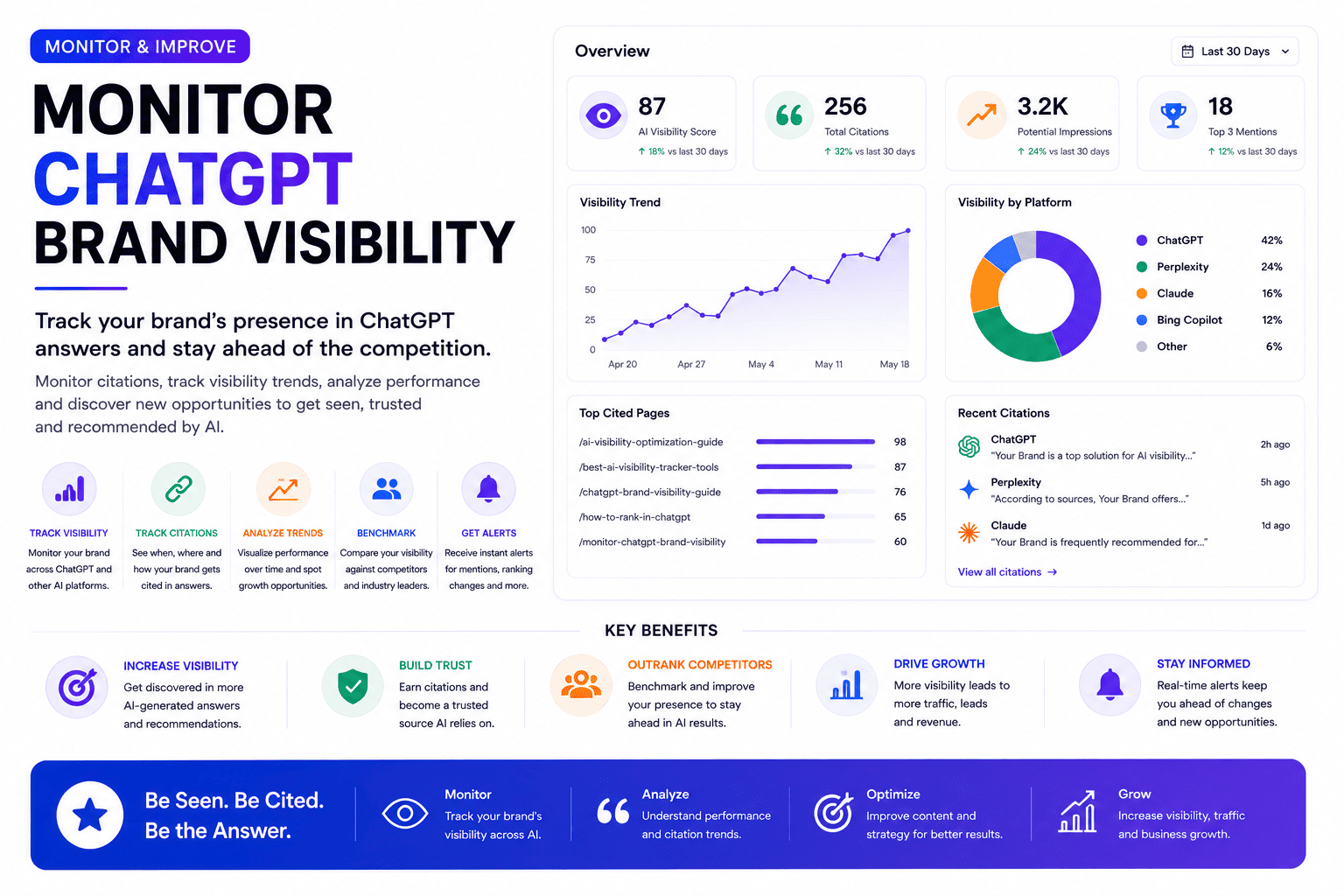
1. AI Citation Tracking
Monitor whether AI assistants cite your company, website, products, or content.
Example:
A user asks:
"What are the best project management tools?"
The platform identifies whether your brand appears in the answer.
2. Share of Voice Measurement
Track how frequently your brand is mentioned compared to competitors.
Metrics typically include:
- Brand visibility percentage
- AI recommendation frequency
- Competitive share of voice
- Mention trends over time
3. Prompt Monitoring
Track visibility across thousands of relevant prompts.
Examples:
- Best CRM software
- Top cybersecurity platforms
- Best accounting software for startups
- AI marketing tools
This helps identify where your brand is visible - and where it is absent.
4. Competitor Intelligence
See which competitors dominate AI-generated responses.
Understand:
- Why they are being cited
- Which content AI models prefer
- Which sources influence recommendations
5. AI Visibility Reporting
Generate reports showing:
- Visibility improvements
- Citation growth
- Competitive movements
- GEO campaign performance
Key Capabilities to Look For
Not all platforms offer the same level of functionality.
When evaluating tools, prioritise:
Multi-LLM Coverage
The platform should monitor:
- ChatGPT
- Claude
- Gemini
- Perplexity
- Microsoft Copilot
The more models tracked, the more accurate your visibility insights.
Citation Detection
Look for detailed citation tracking rather than simple mention monitoring.
The best tools reveal:
- Citation source
- Citation frequency
- Prompt context
- Competitor citations
Prompt Discovery
Leading platforms continuously identify new prompts users ask AI systems.
This helps uncover visibility opportunities before competitors.
Competitive Benchmarking
A strong platform should show:
- Competitor rankings
- Visibility share
- Mention frequency
- Citation overlap
Historical Trends
Trend analysis helps answer:
- Is visibility improving?
- Which campaigns are working?
- Which competitors are gaining ground?
Top LLM Optimisation Tools Reviewed
LLM optimisation platforms are only one category within the wider AI visibility ecosystem. If you're evaluating multiple solutions, our comparison of the best AI visibility optimisation tools provides a broader overview of leading platforms and their capabilities.
Best For
Enterprise AI visibility management
Key Features
- AI citation tracking
- Multi-model monitoring
- Competitive intelligence
- Prompt discovery
- Share of voice reporting
- Enterprise dashboards
Pros
- Most comprehensive AI visibility platform
- Advanced reporting
- Enterprise-grade analytics
- Strong competitive insights
Cons
- Premium pricing
- Better suited for larger organisations
Ideal Users
- Enterprise brands
- Global companies
- Large marketing teams
Best For
Small and medium-sized businesses
Key Features
- AI visibility tracking
- Prompt monitoring
- Brand mention alerts
- Reporting dashboards
Pros
- Easy setup
- User-friendly interface
- Affordable pricing
- Strong visibility tracking
Cons
- Limited enterprise capabilities
- Smaller feature set than premium competitors
Ideal Users
Best For
Competitive AI visibility analysis
Key Features
- Share of voice tracking
- Competitor benchmarking
- Prompt intelligence
- AI monitoring dashboards
Pros
- Excellent competitive insights
- Strong visual reporting
- Fast implementation
Cons
- Less focused on enterprise workflows
- Fewer integrations
Ideal Users
- Marketing teams
- Competitive research teams
- Mid-sized businesses
Best For
SEO teams expanding into AI visibility
Key Features
- AI brand monitoring
- Competitor analysis
- AI search insights
- SEO integration
Pros
- Familiar ecosystem
- Excellent reporting
- Strong SEO data integration
Cons
- Newer AI capabilities
- Less specialised than dedicated GEO platforms
Ideal Users
- Existing Semrush customers
- SEO agencies
- Digital marketing teams
Best For
Brand visibility tracking
Key Features
- Brand mention monitoring
- AI visibility analysis
- Competitive benchmarking
- Search intelligence
Pros
- Reliable data infrastructure
- Strong brand tracking
- Excellent interface
Cons
- AI-specific features still evolving
- Limited compared to dedicated GEO tools
Ideal Users
- Content teams
- SEO professionals
- Brand marketers
Pricing Breakdown
Pricing varies significantly depending on monitoring depth and prompt volume.
Businesses comparing software options should also review our comprehensive comparison of AI visibility platforms to understand how LLM optimisation tools fit into the broader market.
| Tool |
Typical Pricing Tier |
| Profound |
Enterprise custom pricing |
| Otterly.AI |
SMB-friendly monthly plans |
| Peec AI |
Mid-market pricing |
| Semrush AI Toolkit |
Add-on pricing |
| Ahrefs Brand Radar |
Included within selected plans |
Before choosing a platform, evaluate:
- Number of brands monitored
- Prompt volume limits
- Number of AI models covered
- Reporting requirements
- Team access needs
Use Cases by Business Type
Startups
Recommended:
Focus on:
- Brand monitoring
- Competitor visibility
- Early AI presence
Agencies
Recommended:
- Semrush AI Toolkit
- Otterly.AI
- Peec AI
Focus on:
- Client reporting
- Visibility benchmarking
- Campaign measurement
Mid-Market Companies
Recommended:
Focus on:
- Competitive analysis
- Citation growth
- Share of voice improvements
Enterprise Brands
Recommended:
Focus on:
- Large-scale monitoring
- Global visibility tracking
- Executive reporting
Integration Requirements
Most modern LLM optimisation platforms integrate with:
- Google Analytics
- Google Search Console
- CRM platforms
- Business intelligence tools
- Marketing dashboards
Before purchasing, verify:
- API access availability
- Reporting integrations
- Data export options
- Team collaboration features
Our Recommendation
The best LLM optimisation tool depends on your business size and objectives.
Choose Profound If:
- You need enterprise-grade analytics
- AI visibility is a strategic priority
- You require advanced reporting
Choose Otterly.AI If:
- You are new to AI visibility optimisation
- You need affordable monitoring
- You want fast implementation
Choose Peec AI If:
- Competitive intelligence is your priority
- You need strong share-of-voice reporting
Choose Semrush AI Toolkit If:
- Your team already uses Semrush
- You want AI visibility alongside SEO reporting
Choose Ahrefs Brand Radar If:
- Brand tracking is your primary goal
- You already rely on Ahrefs data
For most businesses entering AI visibility optimisation in 2026, Otterly.AI and Peec AI offer the best balance of affordability, usability, and actionable insights, while Profound remains the strongest enterprise solution.
Ready to improve your AI visibility? Start tracking how AI systems mention your brand today and discover the opportunities your competitors may already be capturing.


.png)

.png)