AI-powered search and answer engines are changing how people discover brands. Instead of browsing through multiple search results, users increasingly ask platforms like ChatGPT direct questions and receive instant recommendations.
This shift creates a new challenge for businesses: How do you ensure your brand gets mentioned when AI generates answers?
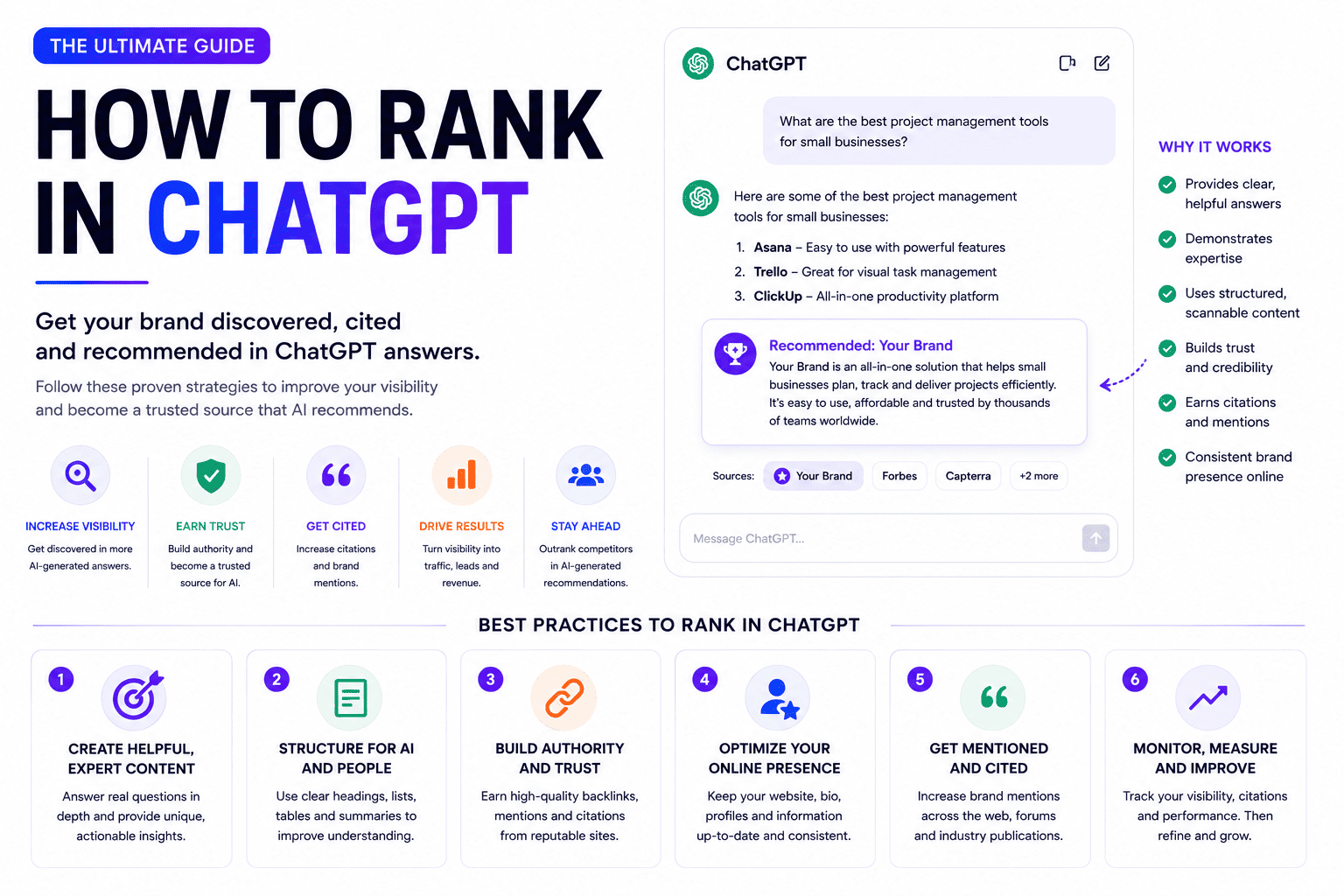
Unlike traditional SEO, where ranking on page one is the goal, ChatGPT brand visibility focuses on becoming a trusted source that AI systems recognize, understand, and cite when responding to users.
In this guide, you'll learn how ChatGPT selects brands, what signals influence visibility, and how to build a strategy that increases the likelihood of your brand appearing in AI-generated responses.
Featured snippet
What is ChatGPT brand visibility?
ChatGPT brand visibility refers to how often and how prominently a brand appears in AI-generated responses when users ask relevant questions.
Why ChatGPT Brand Mentions Matter
Being mentioned in AI responses can influence purchasing decisions before users ever visit a search engine.
When users ask questions such as:
- "What are the best CRM platforms for startups?"
- "Which GEO agency should I hire?"
- "What are the top AI visibility tools?"
- "Which project management software is best for remote teams?"
ChatGPT often provides a curated list of recommendations.
Brands included in these recommendations gain:
Increased Trust
Users perceive AI recommendations as more objective than advertisements.
Higher Consideration
Being included in a shortlist places your brand directly in the decision-making process.
More Qualified Traffic
Users who discover brands through AI often have high purchase intent.
Competitive Advantage
Many competitors still focus exclusively on traditional SEO and have not adapted to AI search visibility.
As AI search adoption grows, visibility inside AI-generated responses becomes an increasingly important marketing channel.
Understanding How ChatGPT Selects Brands
To improve ChatGPT brand visibility, it helps to understand how AI models identify and recommend companies.
AI systems generally rely on patterns found across:
- High-authority websites
- Industry publications
- Review platforms
- Research reports
- News coverage
- Educational resources
- Community discussions
- Brand mentions across the web
Rather than relying on a single ranking factor, AI evaluates whether a brand consistently appears as a credible answer across multiple trusted sources.
Think of it this way:
Traditional SEO asks:
"Can this page rank?"
AI visibility asks:
"Does the internet consistently recognize this brand as a credible answer?"
The stronger that consensus becomes, the higher the likelihood of brand inclusion.
Key Signals That Influence ChatGPT Brand Visibility
1. Brand Authority
AI models tend to favor brands with clear expertise and industry recognition.
Authority signals include:
- Expert-authored content
- Thought leadership articles
- Industry awards
- Research publications
- Conference participation
- Expert interviews
- Original studies
The more evidence available online that demonstrates expertise, the easier it becomes for AI systems to associate your brand with specific topics.
2. Consistent Brand Mentions
One website mentioning your company is not enough.
AI systems look for recurring references across multiple trusted domains.
Examples include:
- Industry blogs
- News websites
- Review platforms
- Partner websites
- Business directories
- Podcast transcripts
- Case studies
A consistent mention pattern strengthens confidence that your brand is relevant to a particular subject.
3. Topical Relevance
AI models categorize brands based on topic associations.
For example:
A company specializing in GEO services should repeatedly appear in content discussing:
- Generative Engine Optimisation
- AI visibility
- AI search marketing
- LLM optimisation
- ChatGPT ranking
- AI brand visibility
The more content supporting these associations, the stronger the topical relevance signal becomes.
4. Structured Data and Entity Clarity
AI systems perform better when they clearly understand:
- Who you are
- What you offer
- Which industry you serve
Important structured data includes:
- Organization schema
- Product schema
- Service schema
- FAQ schema
- Article schema
- Author schema
Entity clarity reduces ambiguity and improves machine understanding.
5. Third-Party Validation
AI trusts independent sources more than self-promotional content.
Examples include:
- Customer reviews
- Analyst reports
- Comparison articles
- Industry rankings
- Media coverage
- Research citations
Third-party validation often becomes the deciding factor when AI chooses between competing brands.
Content Strategies That Increase ChatGPT Visibility
Content remains one of the strongest drivers of AI visibility.
Build Topic Clusters
Create comprehensive content around your expertise.
Example:
If you offer AI visibility services:
Pillar Page
- AI Visibility Optimisation Guide
Supporting Articles
- Generative Engine Optimisation Basics
- GEO vs SEO
- AI Search Ranking Factors
- AI Citation Tracking
- ChatGPT Brand Visibility
- LLM Optimisation Strategies
This content structure helps AI connect your brand to the broader topic ecosystem.
Publish Original Research
Original data is highly valuable because other websites frequently cite it.
Examples:
- Industry surveys
- Benchmark reports
- AI visibility studies
- Ranking factor research
- Usage trend reports
Original research often generates:
- Backlinks
- Media mentions
- Citations
- AI references
All of which strengthen visibility.
Answer Real User Questions
AI systems frequently learn topic relationships from question-and-answer formats.
Create content targeting:
- What is AI visibility optimisation?
- How does ChatGPT choose brands?
- How do AI citations work?
- How can companies improve AI visibility?
These pages align closely with conversational search behavior.
Create Comparison Content
Comparison articles help AI understand competitive positioning.
Examples:
- Best AI visibility tools
- Top GEO agencies
- AI citation tracking platforms
- Profound vs Otterly
- GEO software comparisons
AI frequently references brands appearing in authoritative comparison content.
Building Digital Authority Beyond Content
Content alone is rarely enough.
Authority is strengthened through broader digital presence.
Earn Media Coverage
PR campaigns help generate trusted third-party mentions.
Focus on:
- Industry publications
- Business news sites
- Technology media
- Expert commentary opportunities
Media mentions provide strong authority signals.
Secure Podcast and Webinar Appearances
Expert appearances expand brand visibility across multiple content formats.
Benefits include:
- Additional citations
- Brand mentions
- Expert positioning
- Searchable transcripts
These signals contribute to broader AI recognition.
Build Strategic Partnerships
Partner websites often create:
- Case studies
- Co-marketing content
- Resource pages
- Integration listings
These references reinforce your brand's relevance within a category.
Encourage Review Generation
Reviews help validate market credibility.
Focus on platforms relevant to your industry.
Examples include:
- G2
- Capterra
- Trustpilot
- Clutch
A strong review presence improves trust signals across the web.
Optimising Your Website for AI Understanding
Your website should clearly communicate your expertise.
Create Clear Service Pages
Avoid vague descriptions.
Instead of:
"Digital Marketing Solutions"
Use:
- Generative Engine Optimisation Services
- AI Visibility Optimisation Services
- ChatGPT Brand Visibility Services
- AI Citation Tracking Services
Specific language improves entity understanding.
Strengthen About Pages
Clearly explain:
- Company mission
- Areas of expertise
- Industry focus
- Leadership team
- Achievements
Strong About pages help AI understand organizational identity.
Implement Schema Markup
Important schema types include:
- Organization
- Person
- Service
- FAQ
- Article
- Breadcrumb
- Review
Schema provides structured context that machines can process efficiently.
Improve Content Freshness
AI systems often favor current information.
Update:
- Statistics
- Screenshots
- Research findings
- Tool comparisons
- Industry trends
Regular updates help maintain relevance.
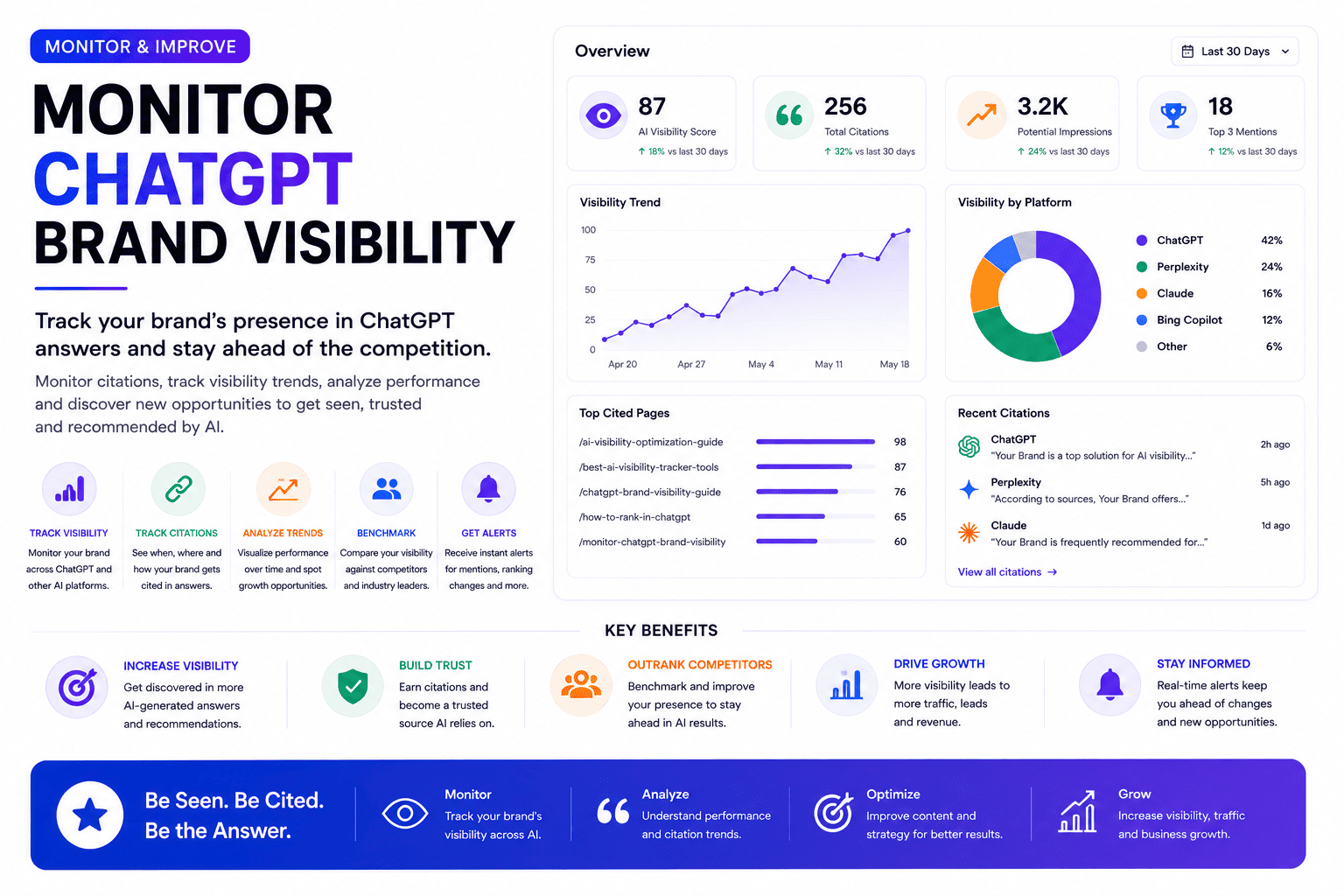
How to Monitor Your Brand Visibility in ChatGPT
Improvement requires measurement.
Before investing heavily in optimisation efforts, it's important to establish a baseline and continuously measure performance. A structured guide to monitoring your ChatGPT brand visibility over time can help you track mentions, share of voice, competitor visibility, and citation growth across AI platforms.
Manual Testing
Create a list of prompts such as:
- Best GEO agencies
- Leading AI visibility platforms
- Top AI search optimisation companies
- Recommended AI citation tracking tools
Track:
- Whether your brand appears
- Position in recommendations
- Competitor mentions
- Context of citations
Monitor consistently over time.
AI Visibility Platforms
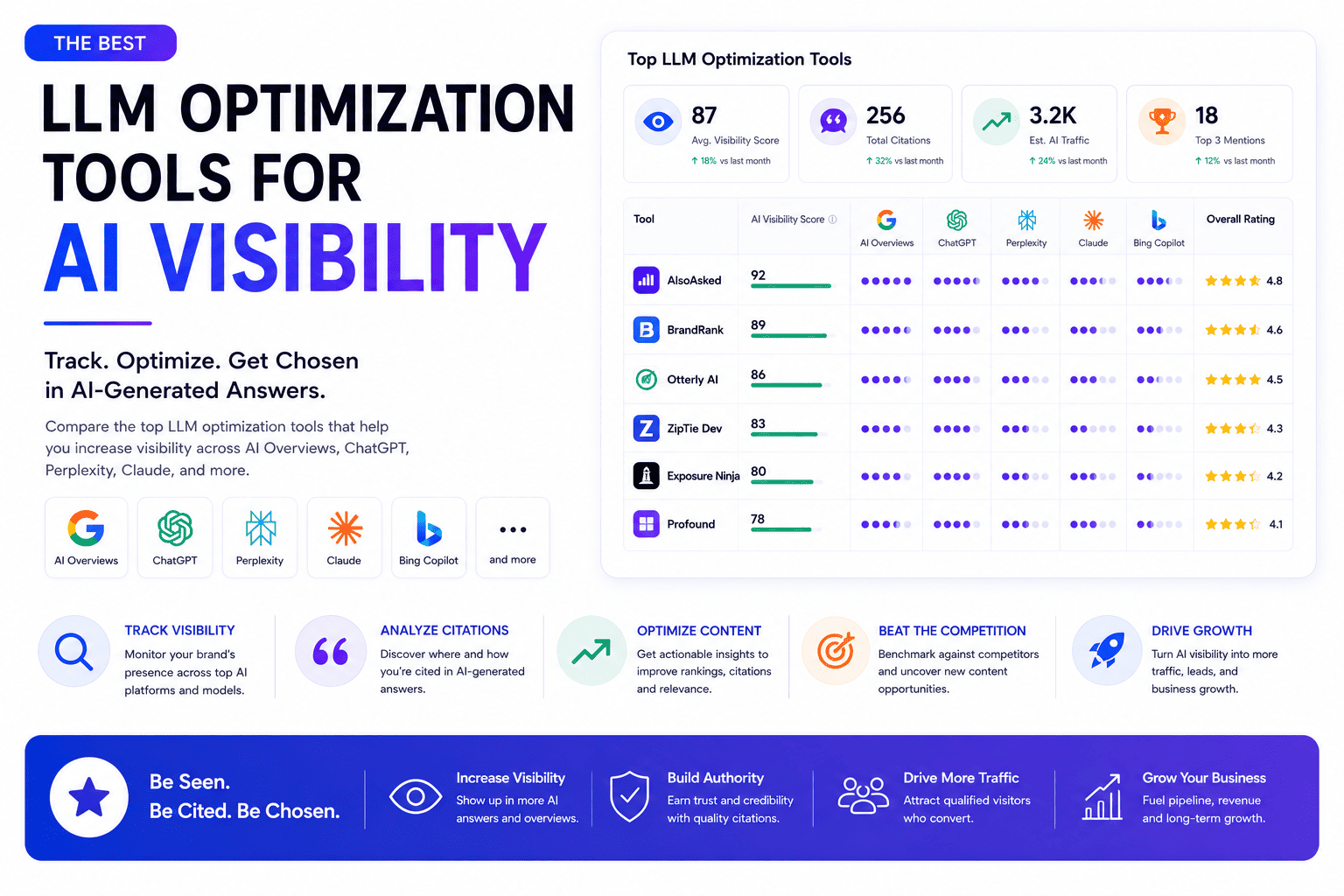
Several tools now track AI-generated brand mentions.
Common capabilities include:
- Brand mention monitoring
- Citation tracking
- Competitor comparison
- Share-of-voice reporting
- Prompt tracking
These tools provide more scalable visibility measurement.
Track Supporting Metrics
Monitor:
- Organic traffic
- Branded search volume
- Referral traffic
- Media mentions
- Backlink growth
- Review growth
These often correlate with improving AI visibility.
Sample ChatGPT Brand Visibility Reporting Framework
A monthly report might include:
| Metric |
Example |
| Prompt Coverage |
42% |
| Brand Mentions |
310 |
| Competitor Mentions |
275 |
| AI Share of Voice |
18% |
| New Citations |
54 |
| Authority Mentions |
22 |
| Top Performing Topic |
AI Visibility |
| Visibility Trend |
+14% |
This framework helps connect AI visibility efforts to measurable outcomes.
Common Mistakes That Reduce ChatGPT Visibility
Relying Only on SEO
Traditional rankings remain important but are no longer sufficient.
Publishing Thin Content
Short, generic articles rarely build authority.
Ignoring PR
Media coverage often influences AI recognition more than additional blog posts.
Weak Entity Signals
Confusing service descriptions make it harder for AI to understand your expertise.
Lack of Consistency
Visibility is built through repeated mentions across multiple trusted sources.
The Future of ChatGPT Brand Visibility
AI search is rapidly becoming a primary discovery channel.
Brands that invest early in:
- Authority building
- AI-focused content
- Digital PR
- Structured data
- Citation acquisition
- Entity optimisation
will be better positioned as AI-generated recommendations become increasingly influential.
The goal is no longer simply ranking a webpage.
The goal is becoming the answer AI trusts enough to recommend.
Frequently Asked Questions
How can I check my brand visibility in ChatGPT?
You can manually test relevant prompts or use AI visibility tracking platforms that monitor brand mentions, citations, and share of voice across AI systems.
Does SEO help ChatGPT visibility?
Yes. Strong SEO contributes to authority and discoverability, but AI visibility also depends heavily on brand mentions, citations, PR, reviews, and entity recognition.
Why does ChatGPT mention some brands but not others?
AI systems typically favor brands with stronger authority, broader recognition, consistent mentions, and clearer associations with specific topics.
What are ChatGPT brand visibility services?
ChatGPT brand visibility services help businesses improve their presence in AI-generated answers through content strategy, GEO, digital PR, authority building, citation acquisition, and AI visibility monitoring.
Conclusion
ChatGPT brand visibility is about building enough authority, relevance, and trust that AI systems consistently recognize your company as a credible solution.
Success comes from combining:
- High-quality content
- Strong topical authority
- Digital PR
- Third-party mentions
- Structured data
- Ongoing visibility measurement
Brands that establish these signals today will have a significant advantage as AI-powered discovery continues to grow.
These activities form the foundation of building a broader AI visibility strategy, helping brands improve discoverability not only in ChatGPT but across emerging AI search engines, answer engines, and large language model platforms.
If your business wants to increase visibility in ChatGPT and other AI platforms, a structured AI visibility strategy can help you earn more mentions, citations, and recommendations across the evolving search landscape.



.png)
.png)