Search is changing faster than ever. Instead of clicking through ten blue links, users increasingly ask AI assistants direct questions and receive complete answers instantly.
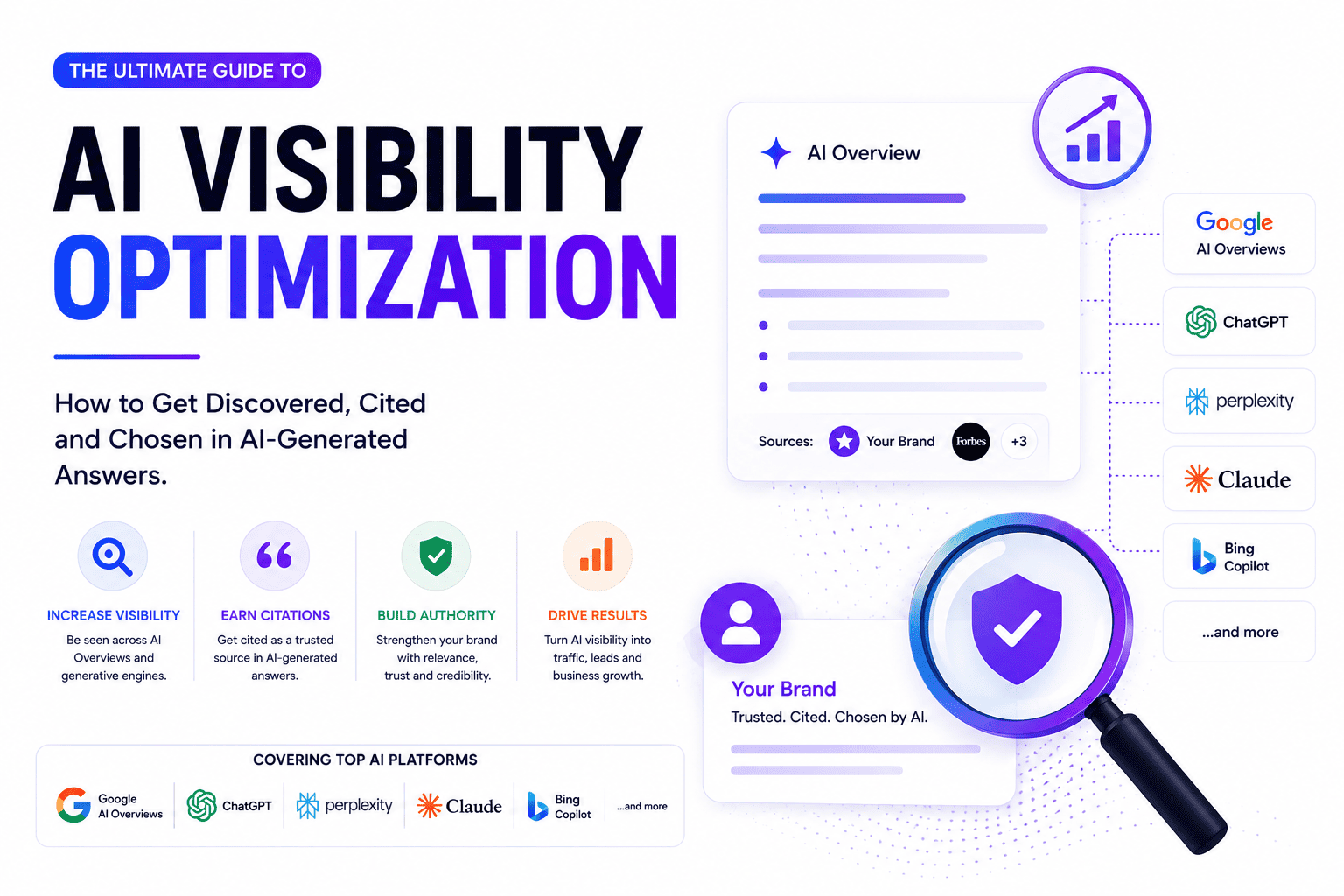
Whether someone uses ChatGPT, Google's AI Overviews, Gemini, Perplexity, Claude, or Microsoft's Copilot, these systems decide which brands, websites, products, and experts deserve to be mentioned.
This shift has created a new challenge for marketers: AI Visibility Optimisation.
Brands that are visible inside AI-generated answers gain trust, traffic, leads, and market share. Brands that aren't visible risk becoming invisible to future customers.
In this guide, you'll learn:
- What AI visibility optimisation is
- How AI systems decide what to surface
- The signals that influence AI recommendations
- How to improve your visibility across AI platforms
- Tools and metrics for measuring success
- Industry benchmarks and best practices for 2026
Featured snippet
What Is AI Visibility Optimisation?
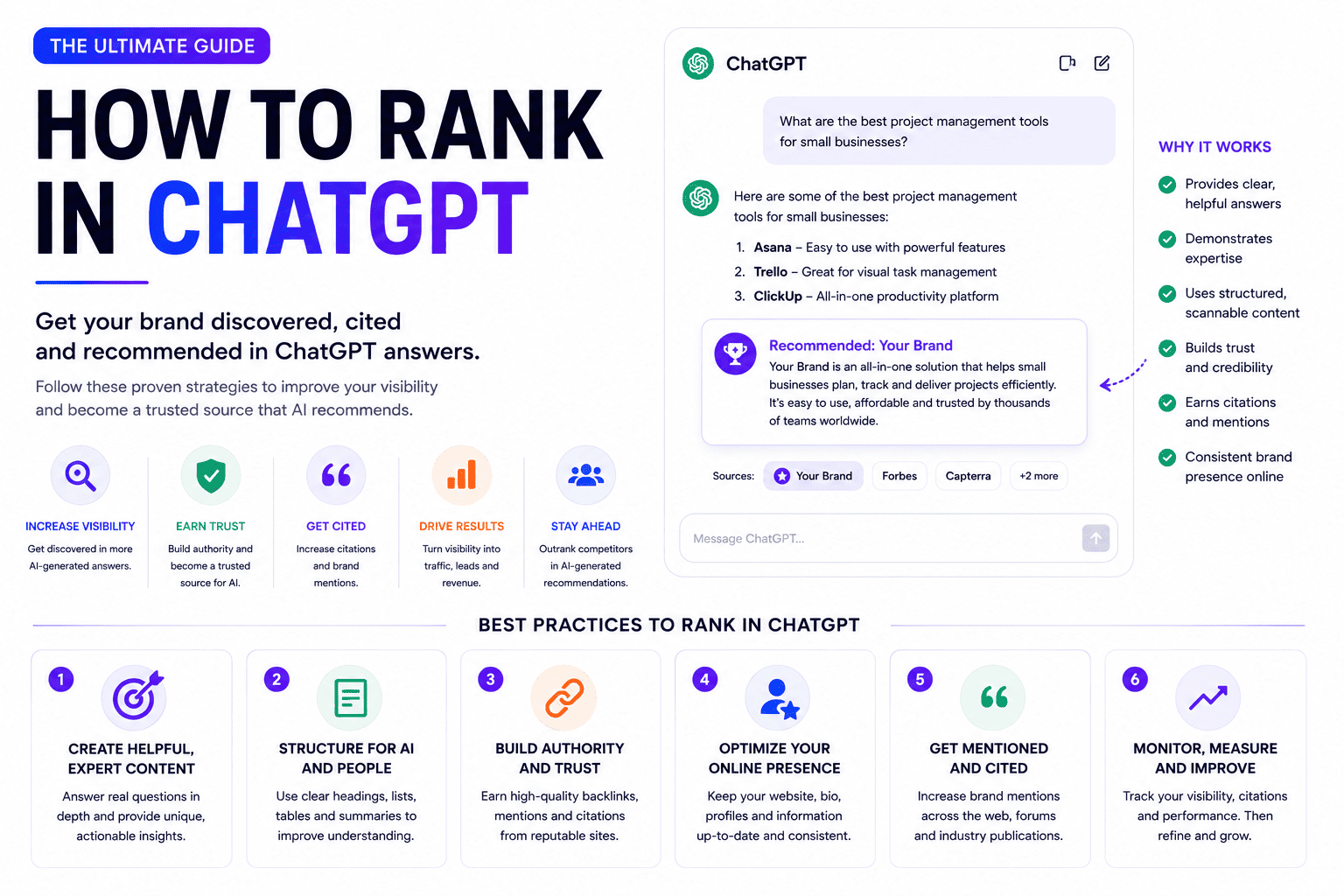
AI Visibility Optimisation (AIVO) is the practice of increasing the likelihood that AI systems mention, cite, recommend, or reference your brand when answering user questions.
While AI visibility focuses on increasing mentions and citations across AI platforms, many marketers also explore Generative Engine Optimisation (GEO) to improve how brands appear within AI-generated search experiences. If you're new to the concept, read our guide on What Is Generative Engine Optimisation (GEO)? to understand how GEO supports broader AI visibility efforts.
Traditional SEO focuses on ranking webpages.
AI Visibility Optimisation focuses on becoming a trusted source for AI-generated answers.
For example:
Traditional Search
User searches:
Best CRM software for startups
Google returns a list of links.
AI Search
User asks:
What's the best CRM software for a startup with under 20 employees?
An AI system may directly recommend several brands.
The question becomes:
Will your brand be one of them?
That's what AI Visibility Optimisation aims to achieve.
Why AI Visibility Matters in 2026
Several industry trends are driving the need for AI visibility.
1. AI Search Adoption Is Growing Rapidly
Millions of users now begin research directly within AI platforms.
Instead of browsing multiple websites, users receive curated answers immediately.
This reduces the number of traditional search clicks available to brands.
2. AI Recommendations Influence Buying Decisions
Consumers increasingly trust AI-generated recommendations for:
- Software
- Healthcare providers
- Financial services
- Agencies
- Consumer products
- Education providers
Being included in AI recommendations can significantly impact conversions.
3. Brand Discovery Is Changing
Historically:
Search → Website → Comparison → Purchase
Now:
Question → AI Answer → Purchase Consideration
Brands must optimise for both pathways.
4. Visibility Creates Authority
When multiple AI systems consistently mention a brand, users perceive that company as an industry leader.
Repeated AI citations build credibility even before a prospect visits your website.
How AI Systems Rank & Surface Content
AI systems don't rank content exactly like traditional search engines.
Instead, they combine multiple trust and relevance signals.
Common factors include:
Relevance
How closely your content matches the user's query.
Questions answered clearly and comprehensively are more likely to be referenced.
Authority
AI models favor sources that demonstrate expertise.
Authority signals include:
- Expert-written content
- Industry recognition
- Research publications
- Original data
- Strong backlink profiles
Brand Mentions
AI systems learn from information distributed across the web.
Brands frequently mentioned by trusted sources tend to gain stronger visibility.
Examples:
- Industry publications
- News sites
- Professional directories
- Community discussions
- Review platforms
Structured Information
AI systems prefer content they can understand easily.
This includes:
- Schema markup
- FAQs
- Clear headings
- Consistent entity information
- Product specifications
Freshness
For many topics, current information matters.
Regularly updated content often receives greater attention from AI retrieval systems.
The Brand Visibility Pyramid
Think of AI visibility as a pyramid.
Level 1: Crawlability
AI systems must be able to access and understand your content.
Requirements:
- Fast website
- Mobile-friendly design
- Clean site structure
- Indexable pages
Level 2: Content Quality
Content must answer user questions effectively.
Focus on:
- Comprehensive coverage
- Expertise
- Accuracy
- Original insights
Level 3: Authority
Your brand must be trusted across the web.
Build:
- Backlinks
- Citations
- Media mentions
- Industry recognition
Level 4: AI Recognition
AI systems begin consistently citing your brand.
Indicators include:
- Mention frequency
- AI citations
- Inclusion in comparisons
- Product recommendations
Level 5: Category Leadership
Your brand becomes a default recommendation within your niche.
This is the ultimate goal of AI Visibility Optimisation.
Signals That Drive AI Visibility
Strong Topical Authority
Building topical authority is one of the core principles behind modern GEO strategies. Brands that publish comprehensive, interconnected content are more likely to be cited by AI systems. Learn more about implementing these tactics in our guide to Generative Engine Optimisation (GEO).
Create deep content clusters around important topics.
Instead of publishing one article about AI visibility, build resources covering:
- GEO
- AI search
- AI citations
- AI rankings
- AI content strategies
- Answer engine optimisation
Comprehensive topic coverage increases perceived expertise.
Consistent Brand Entities
Your business information should remain consistent everywhere.
Include:
- Brand name
- Website URL
- Contact details
- Social profiles
- Company descriptions
Consistency helps AI systems confidently identify your brand.
Original Research
AI systems often reference unique information.
Examples:
- Industry surveys
- Benchmark reports
- Data studies
- Case studies
Original research increases citation opportunities.
Digital PR
Mentions from trusted publications strengthen AI confidence.
Effective channels include:
- Industry websites
- Podcasts
- Interviews
- Guest articles
- News features
Customer Reviews
Reviews contribute to trust signals.
Maintain strong profiles across:
- Google Business Profile
- G2
- Capterra
- Trustpilot
- Industry review sites
Content Strategy for AI Visibility
Create Answer-Focused Content
Many AI responses originate from content that directly answers questions.
Use formats such as:
- How-to guides
- Definitions
- Comparisons
- FAQs
- Checklists
- Industry glossaries
Cover Complete User Journeys
Build content for every funnel stage.
Awareness
- What is AI visibility optimisation?
- Why does AI visibility matter?
Consideration
- Best AI visibility tools
- GEO vs SEO
Decision
- AI visibility agencies
- AI visibility services
- AI visibility audits
Build Content Clusters
Example cluster:
Pillar Page
AI Visibility Optimisation Guide
Supporting Content
- GEO best practices
- AI citation tracking
- AI search ranking factors
- Brand authority building
- AI content optimisation
Clusters strengthen topical authority.
Use Structured FAQs
FAQ sections improve content accessibility for AI systems.
Example:
What is AI visibility optimisation?
AI visibility optimisation helps brands increase their chances of appearing in AI-generated answers and recommendations.
How is AI visibility different from SEO?
SEO focuses on search rankings while AI visibility focuses on citations, recommendations, and presence within AI-generated responses.
Technical Requirements
Technical foundations remain essential.
Schema Markup
Implement:
- Organization Schema
- Article Schema
- FAQ Schema
- Product Schema
- Review Schema
Structured data improves machine understanding.
Fast Performance
Core Web Vitals still matter.
Focus on:
- Fast loading times
- Optimized images
- Reduced JavaScript
- Efficient hosting
Internal Linking
Connect related content logically.
Benefits:
- Better topic understanding
- Stronger authority distribution
- Improved discovery
Indexability
Ensure important pages are:
- Crawlable
- Indexable
- Canonicalized correctly
- Free from technical errors
Monitoring Your AI Visibility
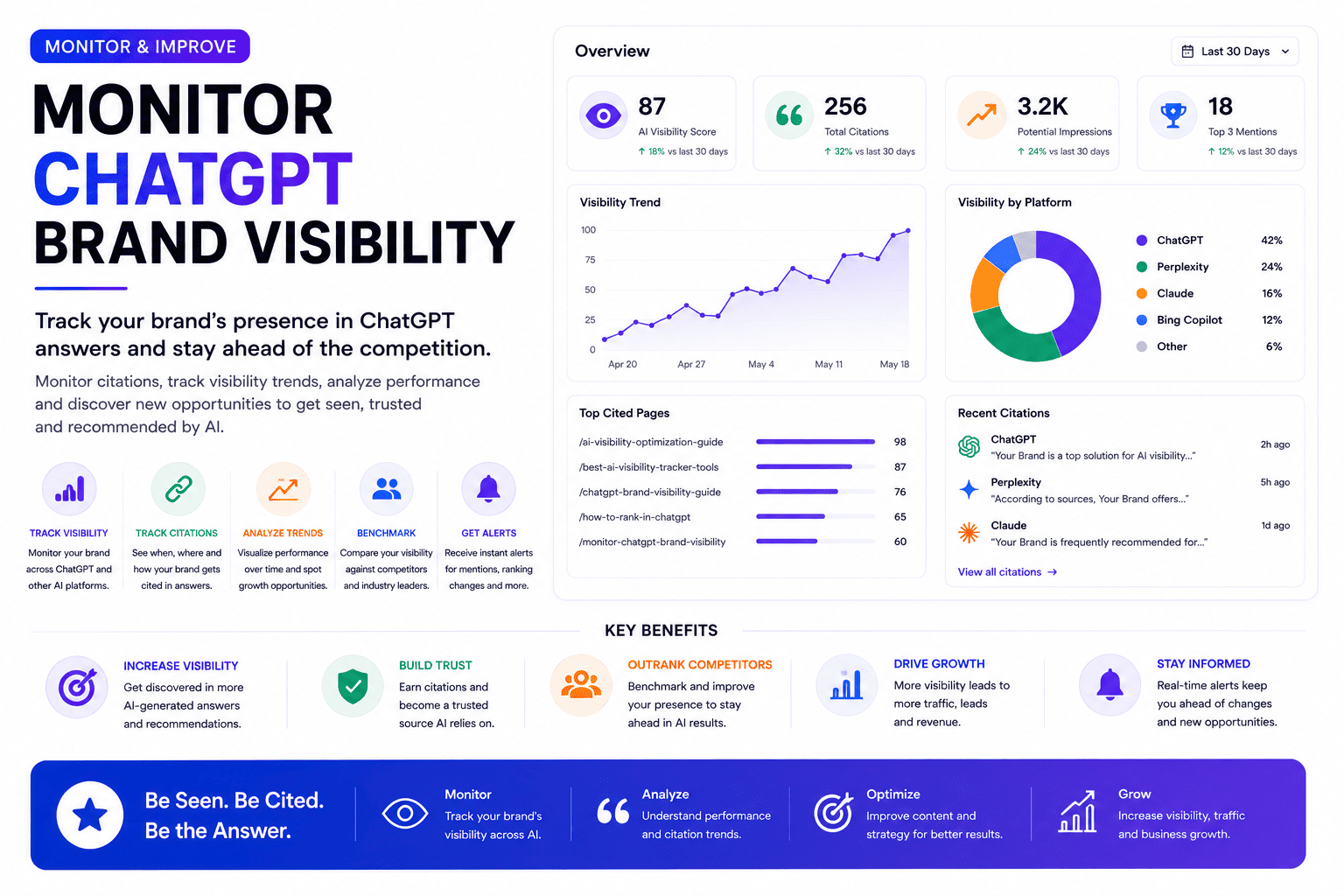
Unlike traditional SEO rankings, AI visibility requires new measurement approaches.
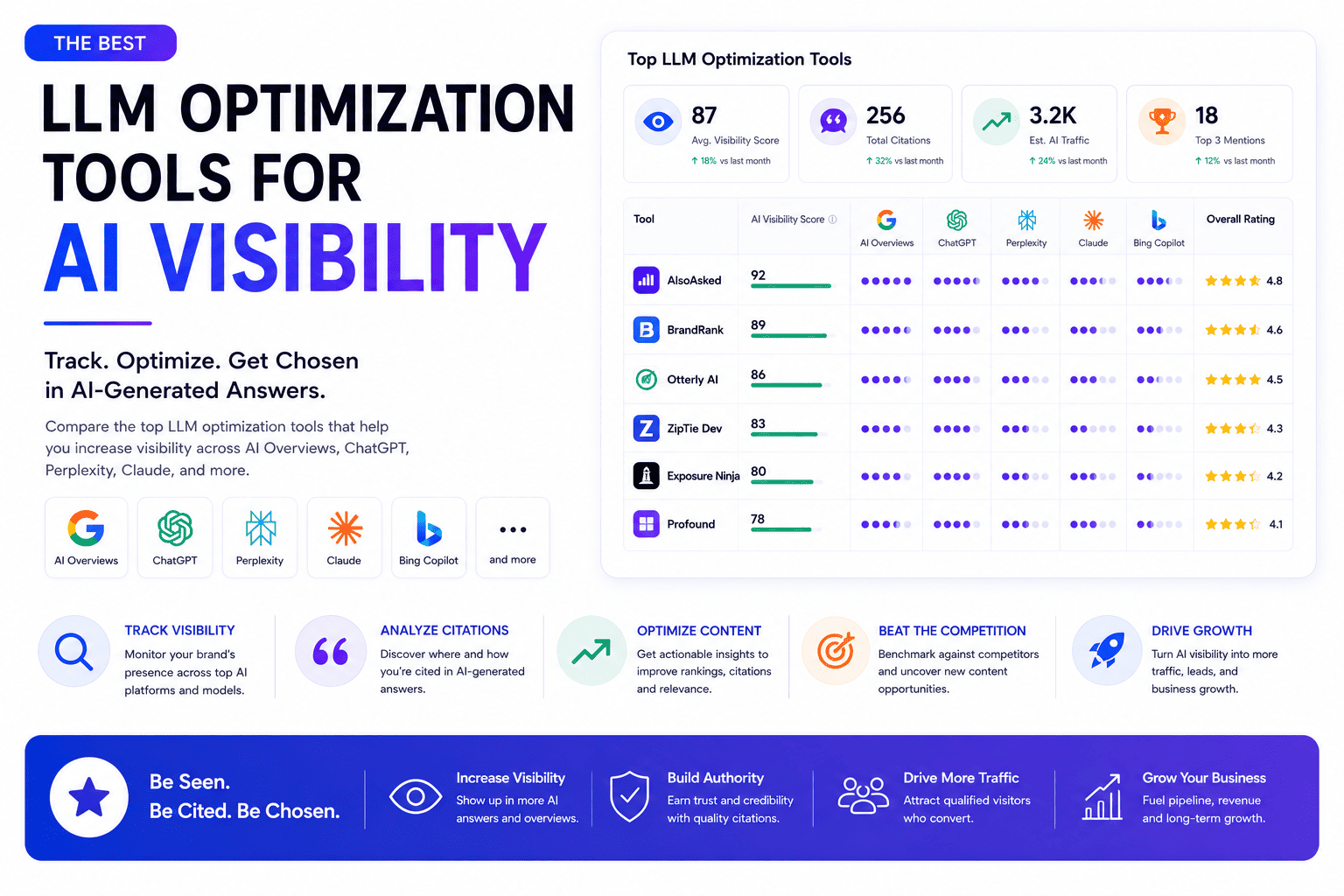
Tracking AI visibility manually can be time-consuming. Many brands use specialised platforms to monitor AI citations, brand mentions, share of voice, and competitive visibility across systems like ChatGPT, Gemini, and Perplexity. Explore our comparison of the best AI visibility optimisation tools to find the right solution for your organisation.
Track:
AI Citation Share
How often your brand appears compared to competitors.
Formula:
AI Citations ÷ Total Industry Citations × 100
Brand Mention Frequency
Monitor mentions across:
- ChatGPT
- Gemini
- Perplexity
- Claude
- AI Overviews
Sentiment Analysis
Understand whether AI systems describe your brand positively, neutrally, or negatively.
Referral Traffic
Measure traffic from AI platforms.
Common sources include:
- ChatGPT referrals
- Perplexity citations
- AI Overviews clicks
Share of Voice
Compare your AI presence against competitors.
Higher share of voice typically correlates with stronger visibility.
Benchmarks by Industry
While benchmarks vary, many industries are beginning to measure AI visibility using share-of-citation metrics.
| Industry |
Strong AI Visibility Share |
| SaaS |
20–30% |
| Healthcare |
15–25% |
| Finance |
15–25% |
| E-commerce |
10–20% |
| Professional Services |
15–30% |
Brands below these ranges often have substantial growth opportunities.
Common AI Visibility Mistakes
Publishing Generic Content
AI systems favor comprehensive, authoritative resources.
Ignoring Brand Mentions
Authority is built beyond your website.
Focusing Only on SEO Rankings
High rankings don't automatically guarantee AI citations.
Inconsistent Entity Information
Conflicting brand data reduces trust.
Neglecting Technical Foundations
AI visibility still depends on crawlable, accessible content.
The Future of AI Visibility
As AI adoption grows, visibility inside AI-generated answers will become as important as traditional search rankings.
Successful brands will focus on:
- Strong topical authority
- Trusted brand signals
- Original research
- Structured content
- Consistent entity optimisation
- AI citation monitoring
Companies that invest early will gain a significant advantage as AI becomes a primary discovery channel.
Frequently Asked Questions
What is AI visibility optimisation?
AI visibility optimisation is the process of improving how often AI systems cite, recommend, and reference your brand within generated answers.
Is AI visibility the same as GEO?
Not exactly.
Generative Engine Optimisation (GEO) is a broader discipline focused on improving visibility within AI search engines. AI visibility optimisation focuses specifically on increasing brand presence and citations.
Can AI visibility replace SEO?
No.
SEO and AI visibility should work together. SEO drives organic traffic while AI visibility increases exposure within AI-generated answers.
How long does AI visibility optimisation take?
Most brands begin seeing measurable improvements within 3–6 months, depending on authority, content quality, and competitive landscape.
Which platforms should I optimise for?
Focus on major AI systems including:
- ChatGPT
- Gemini
- Perplexity
- Claude
- Google AI Overviews
- Microsoft Copilot
Get Your AI Visibility Score
Want to know how visible your brand is across AI platforms?
A professional AI Visibility Audit can identify:
- Current AI citation share
- Competitor visibility gaps
- Brand mention opportunities
- Content weaknesses
- Technical issues affecting AI discoverability
Understanding your AI visibility today is the first step toward becoming tomorrow's AI-recommended brand.


.png)

.png)