Generative Engine Optimisation (GEO) has quickly become one of the most important digital marketing disciplines in the AI era. As users increasingly rely on ChatGPT, Google AI Overviews, Gemini, Claude, Perplexity, and other AI-powered answer engines, businesses must adapt their content strategies to remain visible.
Traditional SEO focuses on earning rankings and clicks from search engine results pages. GEO focuses on helping AI systems understand, trust, reference, and cite your content when generating answers.
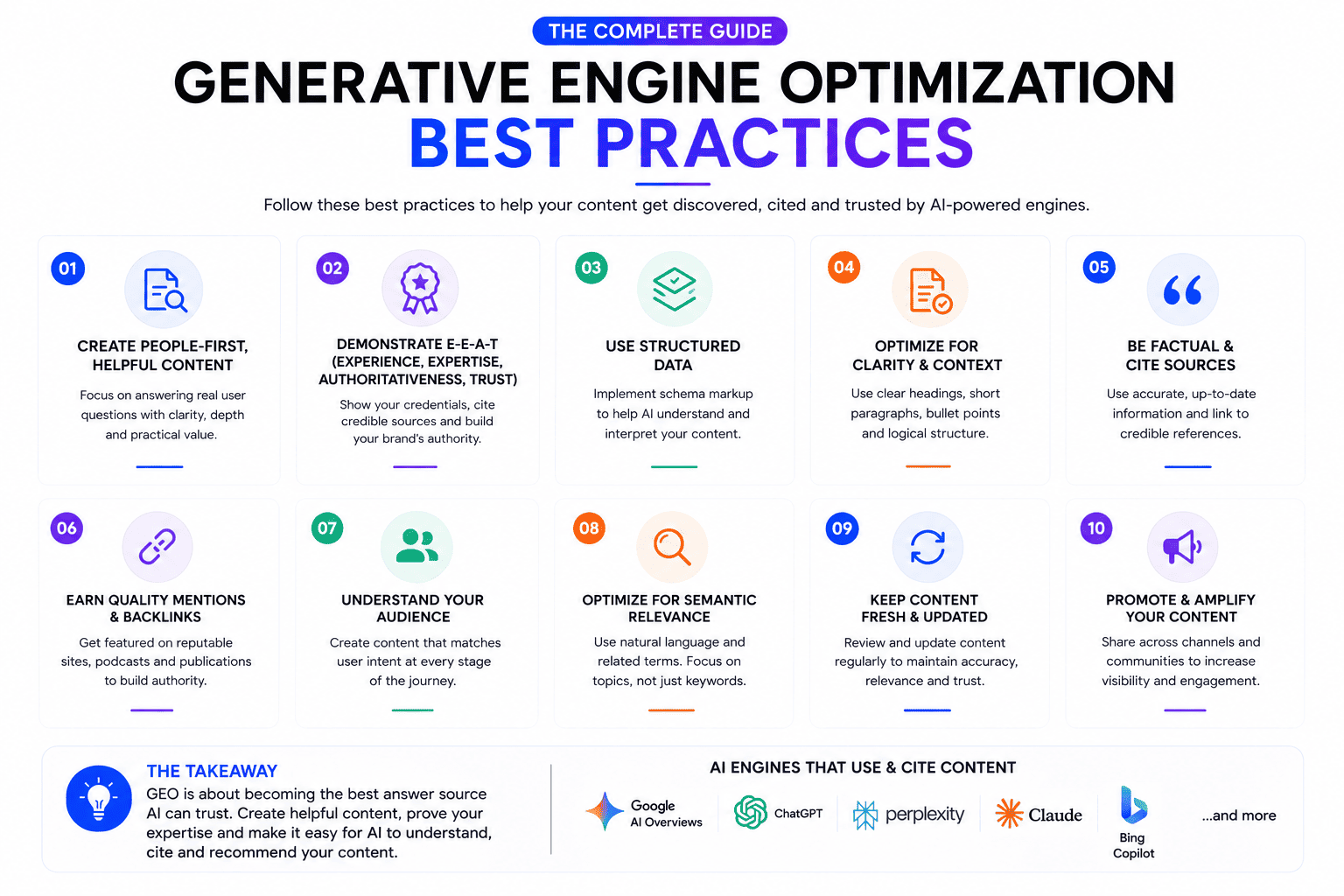
In this guide, we'll explore the most effective generative engine optimization best practices for 2026, covering content creation, technical implementation, entity optimization, measurement frameworks, and common mistakes to avoid.
Featured snippet
What Makes a Best Practice in GEO?
A GEO best practice is any strategy that improves the likelihood of your brand, website, content, or expertise being referenced by AI-powered search and answer engines.
Unlike traditional search engines that rank pages, AI systems synthesize information from multiple sources. This means success depends on more than rankings alone.
The strongest GEO strategies help AI systems:
- Understand your content clearly
- Recognize your brand as a trusted entity
- Verify information across multiple sources
- Extract answers efficiently
- Associate your business with specific topics
The organizations gaining visibility in AI-generated answers are those creating authoritative, structured, trustworthy, and entity-rich content.
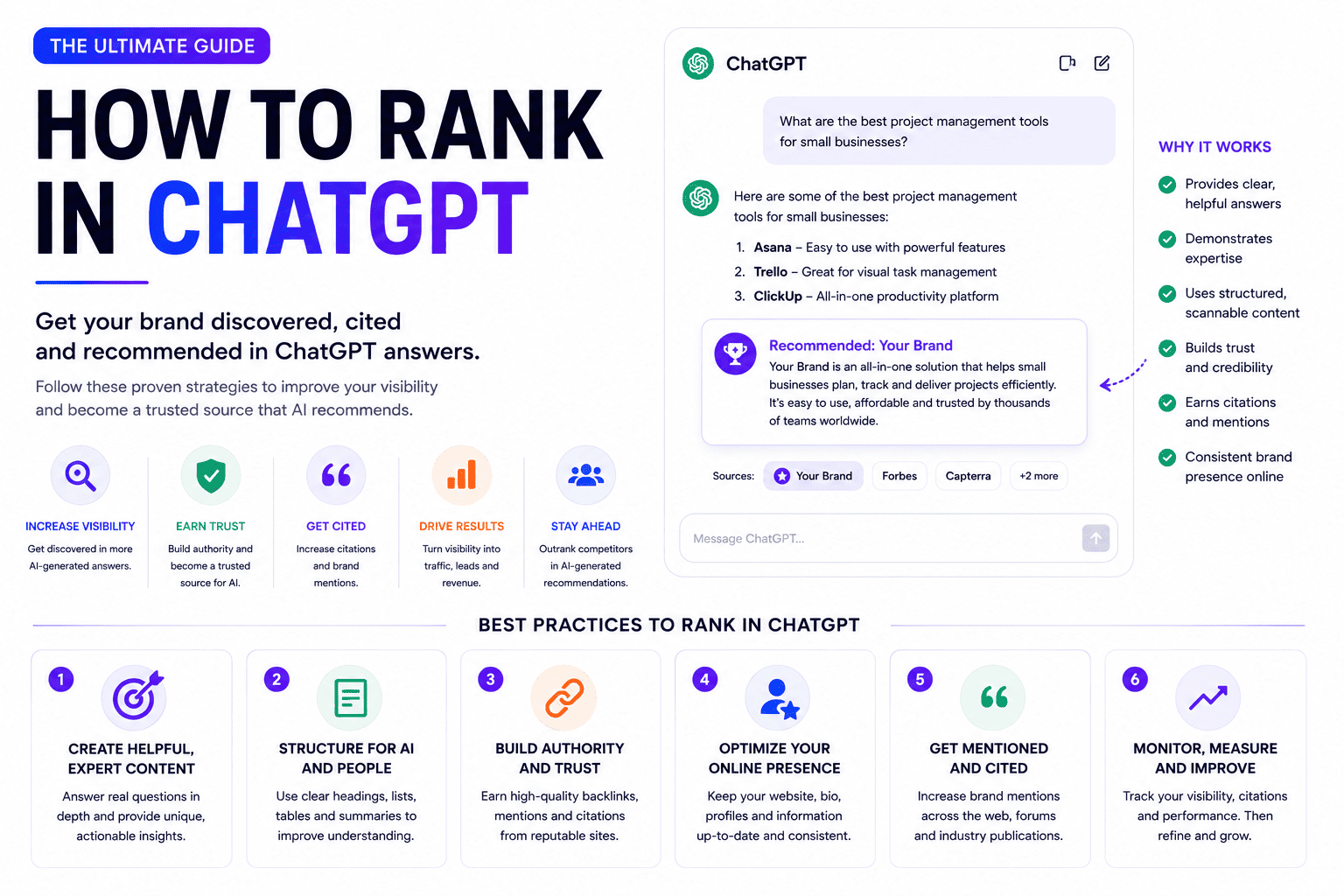
These principles form the foundation of effective GEO execution. For a tactical breakdown of implementation methods, explore these 7 Generative Engine Optimisation strategies that drive AI visibility.
Content Best Practices for GEO
1. Create Comprehensive Topic Coverage
AI systems prefer content that thoroughly answers a topic rather than pages targeting a single keyword.
Instead of publishing:
- What Is GEO?
- GEO Benefits
- GEO Examples
- GEO Tools
As isolated articles, create a complete topical cluster that demonstrates expertise across the subject.
Comprehensive topic coverage helps AI engines identify your site as an authoritative resource.
Best Practices
- Build content hubs around major topics
- Cover beginner and advanced questions
- Include definitions, examples, frameworks, and case studies
- Update content regularly
2. Answer Questions Directly
AI models extract concise answers from content.
Pages that immediately answer a question often have a higher chance of being cited.
For example:
Poor Example
"GEO has become increasingly important in today's evolving digital ecosystem..."
Better Example
"Generative Engine Optimisation (GEO) is the practice of improving content visibility within AI-generated answers by helping answer engines understand, trust, and reference your content."
The second example is significantly easier for AI systems to extract.
Best Practices
- Use direct definitions
- Place answers near the top of pages
- Use concise summaries before deeper explanations
- Include FAQ sections
3. Focus on Semantic Relevance Instead of Keywords
Traditional SEO often emphasizes keyword placement.
GEO prioritizes context and meaning.
AI systems understand relationships between concepts, entities, and topics.
For example, an article about GEO should naturally reference:
- AI search
- Answer engines
- AI Overviews
- Entity optimization
- Structured data
- Citations
- Knowledge graphs
This creates a richer semantic profile.
Best Practices
- Write naturally
- Use related concepts
- Cover subtopics comprehensively
- Avoid keyword stuffing
4. Structure Content for AI Extraction
Content that is easy to scan is easier for AI systems to process.
Recommended Structure
- H1 headline
- Clear H2 sections
- Short paragraphs
- Bullet points
- Numbered lists
- Tables
- FAQs
Well-structured content improves extraction and summarization accuracy.
5. Demonstrate Real Expertise
Many AI-generated articles lack original insights.
AI systems increasingly prioritize content demonstrating genuine expertise.
Include:
- Original research
- Industry experience
- Case studies
- Data analysis
- Expert commentary
Unique information gives AI engines a reason to reference your content over generic competitors.
Technical Best Practices for GEO
6. Implement Structured Data
Structured data helps search engines and AI systems understand page context.
Important schema types include:
- Organization
- Article
- FAQ
- Person
- LocalBusiness
- Product
- Review
- Breadcrumb
Schema provides explicit information about content and entities.
Best Practices
- Validate schema regularly
- Use JSON-LD format
- Maintain consistency across pages
7. Optimize Crawlability
AI systems rely heavily on accessible content.
If pages cannot be crawled or indexed efficiently, they are unlikely to appear in AI-generated answers.
Best Practices
- Maintain clean site architecture
- Fix broken links
- Optimize XML sitemaps
- Avoid excessive JavaScript rendering
- Ensure mobile accessibility
8. Improve Page Speed and User Experience
Fast websites are easier to crawl and typically provide stronger user signals.
Focus Areas
- Core Web Vitals
- Mobile performance
- Image optimization
- Lazy loading
- CDN implementation
A strong technical foundation supports both SEO and GEO performance.
9. Keep Content Fresh
AI systems increasingly prioritize current information.
Outdated content may lose visibility even if it was previously authoritative.
Best Practices
- Update statistics
- Refresh examples
- Revise screenshots
- Expand coverage
- Add recent industry developments
Freshness signals improve trust and relevance.
Entity and Brand Signal Best Practices
10. Build a Strong Brand Entity
One of the most important GEO strategies is becoming a recognizable entity.
AI systems don't just understand websites.
They understand:
- Brands
- People
- Products
- Organizations
- Locations
The more clearly your brand exists across the web, the easier it becomes for AI systems to reference it.
Best Practices
Maintain consistent:
- Company name
- Description
- Logo
- Social profiles
- Contact information
Across all platforms.
11. Strengthen Author Expertise Signals
AI systems increasingly evaluate who created content.
Strong author signals improve trust.
Include
- Author bios
- Credentials
- Experience
- Professional profiles
- Published research
Expert attribution strengthens content authority.
12. Earn Third-Party Mentions
AI models validate information through multiple sources.
Brands mentioned by reputable websites gain stronger authority signals.
Valuable Sources
- Industry publications
- News sites
- Podcasts
- Research reports
- Professional directories
Independent validation significantly improves AI trust.
13. Build Topical Authority
Publishing one GEO article won't establish expertise.
Authority comes from sustained topic coverage.
Example GEO Cluster
- What Is GEO?
- GEO vs SEO
- GEO Best Practices
- GEO Tools
- GEO Metrics
- GEO Case Studies
- GEO Strategy Frameworks
Topical depth helps AI engines identify your site as a trusted source.
Measurement Best Practices
How to Measure the Success of Generative Engine Optimization Campaigns
Unlike SEO, GEO success isn't measured solely by rankings.
You need broader visibility metrics.
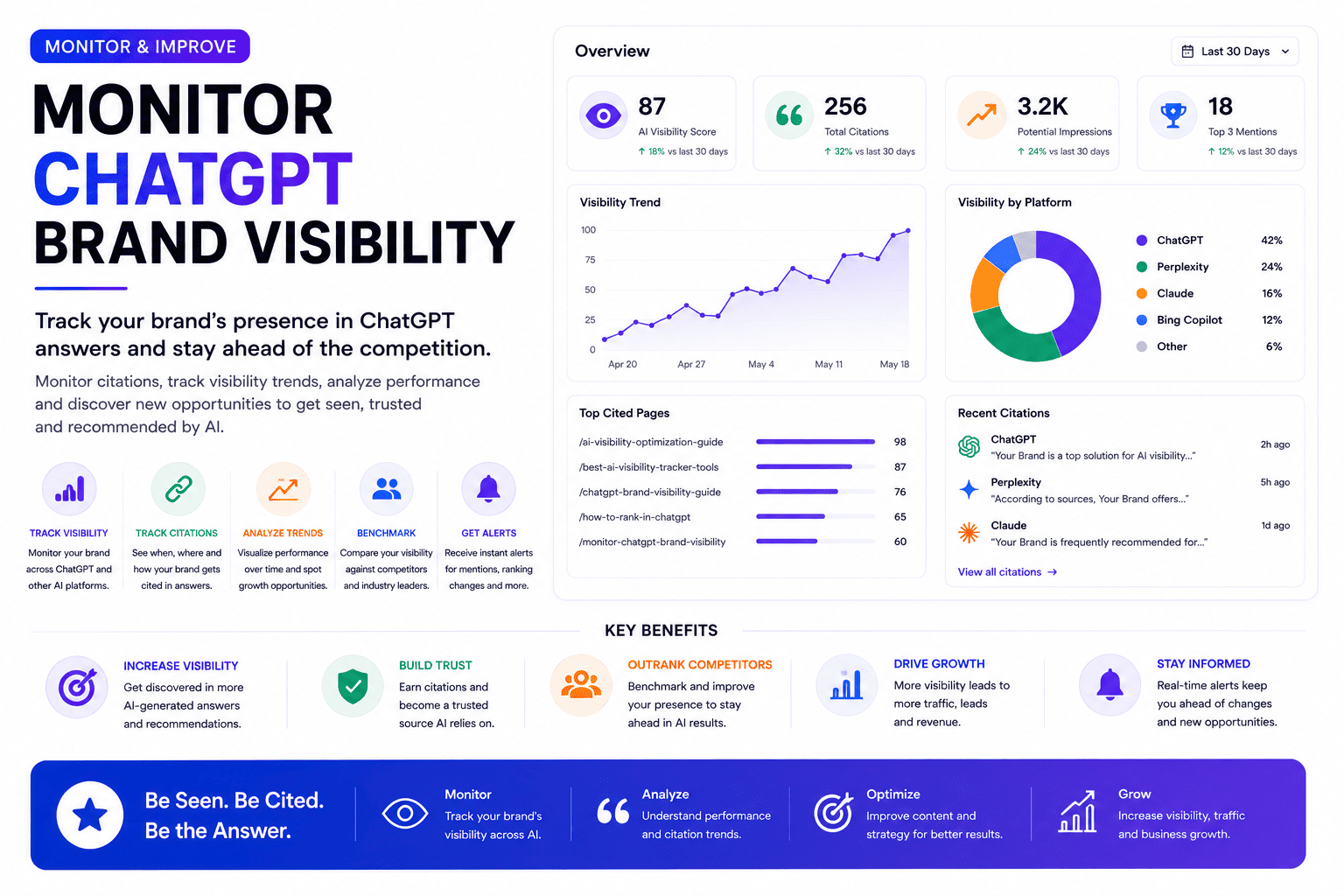
Key GEO Metrics
AI Citation Frequency
How often AI platforms reference your content.
Brand Mentions
How often your company appears in AI-generated responses.
AI Referral Traffic
Visits originating from AI platforms.
AI Overview Visibility
Appearances within Google AI Overviews.
Entity Recognition
How consistently AI systems understand your brand.
Branded Search Growth
Increasing searches for your company or products.
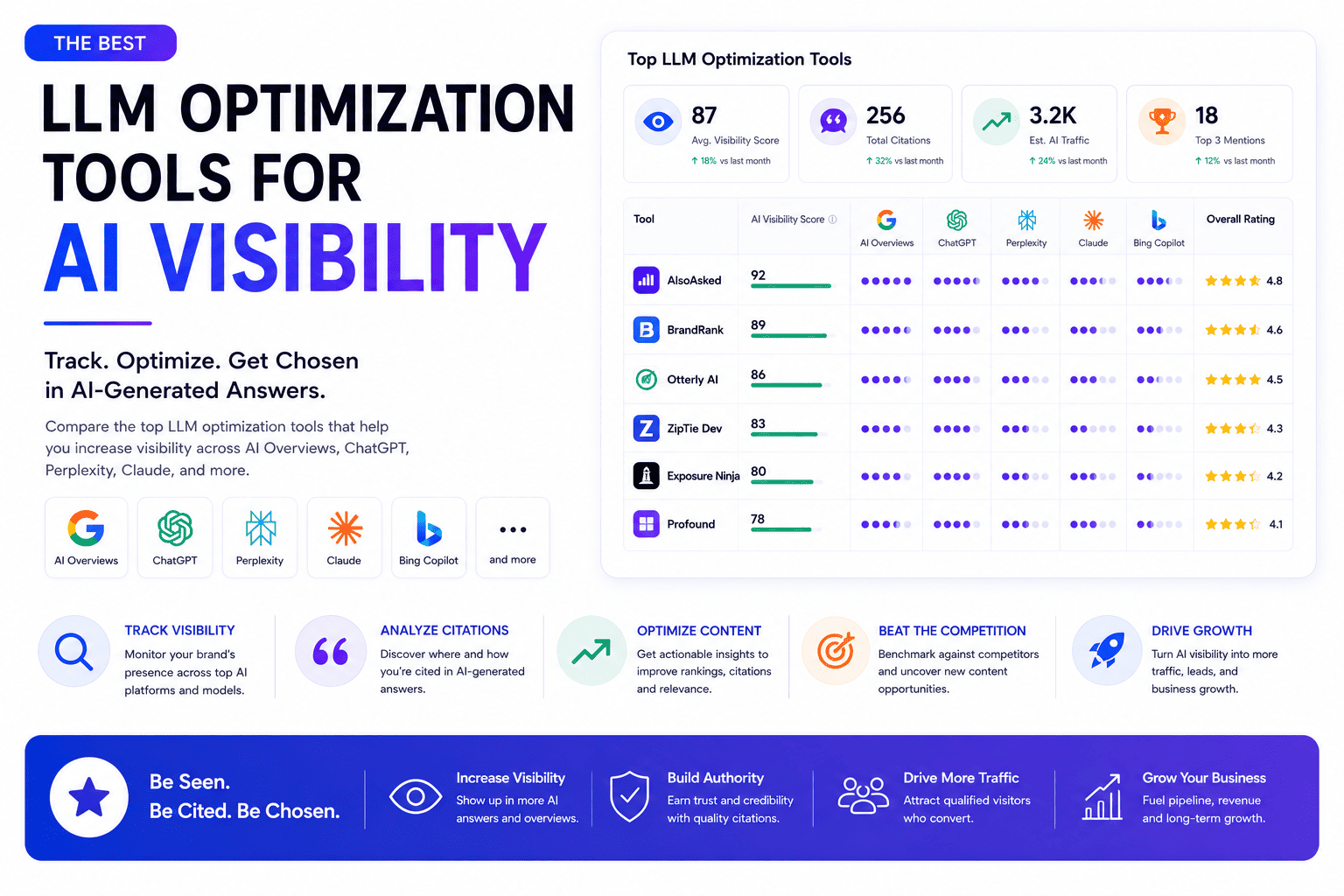
Compare Top Generative Engine Optimization Platforms for AI Search Visibility
Several tools now help marketers track GEO performance.
Profound
Focused on AI visibility tracking and brand mentions.
Peec AI
Provides AI search monitoring and citation tracking.
Scrunch AI
Tracks AI answer visibility and competitor presence.
Semrush
Expanding AI visibility reporting alongside traditional SEO metrics.
Ahrefs
Provides entity and authority insights that support GEO initiatives.
The best platform depends on your reporting needs, market size, and GEO maturity.
Common GEO Mistakes
Publishing Thin AI-Generated Content
Large volumes of low-value content rarely create lasting AI visibility.
Quality consistently outperforms quantity.
Ignoring Entity Optimization
Many organizations focus only on content while neglecting brand authority.
Entity signals often determine whether AI systems trust and cite your business.
Over-Focusing on Keywords
Keyword optimization alone is insufficient.
AI systems evaluate context, relationships, and expertise.
Neglecting Technical Foundations
Poor site performance can limit visibility regardless of content quality.
SEO fundamentals still matter.
Failing to Update Content
AI engines increasingly reward freshness.
Old content eventually loses relevance.
GEO Best Practices Checklist for 2026
Before publishing content, ensure you can answer yes to the following:
Content
- Comprehensive topic coverage
- Direct answers
- Strong semantic relevance
- Clear content structure
- Original expertise included
Technical
- Schema markup implemented
- Fast page speed
- Mobile-friendly design
- Crawlable architecture
- Updated content
Authority
- Strong brand entity
- Expert author profiles
- Third-party mentions
- Consistent business information
Measurement
- AI citation tracking
- AI Overview monitoring
- Brand mention analysis
- Referral traffic reporting
Frequently Asked Questions
What are the most important generative engine optimization best practices?
Creating authoritative content, implementing structured data, building strong entity signals, earning third-party mentions, and tracking AI citations are among the most important GEO practices.
How is GEO different from SEO?
SEO focuses on improving rankings in search engines, while GEO focuses on increasing visibility and citations within AI-generated answers.
How do AI systems choose sources to cite?
AI systems evaluate content quality, authority, relevance, entity signals, trustworthiness, and corroboration across multiple sources.
How do you measure GEO success?
Track AI citations, AI Overview appearances, brand mentions, referral traffic, entity recognition, and branded search growth.
What are the best GEO tools in 2026?
Popular GEO tools include Profound, Peec AI, Scrunch AI, Semrush, and Ahrefs.
Can small businesses benefit from GEO?
Yes. Small businesses can gain significant visibility by creating expert content, strengthening entity signals, and building authority within niche topics.
If you're implementing these recommendations across multiple pages, use our AI search content optimisation checklist to ensure every GEO requirement is covered before publication.
Final Thoughts
Generative Engine Optimisation is no longer an experimental discipline. In 2026, it has become a critical component of digital visibility.
Organizations that combine high-quality content, strong technical foundations, clear entity signals, and ongoing measurement are best positioned to earn visibility across AI-powered search platforms.
The future of search is increasingly answer-driven. Businesses that optimize for AI understanding, trust, and citation today will gain a significant competitive advantage as generative search continues to evolve.


.png)

.png)