As Generative Engine Optimisation (GEO) becomes a core component of digital marketing, businesses are investing significant resources into improving their visibility within AI-powered search platforms such as ChatGPT, Google AI Overviews, Gemini, Claude, Perplexity, and Microsoft Copilot.
But unlike traditional SEO, where rankings and organic traffic are the primary indicators of success, GEO requires a completely different measurement framework.
A page can generate thousands of AI citations and influence buying decisions without ever appearing in the top organic search results. Likewise, a brand can gain substantial exposure through AI-generated answers even when website traffic remains relatively flat.
This shift raises an important question:
How do you measure the success of a Generative Engine Optimisation campaign?
If you're new to GEO, start with our What Is Generative Engine Optimisation (GEO)? guide to understand how AI search works and what success looks like before building a measurement framework.
In this guide, we'll explore the key GEO metrics, reporting frameworks, tools, and attribution models that modern marketers should use in 2026.
Featured snippet
What is the most important GEO KPI?
AI citation frequency is generally considered the most important KPI because it directly measures how often AI systems use your content when generating answers.
Why GEO Measurement Is Different From Traditional SEO
Traditional SEO focuses on:
- Keyword rankings
- Organic traffic
- Click-through rate (CTR)
- Backlinks
- Conversions from search
GEO focuses on a broader goal:
Ensuring AI systems choose your content, brand, and expertise when generating answers.
This means success isn't solely about clicks.
Instead, GEO campaigns measure:
- AI citations
- Brand mentions in AI responses
- Share of AI voice
- Entity visibility
- AI-assisted conversions
- Authority signals across knowledge sources
The challenge is that AI search journeys often occur without a click, making traditional analytics insufficient.
The Core GEO KPIs You Should Track
Successful GEO measurement starts with tracking the right performance indicators.
Before setting GEO KPIs, it's important to understand the broader concept of AI visibility optimisation, which explains how brands become discoverable across ChatGPT, Google AI Overviews, Gemini, Claude, and other AI platforms.
1. AI Citation Frequency
One of the most important GEO metrics is:
How often AI systems cite your content.
Track:
- Number of citations per month
- Citation growth trend
- Citations by platform
- Citations by topic cluster
Example:
| Month |
AI Citations |
| January |
120 |
| February |
178 |
| March |
255 |
| April |
344 |
Increasing citations usually indicate stronger AI visibility.
2. Brand Mention Volume
AI engines frequently mention brands without directly linking to them.
Monitor:
- Brand name mentions
- Product mentions
- Executive mentions
- Company expertise references
Questions to track:
- Is ChatGPT mentioning your company?
- Is Google AI Overview recommending your brand?
- Does Perplexity reference your content?
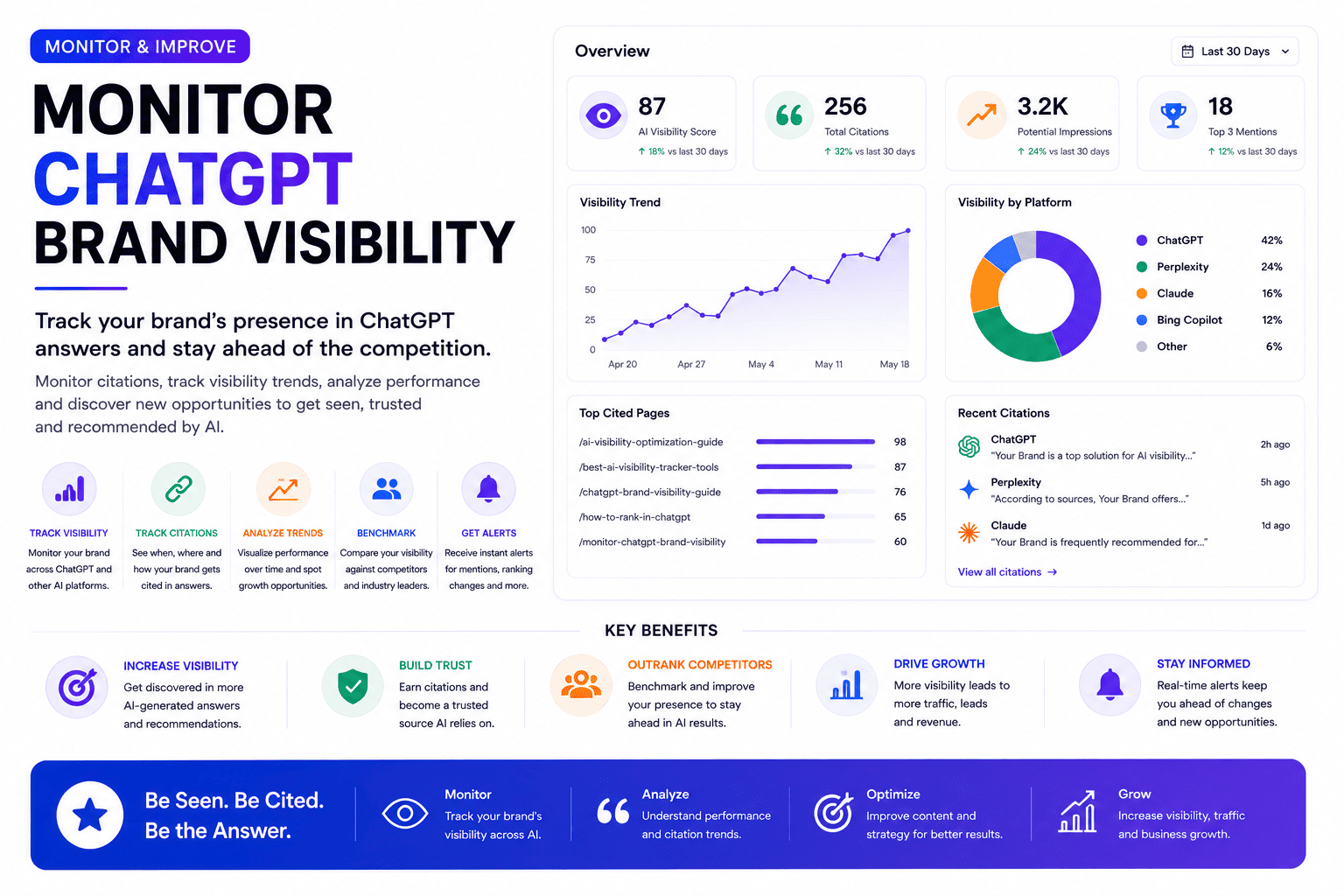
A rise in AI-generated brand mentions often signals GEO growth.
3. Share of AI Voice (SAIV)
Think of Share of AI Voice as the GEO equivalent of Share of Search.
Measure:
- Percentage of AI answers mentioning your brand
- Visibility compared to competitors
- Topic ownership within your industry
Example:
| Brand |
AI Visibility Share |
| Brand A |
38% |
| Brand B |
24% |
| Brand C |
18% |
| Your Brand |
20% |
The goal is to increase your share over time.
4. AI Search Visibility Score
Many GEO platforms calculate an aggregate visibility score.
This may include:
- Citations
- Mentions
- Entity recognition
- Topic authority
- Coverage across AI systems
A visibility score provides a quick executive-level KPI.
5. Entity Recognition Growth
Modern AI systems rely heavily on entities rather than keywords.
Track:
- Brand entity recognition
- Product entity recognition
- Executive entities
- Industry expertise entities
Questions:
- Does AI associate your brand with your target topic?
- Are you becoming the default authority for important industry concepts?
Entity growth is often one of the strongest GEO indicators.
AI Citation Tracking: The Most Important GEO Metric
Many marketers consider citation tracking the single most valuable GEO measurement.
Citation growth is often the direct result of implementing proven generative engine optimisation strategies that increase the likelihood of AI systems selecting and referencing your content.
Track:
Citation Sources
- ChatGPT
- Google AI Overviews
- Gemini
- Claude
- Perplexity
- Copilot
Citation Categories
- Educational content
- Product content
- Comparison content
- Research reports
- Industry guides
Citation Quality
Not all citations are equal.
Measure:
- Position within answer
- Citation prominence
- Frequency of appearance
- Context relevance
A citation appearing as the primary source carries more weight than a passing mention.
Monitoring Brand Mentions Across AI Platforms
Many AI-generated responses do not include clickable citations.
Therefore, mention tracking becomes essential.
Monitor:
Direct Mentions
Examples:
- "According to Revonix..."
- "Revonix recommends..."
Indirect Mentions
Examples:
- Product references
- Service references
- Framework references
Competitive Comparison Mentions
Track when AI includes your brand alongside competitors.
This often influences buyer decisions.
Measuring GEO Impact on Website Traffic
Although GEO isn't solely traffic-focused, website visits remain important.
Monitor:
Branded Search Growth
Watch increases in:
- Brand-name searches
- Product searches
- Executive searches
AI exposure often leads users to search directly for your company later.
Direct Traffic Growth
Many users:
- Discover your brand in AI responses
- Visit directly later
Track:
- Direct traffic
- Returning visitors
- Brand recall traffic
Referral Traffic From AI Platforms
Some platforms send measurable referrals.
Monitor traffic from:
- ChatGPT
- Perplexity
- Gemini
- Copilot
- AI Overview interactions
Referral growth may indicate increasing AI visibility.
Conversion Attribution for GEO Campaigns
Attribution is one of the biggest GEO challenges.
Many conversions happen after multiple AI interactions.
Instead of relying solely on last-click attribution, use:
Assisted Conversion Tracking
Measure:
- AI-assisted journeys
- Multi-touch conversions
- Brand discovery interactions
Example:
ChatGPT → Brand Search → Website Visit → Demo Request
Traditional analytics may only credit the brand search.
GEO reporting should credit the AI interaction as well.
Branded Conversion Growth
Track:
- Demo requests
- Contact forms
- Sales calls
- Free trial signups
Then correlate growth with:
- AI citation increases
- Brand mention increases
Strong correlations often indicate GEO success.
Essential GEO Reporting Metrics Dashboard
A GEO dashboard should include:
Visibility Metrics
- AI citations
- Brand mentions
- Share of AI voice
- Entity visibility score
Traffic Metrics
- Direct traffic
- Branded traffic
- AI referral traffic
Conversion Metrics
- Leads
- Assisted conversions
- Revenue influence
- Pipeline impact
Competitive Metrics
- Competitor citations
- Competitor mentions
- AI visibility share
This creates a complete GEO performance picture.
Recommended GEO Measurement Tools
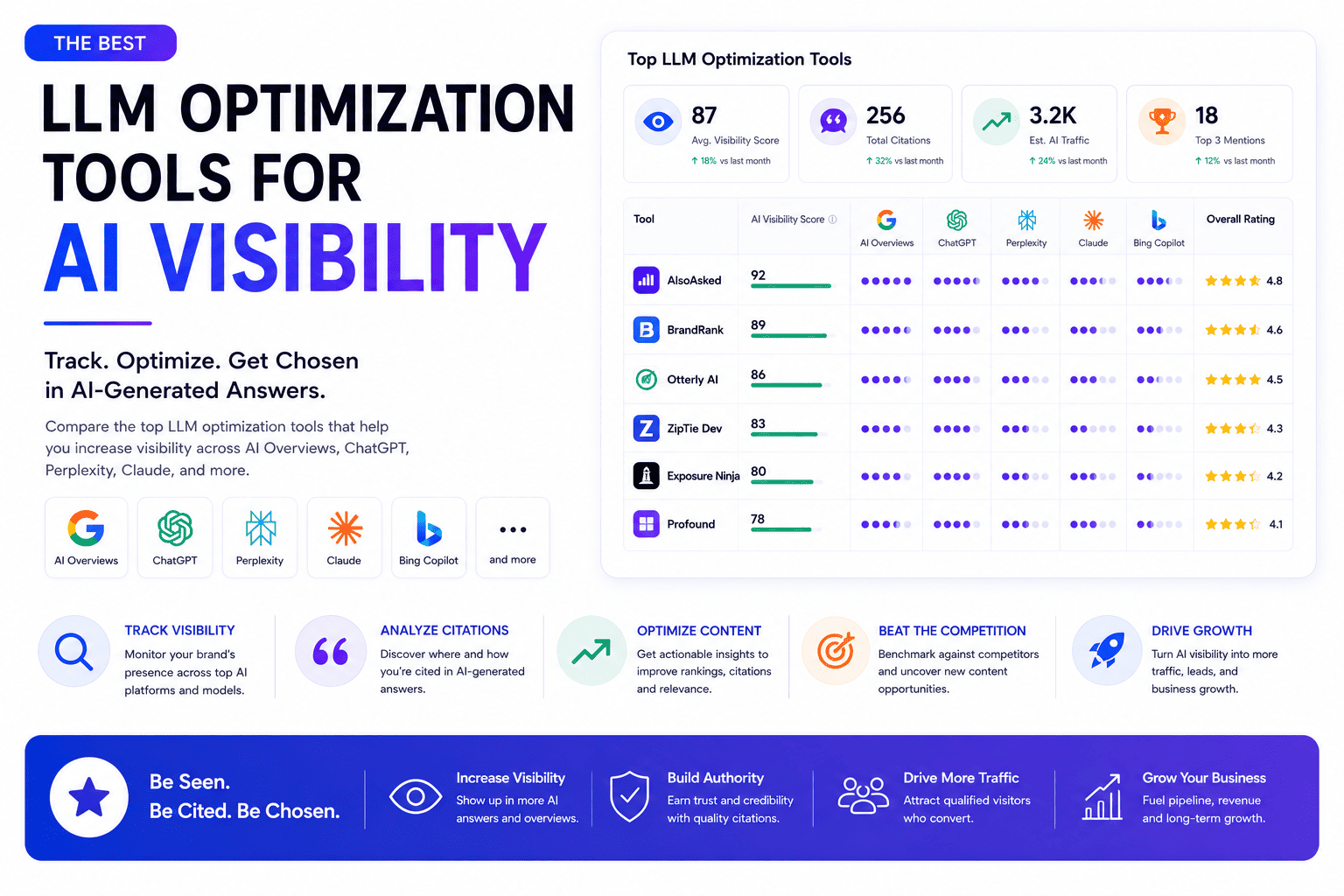
Several platforms now specialize in AI visibility tracking.
Popular categories include:
AI Visibility Platforms
Track:
- AI citations
- Brand mentions
- Share of voice
Entity Monitoring Tools
Track:
- Knowledge graph growth
- Entity associations
- Topic authority
Analytics Platforms
Use:
- GA4
- Search Console
- CRM attribution tools
Brand Monitoring Platforms
Track:
- Mentions across AI-generated content
- Competitive visibility
- Reputation trends
The best approach combines GEO-specific tools with traditional analytics platforms.
Building a Monthly GEO Report
An effective monthly GEO report should answer:
Visibility
- How often were we cited?
- How many AI mentions did we receive?
Authority
- Which entities gained visibility?
- Which topics showed growth?
Competitive Position
- Did our share of AI voice increase?
Business Impact
- Did branded traffic grow?
- Did leads increase?
- Did AI-assisted conversions rise?
This framework helps executives understand GEO performance beyond simple rankings.
Common GEO Measurement Mistakes
Avoid these errors:
Measuring Only Traffic
AI visibility often creates influence without clicks.
Ignoring Brand Mentions
Mentions frequently matter as much as citations.
Using SEO KPIs Alone
Following established Generative Engine Optimisation best practices can help marketers avoid relying solely on traditional SEO metrics and build a more accurate GEO reporting framework.
Rankings are only one piece of the picture.
No Competitive Benchmarking
Without competitor comparison, visibility metrics lack context.
Failing to Track Entities
Entity authority increasingly drives AI inclusion.
The Future of GEO Analytics
By 2026 and beyond, GEO measurement will become more sophisticated.
Expect increased focus on:
- AI visibility indices
- Citation authority scores
- Entity reputation metrics
- AI-assisted revenue attribution
- Share of AI voice benchmarking
Organizations that build GEO measurement frameworks today will gain a significant advantage as AI-driven discovery continues to grow.
Frequently Asked Questions
Can GEO success be measured through traffic alone?
No. Many AI interactions occur without clicks, making citations, mentions, and share of AI voice equally important metrics.
How often should GEO campaigns be reported?
Most organizations report GEO performance monthly, while enterprise brands often monitor visibility weekly.
What is Share of AI Voice?
Share of AI Voice measures how frequently your brand appears in AI-generated answers compared to competitors.
Does GEO improve conversions?
Yes. Increased AI visibility often improves brand awareness, trust, and assisted conversions throughout the buyer journey.
Conclusion
Measuring the success of a Generative Engine Optimisation campaign requires a fundamentally different mindset from traditional SEO.
Instead of focusing solely on rankings and traffic, GEO success is measured through:
- AI citations
- Brand mentions
- Share of AI voice
- Entity visibility
- AI-assisted conversions
- Business impact
The companies that thrive in AI search will be those that track visibility where users increasingly discover information: inside AI-generated answers.
As AI search adoption accelerates, building a reliable GEO reporting framework is no longer optional—it's essential for understanding your true digital visibility.

.png)

.png)

.png)