The Rise of AI Overviews
Search engines have evolved significantly over the past decade.
Traditional search displayed a list of blue links, requiring users to visit websites to find answers. Today's search experience is increasingly powered by artificial intelligence.
Google's AI Overviews analyze multiple sources across the web and generate summarized answers directly within search results. Instead of presenting ten links and letting users decide, the search engine often delivers a complete response immediately.
This shift is transforming how users discover information and how businesses earn visibility online.
What Are AI Overviews?
AI Overviews are AI-generated summaries that appear at the top of certain search results.
When a user searches for a question, problem, or topic, Google's AI systems may:
- Analyze multiple webpages
- Extract relevant information
- Combine insights from various sources
- Generate a conversational answer
- Display cited sources supporting the response
Rather than relying on a single webpage, AI Overviews synthesize information from multiple trusted sources.
For users, this creates a faster search experience.
For marketers, it introduces a new visibility opportunity - and a new challenge.
How AI Overviews Are Generated
Understanding how AI Overviews work is critical for effective optimization.
The process generally includes:
1. Query Understanding
Google first analyzes user intent.
The AI attempts to understand:
- What information is being requested
- Whether a summarized answer would be useful
- Which topics require expertise
- What context is needed
2. Source Selection
The system identifies content that appears:
- Accurate
- Relevant
- Authoritative
- Up to date
- Well-structured
Sources may include:
- Industry websites
- Government resources
- Research publications
- News organizations
- Expert blogs
3. Information Synthesis
The AI extracts relevant facts and combines information from multiple sources into a unified response.
4. Citation Generation
Supporting websites are often cited within the AI Overview, allowing users to explore the original sources.
This citation layer is where AI Overview SEO becomes valuable.
Why AI Overviews Matter for SEO
AI Overviews are changing how visibility works in search.
Previously, success largely depended on:
- Keyword rankings
- Organic traffic
- Click-through rates
Today, visibility can occur even when users never click a result.
Businesses must now consider:
- Citation visibility
- Brand mentions
- Entity recognition
- AI trust signals
- Presence in generated answers
Being cited within an AI Overview can place your brand above traditional rankings.
In many cases, a website ranking fifth organically may still appear prominently inside an AI-generated answer.
How AI Overview SEO Differs From Traditional SEO
| Traditional SEO |
AI Overview SEO |
| Focus on rankings |
Focus on citations |
| Keyword optimization |
Entity optimization |
| Backlinks as primary signal |
Authority and trust signals |
| Blue-link visibility |
AI-generated visibility |
| Search result clicks |
Answer inclusion |
| SERP performance |
AI answer performance |
Traditional SEO remains important.
However, AI Overview SEO adds a new layer focused on becoming a trusted source for AI systems.
This evolution is closely related to the broader discipline of generative engine optimisation explained, which focuses on improving visibility across AI-powered search engines, assistants, and answer-generation platforms beyond Google alone.
Key Ranking Factors for AI Overview SEO
While search engines do not publish exact algorithms, emerging patterns reveal several factors that increase citation likelihood.
Topical Authority
AI systems prefer sources that consistently cover a subject in depth.
Rather than publishing isolated articles, organizations should build comprehensive topic clusters demonstrating expertise.
For example:
- AI Search Optimization Guide
- AI Search Optimization Checklist
- AI Search Optimization Tools
- AI Search Optimization Strategy
- AI Search Optimization Case Studies
Collectively, these strengthen authority signals.
Entity Recognition
Modern search engines increasingly evaluate entities rather than keywords alone.
Important entities include:
- Brands
- People
- Products
- Services
- Organizations
- Locations
Strong entity signals help AI understand who you are and what topics you are associated with.
Content Structure
AI systems extract information more effectively from well-structured content.
Best practices include:
- Clear headings
- Logical hierarchy
- FAQ sections
- Definitions
- Lists
- Tables
- Step-by-step explanations
Content that is easy for humans to scan is usually easier for AI systems to interpret.
For a detailed walkthrough of the specific formatting, content structure, and optimisation techniques that improve citation potential, see our guide on how to optimise your content for AI Overviews.
E-E-A-T Signals
Experience, Expertise, Authoritativeness, and Trustworthiness remain essential.
AI systems often prioritize content demonstrating:
- First-hand experience
- Expert authorship
- Reliable sourcing
- Accurate information
- Strong reputation
Trust is becoming increasingly important as AI-generated answers rely heavily on source credibility.
Freshness
AI models prefer current and relevant information.
Regular updates can improve the likelihood of:
- AI citations
- Search visibility
- Inclusion in emerging topic discussions
Content that becomes outdated may gradually lose visibility.
Benefits of AI Overview SEO
Organizations that adapt early may gain significant advantages.
Increased Brand Visibility
Even without ranking first organically, your content may appear in AI-generated answers.
This can increase:
- Brand awareness
- Recognition
- Industry authority
Enhanced Trust
Being cited by AI systems can reinforce credibility.
Users often perceive cited sources as more trustworthy because they have been selected from a larger pool of content.
Greater Reach Across Search Experiences
Optimization for AI Overviews often improves visibility across:
- Google AI Overviews
- Conversational search
- AI assistants
- Generative search engines
A single optimization effort can influence multiple discovery channels.
Competitive Differentiation
Many organizations still focus exclusively on traditional SEO.
Businesses that invest in AI Overview SEO may establish visibility advantages before competitors fully adapt.
Risks and Challenges
While AI Overviews create opportunities, they also introduce challenges.
Reduced Click-Through Rates
Some users receive answers directly from search results and never visit websites.
This can reduce organic traffic for informational queries.
Attribution Limitations
Not every cited source receives equal visibility.
The AI may summarize information from several pages while prominently displaying only a few citations.
Greater Competition for Authority
As AI search expands, competition increasingly revolves around:
- Expertise
- Trust
- Authority
- Entity strength
Simply publishing content is no longer enough.
How to Adapt Your SEO Strategy
Organizations should evolve their SEO approach rather than abandon traditional tactics.
Build Topic Clusters
Create comprehensive coverage around core subjects.
Focus on:
- Pillar pages
- Supporting content
- FAQs
- Case studies
- Industry insights
Strengthen Entity Signals
Ensure consistency across:
- Website content
- Author profiles
- Social platforms
- Business directories
- Knowledge graph references
Clear entity relationships help AI understand your authority.
Improve Structured Data
Implement schema markup where appropriate:
- Organization schema
- Article schema
- FAQ schema
- Product schema
- Local business schema
Structured data improves machine readability.
Answer Questions Clearly
AI systems frequently pull concise answers from content.
Include:
- Definitions
- Direct answers
- Summaries
- Step-by-step instructions
Place answers near the top of relevant sections.
Demonstrate Expertise
Support claims with:
- Research
- Examples
- Data
- Industry experience
- Expert commentary
Depth often outperforms superficial coverage.
Understanding the principles behind AI Overview SEO is only the first step. If you want a practical framework for implementation, read our guide on how to optimise your content for AI Overviews, which walks through content structure, entity optimisation, schema markup, and citation-focused SEO strategies.
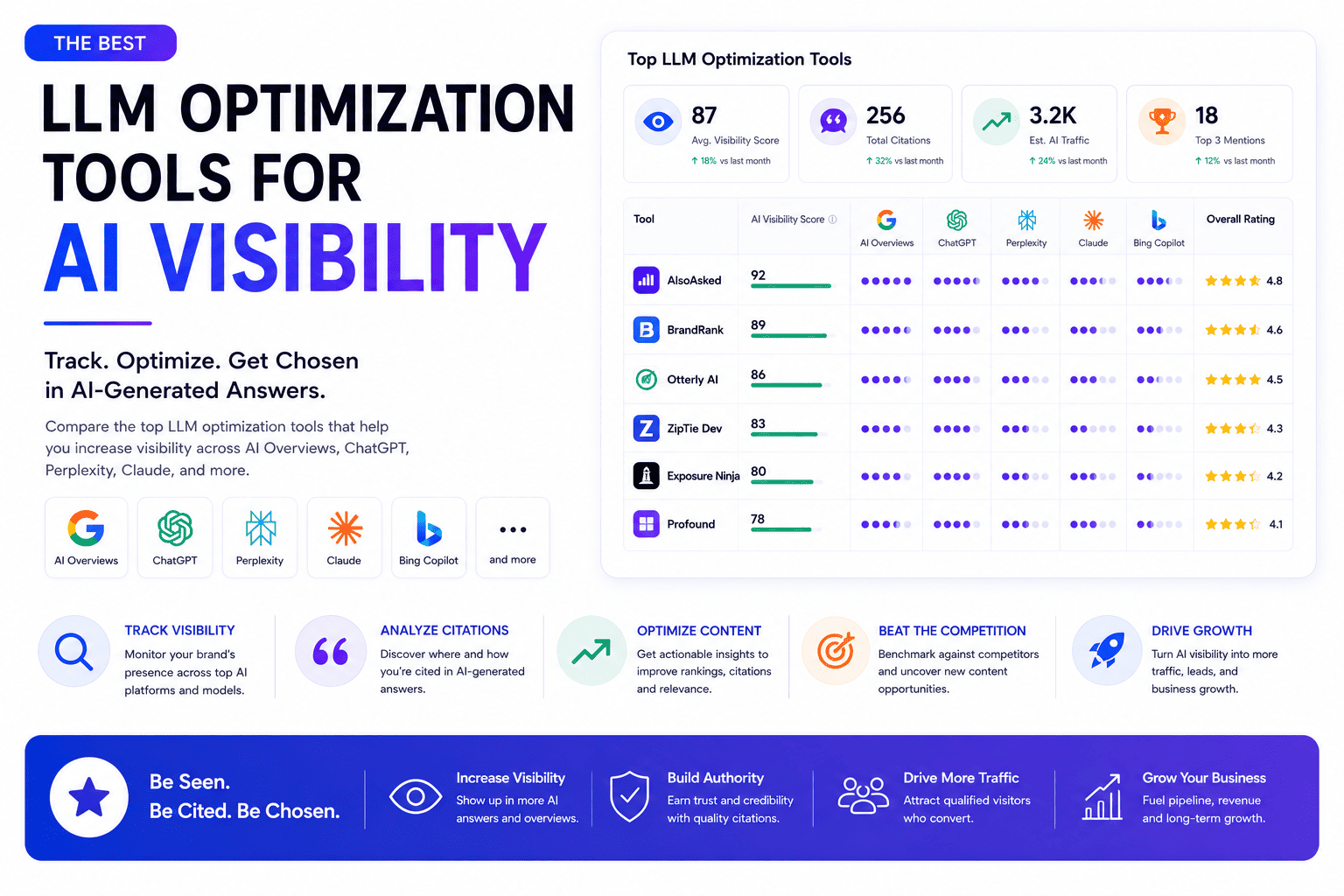
Tools for Monitoring AI Overview Visibility
Several platforms now help businesses monitor AI search performance.
Common categories include:
- AI visibility tracking tools
- Citation monitoring platforms
- Search analytics solutions
- Entity monitoring software
- Brand mention tracking tools
Organizations should measure both traditional SEO performance and AI visibility metrics.
Key indicators include:
- Citation frequency
- AI mention volume
- Brand presence
- Topic coverage
- Organic traffic trends
The Future of AI Overview SEO
AI-generated search experiences are expected to become increasingly common.
Future developments may include:
- More conversational search interfaces
- Personalized AI-generated answers
- Expanded citation systems
- Greater integration with AI assistants
- Increased emphasis on entity authority
As these systems evolve, organizations that prioritize credibility, expertise, and structured information will likely achieve stronger visibility.
AI Overview SEO is not replacing traditional SEO - it is extending it.
The websites that succeed in 2026 and beyond will be those that optimize for both search engines and AI retrieval systems.
Conclusion
AI Overview SEO is the process of improving your visibility within AI-generated search answers rather than focusing solely on traditional rankings.
As Google and other search platforms increasingly generate direct answers, businesses must adapt by strengthening topical authority, improving content structure, building entity recognition, and demonstrating expertise.
The goal is simple: become a trusted source that AI systems choose to cite.
Organizations that begin optimizing today will be better positioned to maintain visibility as search continues its shift toward AI-powered experiences.

.png)

.png)

.png)