Google Search is no longer just a list of blue links.
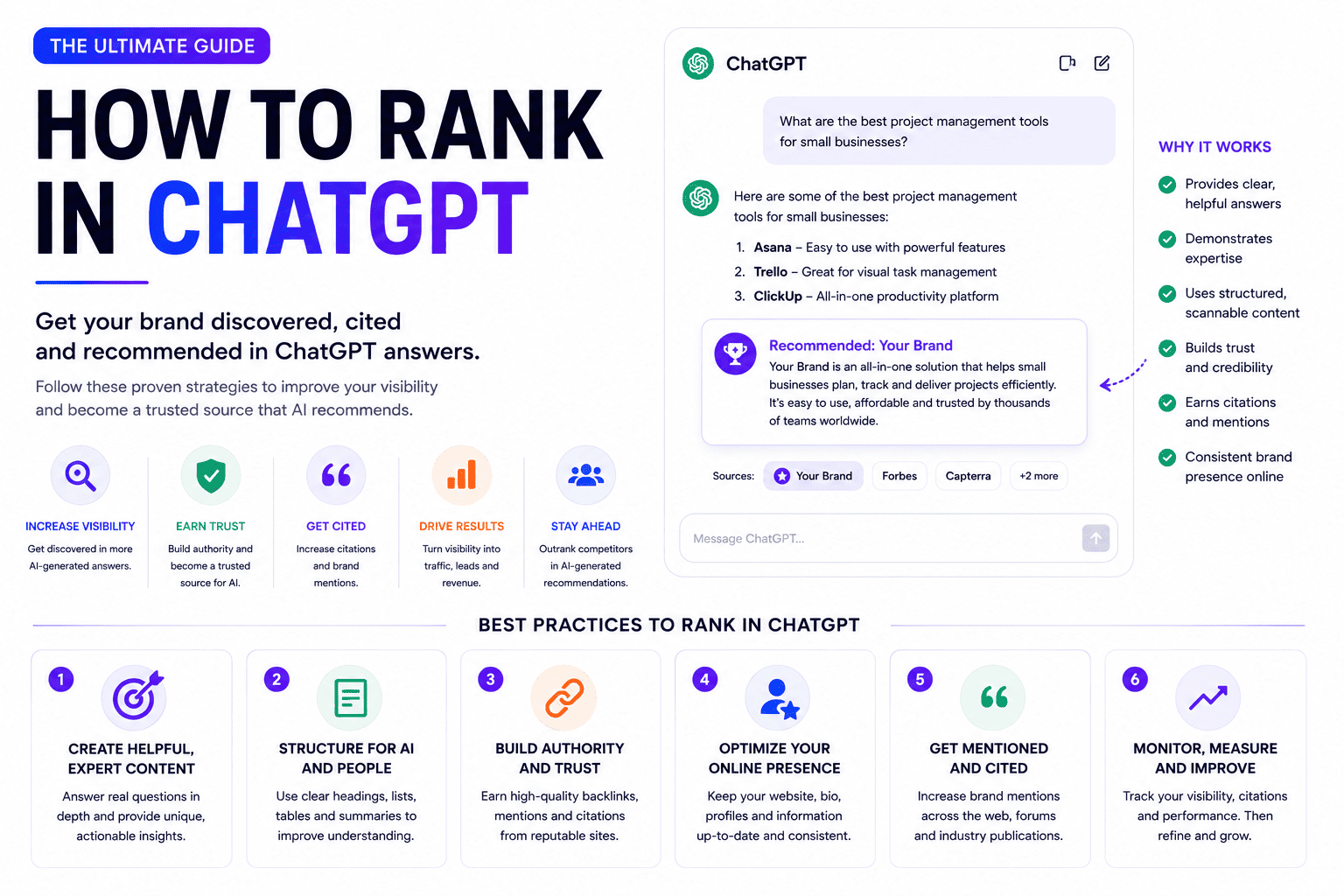
With AI Overviews appearing across an increasing percentage of informational and commercial searches, brands now have a new visibility opportunity: becoming one of the sources Google uses to generate AI-powered answers.
The challenge is that ranking #1 organically does not automatically guarantee inclusion in AI Overviews.
Google's AI systems evaluate content differently than traditional search algorithms. They look for authoritative, trustworthy, well-structured information that can directly answer user questions.
This guide explains exactly how AI Overview selection works and the practical SEO tactics you can implement to increase your chances of appearing in AI-generated search results.
Why Ranking in AI Overviews Matters
AI Overviews often appear above:
- Organic search results
- Featured snippets
- People Also Ask sections
- Knowledge panels
This means users frequently consume AI-generated answers before seeing standard rankings.
Benefits of appearing in AI Overviews include:
- Increased brand visibility
- More qualified traffic
- Higher authority perception
- Better click-through rates from cited links
- Early positioning for the future of search
For many industries, AI Overview visibility is quickly becoming as important as traditional first-page rankings.
Understanding AI Overview Selection Criteria
Before optimizing, it helps to understand how Google selects sources.
While Google has not published a definitive AI Overview algorithm, large-scale studies reveal consistent patterns among cited websites.
1. Topical Authority
Google prefers sources that demonstrate deep expertise in a subject area.
Sites with dozens of related articles tend to be cited more often than websites with only a few isolated pages.
For example:
A website with:
- AI SEO guide
- AI search optimisation checklist
- AI Overview ranking factors
- Generative Engine Optimization guide
has significantly stronger topical authority than a site with one article about AI search.
Action Step
Build topic clusters rather than standalone articles.
2. Content Completeness
AI systems prefer comprehensive resources that answer multiple related questions.
High-performing pages typically include:
- Definitions
- Explanations
- Examples
- Step-by-step processes
- Statistics
- FAQs
The more user intent your content satisfies, the more likely Google can use it as a source.
3. Demonstrated Expertise
Google increasingly evaluates:
- Author credibility
- Industry expertise
- First-hand experience
- Trust signals
Pages written by identifiable experts often perform better than anonymous content.
Action Step
Include:
- Author bios
- Credentials
- Company expertise
- Original insights
- Industry experience
4. Information Accuracy
AI systems avoid citing content that contains:
- Contradictions
- Outdated information
- Unsupported claims
Fact-based, well-supported content tends to be selected more frequently.
Content Signals That Trigger AI Overview Inclusion
Certain content characteristics repeatedly appear in AI Overview citations.
Direct Answers Near the Top
Google prefers content that answers questions immediately.
Instead of:
AI Overview SEO is a rapidly evolving field that many businesses are beginning to explore...
Use:
AI Overview SEO is the process of optimizing content so it can be selected and cited in Google's AI-generated search answers.
Immediate answers improve extractability. If you're looking for a detailed framework on content structure, semantic coverage, answer formatting, and optimisation best practices, read our guide on how to optimise content for AI Overviews.
Clear Question-and-Answer Formatting
AI models process structured content more efficiently.
Use:
What is AI Overview SEO?
Answer.
Why does AI Overview SEO matter?
Answer.
How do AI Overviews work?
Answer.
This format closely mirrors how AI systems retrieve information.
Definitions and Summaries
Short summary blocks improve citation potential.
Example:
AI Overview Optimization Definition
AI Overview optimization is the practice of improving content quality, structure, authority, and trust signals to increase the likelihood of being cited in Google's AI-generated search results.
Statistics and Original Research
Google often cites pages containing:
- Proprietary research
- Survey data
- Industry benchmarks
- Unique insights
Original data creates differentiation and authority.
How to Structure Content for AI Overviews
Content structure is one of the easiest wins.
Use a Strong Introduction
Within the first 100 words:
- Define the topic
- Answer the primary question
- Establish relevance
Avoid lengthy introductions.
Create Information Hierarchies
Organize content logically:
H1
├─ H2
│ ├─ H3
│ ├─ H3
│
├─ H2
│ ├─ H3
│
├─ FAQ
Structured information helps AI systems understand relationships between concepts. Content structure alone is not enough. You also need to optimise entities, answer completeness, semantic relevance, and topical depth. Our guide on how to optimise content for AI Overviews explains the full process step by step.
Add FAQ Sections
FAQs align closely with conversational search behavior.
Examples:
Can small websites appear in AI Overviews?
Yes. While authority helps, relevance, expertise, and answer quality can still earn citations.
Does ranking #1 guarantee AI Overview inclusion?
No. AI Overviews often cite websites outside the top three rankings.
Use Lists and Tables
AI systems frequently pull information from:
- Bullet lists
- Numbered steps
- Comparison tables
Example:
| Traditional SEO |
AI Overview SEO |
| Rankings |
Citations |
| Keywords |
Entities |
| Backlinks |
Authority Signals |
| Clicks |
Answer Inclusion |
The Role of Domain Authority
Domain authority still matters.
Google often cites:
- Established publishers
- Industry leaders
- Trusted brands
- Recognized experts
However, AI Overviews also create opportunities for niche websites with deep expertise.
A highly authoritative niche article can outperform a broader website with weaker topical relevance.
Focus Areas
Improve:
- Quality backlinks
- Brand mentions
- Digital PR
- Expert content
- Industry citations
Authority remains one of the strongest competitive advantages.
Technical On-Page Tactics
Technical optimization supports AI discoverability.
Implement Structured Data
Use schema markup such as:
- Article Schema
- FAQ Schema
- Organization Schema
- Author Schema
- HowTo Schema (where appropriate)
Structured data helps Google understand content context.
Improve Crawlability
Ensure:
- Clean internal linking
- XML sitemaps
- Proper indexing
- No accidental noindex tags
- Fast page rendering
AI systems can only use content they can access.
Optimize for Entity Recognition
Google increasingly understands topics through entities rather than keywords.
Include:
- Industry terms
- Brand names
- People
- Products
- Technologies
This helps connect your content to Google's knowledge graph.
Improve Page Experience
While not a direct AI Overview factor, strong user experience supports overall search performance.
Focus on:
- Core Web Vitals
- Mobile usability
- Fast load speeds
- Accessible content
Build Content Around User Intent
One of the biggest differences between traditional SEO and AI search optimization is intent coverage.
Google's AI attempts to answer the entire user question.
For every target keyword, identify:
Primary Intent
What is AI Overview SEO?
Secondary Intent
- How does it work?
- Why does it matter?
- How do you rank?
- What tools help?
Related Questions
- Are AI Overviews replacing SEO?
- Do AI Overviews reduce traffic?
- How can brands get cited?
Comprehensive intent coverage improves inclusion probability.
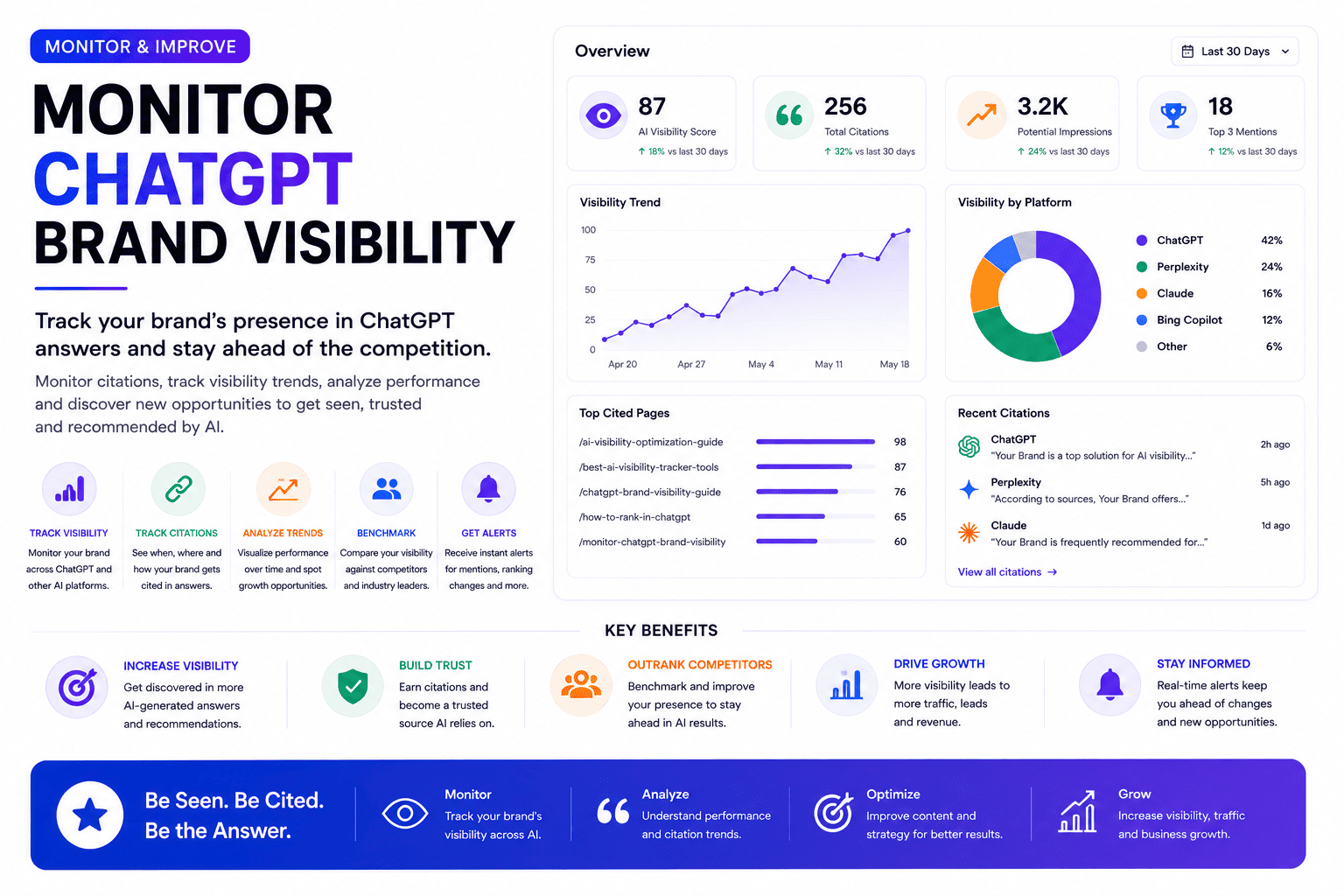
Monitoring Your AI Overview Rankings
You cannot improve what you do not measure. Effective optimisation requires consistently tracking your AI Overview SEO rankings so you can identify citation opportunities, monitor visibility changes, and measure the impact of content improvements.
Track:
- AI Overview appearances
- Citation frequency
- Visibility trends
- Query categories
- Competitor citations
Important metrics include:
| Metric |
Why It Matters |
| AI Overview Presence |
Measures inclusion |
| Citation Rate |
Tracks source selection |
| Organic Rankings |
Supports visibility |
| CTR Changes |
Measures impact |
| Impressions |
Indicates exposure |
How to Identify AI Overview Opportunities
Look for queries where:
- AI Overviews already appear
- Competitors are cited
- Search intent is informational
- Comprehensive answers are possible
Ideal categories include:
- SaaS
- Healthcare
- Finance
- Education
- Technology
- Professional services
These industries frequently trigger AI-generated results.
Iterating and Improving
AI Overview optimization is not a one-time activity.
Create a continuous improvement process:
Step 1
Track target queries and begin tracking your AI Overview SEO rankings to establish a baseline for future optimisation efforts.
Step 2
Identify who is cited.
Step 3
Analyze content structure.
Step 4
Improve topical coverage.
Step 5
Enhance authority signals.
Step 6
Measure results.
Step 7
Repeat monthly.
Sites that consistently update and expand content often gain visibility over time.
Common Mistakes That Prevent AI Overview Inclusion
Avoid:
❌ Thin content
❌ Keyword stuffing
❌ Generic AI-generated articles with no expertise
❌ Missing author information
❌ Poor site authority
❌ Weak topical relevance
❌ Outdated information
❌ Unclear content structure
These issues reduce trust and citation potential.
The Future of AI Overview SEO
As Google continues expanding AI-generated search experiences, optimization will increasingly focus on:
- Authority
- Expertise
- Entities
- Content structure
- Information quality
- Brand trust
Traditional SEO remains important, but AI Overview visibility is becoming a separate competitive advantage.
The websites that adapt early will capture more visibility as search evolves toward AI-generated answers.
Ready to Increase Your AI Overview Visibility?
Ranking in AI Overviews requires more than traditional SEO. It demands authoritative content, strong entity signals, technical optimization, and continuous monitoring.
Start tracking your AI Overview presence today and build content specifically designed to become a trusted AI citation source.
Start AI Overview Tracking →

.png)

.png)

.png)