Search is changing faster than it has in decades.
Instead of showing users a list of blue links, AI-powered search engines now generate direct answers. Platforms such as ChatGPT, Perplexity, and Google's AI-generated search experiences increasingly summarize information from multiple sources and present a complete response without requiring users to visit several websites.
For businesses and marketers, this creates both a challenge and an opportunity.
Traditional SEO remains important, but ranking on page one is no longer enough. Your content must also be understandable, trustworthy, and easy for AI systems to cite and reference.
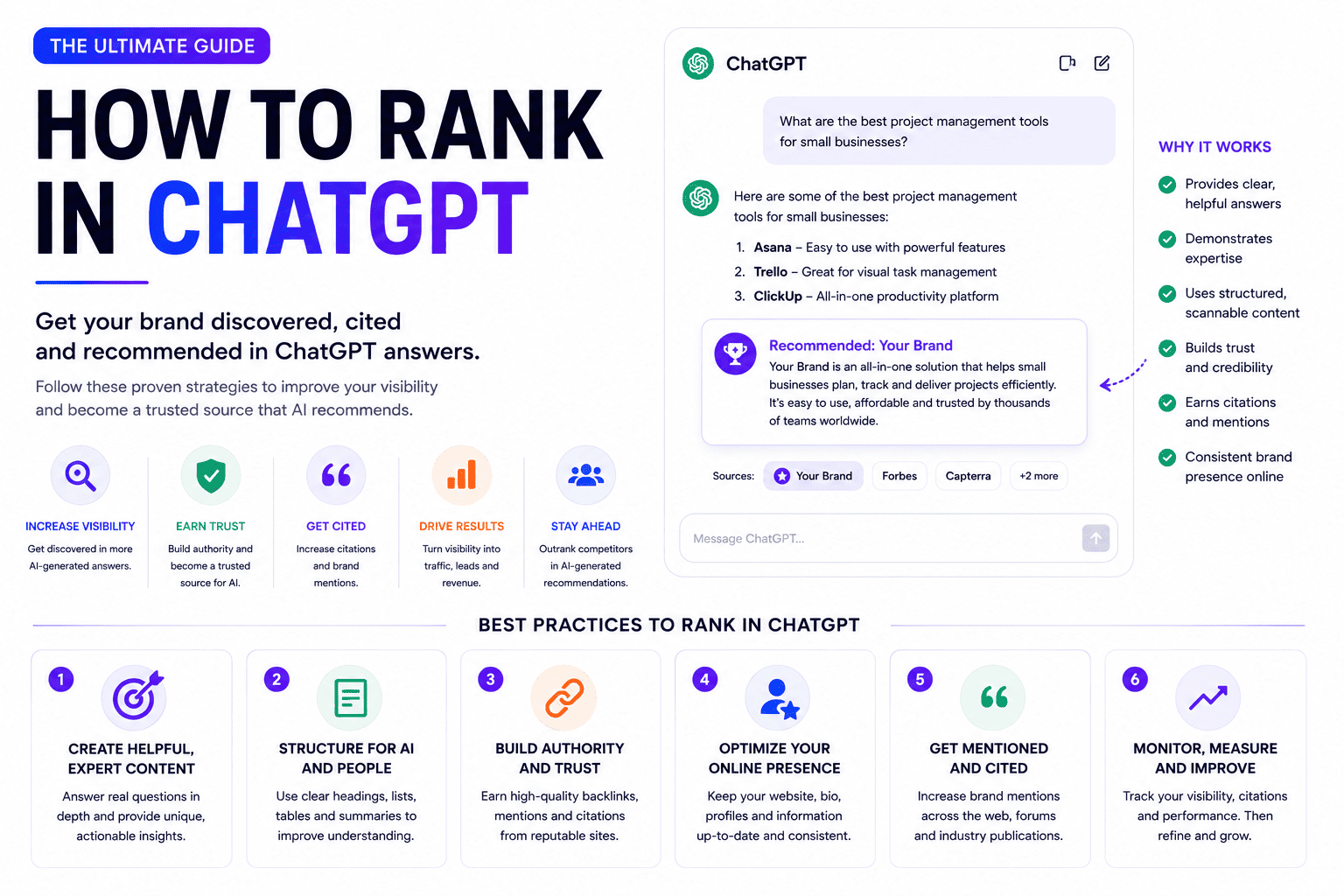
This guide explains exactly how to optimise content for AI search engines in 2026 using a proven step-by-step framework.
Before implementing the strategies below, it's helpful to work through a structured process. Our AI Search Optimisation Checklist provides a practical framework covering content structure, entity optimisation, schema implementation, citation building, and AI visibility tracking. Download the checklist to ensure you don't miss any critical optimisation steps.
Understanding AI Search Engines
Before optimising content, it's important to understand how AI search differs from traditional search.
Traditional search engines primarily rank webpages based on relevance, authority, backlinks, and technical SEO factors.
AI search engines take a different approach. They:
- Retrieve information from multiple sources
- Evaluate content quality and trustworthiness
- Extract specific answers
- Generate summaries and recommendations
- Cite sources they consider authoritative
Rather than asking:
"Best CRM software"
Users increasingly ask:
"What is the best CRM software for a 20-person SaaS company?"
AI systems attempt to provide the answer immediately.
This means content that is:
- Clear
- Well-structured
- Factually accurate
- Expert-driven
- Easy to quote
has a significantly higher chance of appearing in AI-generated responses.
Step 1: Research AI-Friendly Topics
The first step is identifying topics AI search engines are likely to reference.
Focus on queries that require explanation, comparison, guidance, or expert insight.
Examples include:
Informational Queries
- What is AI search optimisation?
- How does generative engine optimisation work?
- What is the difference between SEO and AI SEO?
Comparison Queries
- ChatGPT vs Perplexity
- SEO vs GEO
- AI search vs traditional search
Problem-Solving Queries
- How can I increase AI visibility?
- Why isn't my brand appearing in AI Overviews?
- How do AI search engines select sources?
These topics perform well because AI systems frequently need authoritative content to answer them.
Research Sources
Use:
- Search Console
- AI search platforms
- Industry forums
- Customer support tickets
- Sales conversations
- Competitor content
Pay particular attention to the exact wording people use when asking questions.
Natural-language queries are increasingly becoming the dominant search format.
Step 2: Structure Content for AI Comprehension
AI models process information differently than humans.
Well-structured content is significantly easier for AI systems to understand and reference.
Use Clear Headings
Organise content logically using:
Example:
H1: AI Search Engine Optimisation
H2: What Is AI SEO?
H2: Benefits of AI SEO
H2: How AI Search Works
H3: Retrieval Systems
H3: Ranking Signals
Clear hierarchy helps AI systems identify relationships between concepts.
Use Short Sections
Avoid massive blocks of text.
Instead:
- Use concise paragraphs
- Break up complex ideas
- Add bullet points
- Create numbered processes
AI models often extract information from these sections directly.
Include Definitions
Every important concept should have a direct definition.
Example:
AI Search Optimisation is the process of improving content visibility within AI-generated search results, including ChatGPT, Perplexity, and AI Overviews.
This format is highly citation-friendly. The same content structuring principles are used by Google when generating AI Overviews. Creating clear definitions, concise answers, and logical heading hierarchies increases the likelihood of your content being surfaced in AI-generated search experiences. Learn more about optimising content for Google AI Overviews.
Step 3: Answer Questions Directly
One of the biggest mistakes marketers make is delaying the answer.
AI systems prefer content that answers questions immediately.
Poor Example
"Businesses today face many challenges when attempting to improve visibility online..."
Better Example
"AI Search Optimisation improves a brand's visibility within AI-generated answers by making content easier for AI systems to understand, trust, and cite."
The second example provides a direct answer that AI systems can easily extract.
Create Dedicated Q&A Sections
Include questions such as:
What is AI Search Optimisation?
Provide a concise answer.
Why is AI Search Important?
Provide a concise answer.
How Long Does AI Optimisation Take?
Provide a concise answer.
This format aligns closely with how AI retrieval systems process information.
If your goal is to increase visibility specifically within Google's AI-generated search results, our guide on optimising content for Google AI Overviews explains the ranking signals, content structures, and citation patterns that improve inclusion in AI-generated summaries.
Step 4: Optimise for E-E-A-T
Experience, Expertise, Authoritativeness, and Trustworthiness (E-E-A-T) are more important than ever.
AI search engines prioritize trustworthy information sources.
Demonstrate Experience
Include:
- Case studies
- Real-world examples
- Original insights
- First-hand knowledge
Instead of generic advice, explain what actually worked.
Example:
After implementing structured FAQ content across 50 pages, our client achieved a 42% increase in AI citation frequency within three months.
Specific examples increase credibility.
Demonstrate Expertise
Show:
- Professional credentials
- Industry experience
- Technical knowledge
- Research-backed recommendations
Author bios can significantly improve perceived authority.
Demonstrate Trustworthiness
Include:
- References
- Citations
- Statistics
- Transparent methodology
- Updated publication dates
Trust signals help AI systems determine whether content is reliable enough to reference.
Step 5: Add Structured Data
Structured data helps machines understand your content.
While schema does not guarantee AI visibility, it improves content interpretation.
Recommended schema types include:
FAQ Schema
Ideal for:
- Frequently asked questions
- Definitions
- Educational content
Article Schema
Useful for:
- Blog posts
- Guides
- Educational resources
Organization Schema
Helps establish:
- Brand identity
- Business details
- Expertise signals
Author Schema
Allows AI systems to understand:
- Who wrote the content
- Their credentials
- Their expertise
Structured data creates stronger semantic relationships between entities, authors, and topics.
Step 6: Build Citations and Mentions
AI systems frequently evaluate information consistency across the web.
If multiple trusted sources reference your brand or expertise, confidence increases.
Earn Industry Mentions
Contribute:
- Guest articles
- Research reports
- Industry interviews
- Podcasts
- Webinars
Publish Original Data
Unique research often attracts:
- Journalists
- Bloggers
- Industry publications
These citations strengthen authority signals.
Maintain Consistent Brand Information
Ensure your:
- Company name
- Website
- Author profiles
- Social profiles
remain consistent across platforms.
Consistency improves entity recognition.
Step 7: Monitor Performance
AI visibility requires ongoing measurement.
Track:
- AI referral traffic
- Brand mentions
- Citation frequency
- Organic search growth
- Conversion rates
Monitor AI Platforms
Regularly test prompts such as:
- "Best AI SEO agencies"
- "Top AI search optimisation tools"
- "Who are the experts in AI visibility?"
Observe whether your brand appears.
Review Search Console Data
Watch for:
- Growing informational traffic
- Question-based queries
- Long-tail search terms
- Featured snippet visibility
Many AI visibility improvements first appear through organic search growth.
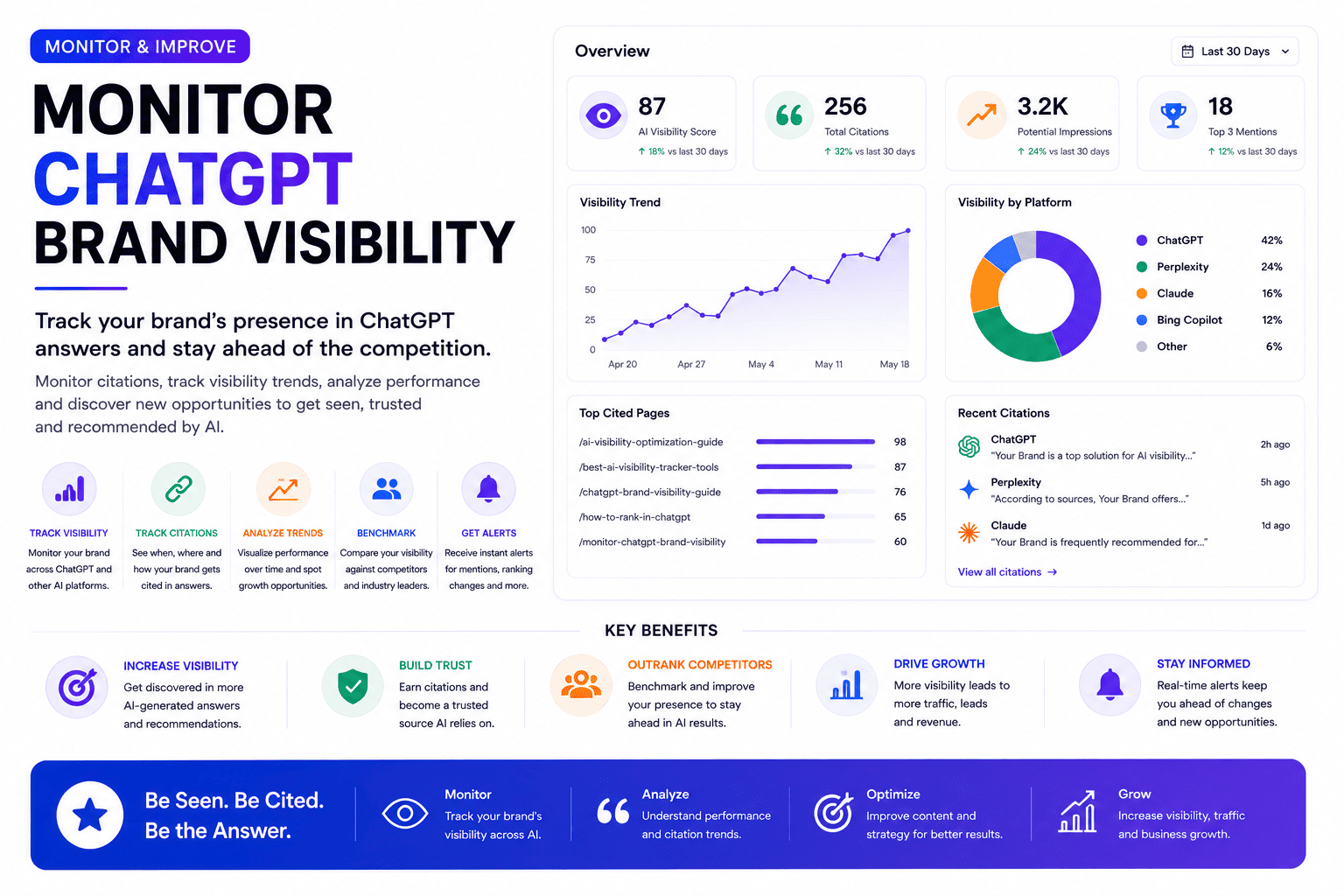
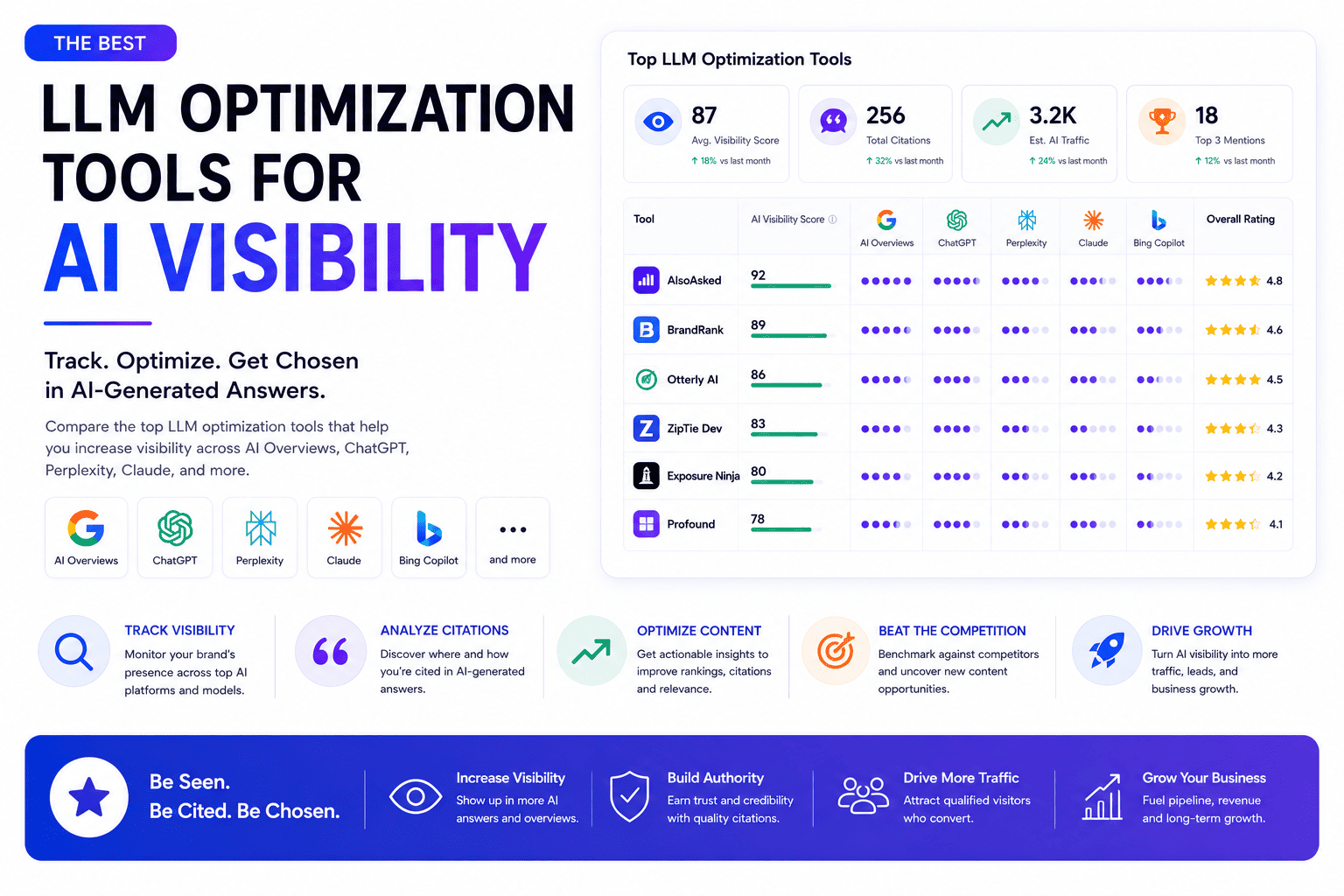
Best Tools for AI Search Optimisation
Several tools can help improve AI visibility.
Combining these tools provides a complete AI optimisation workflow.
Common Mistakes to Avoid
Many brands struggle with AI visibility because they:
Write for Keywords Instead of Questions
AI systems prefer content that answers user intent.
Publish Thin Content
Superficial content is less likely to be cited.
Ignore Author Authority
Anonymous content often lacks trust signals.
Avoid Structured Data
Machines understand structured content more easily.
Skip Original Research
Unique insights increase citation opportunities.
The Future of AI Search Optimisation
AI search is rapidly becoming a primary discovery channel.
As platforms continue evolving, successful brands will focus on:
- Creating expert-led content
- Publishing original research
- Building strong entity authority
- Structuring content for machine comprehension
- Earning trusted citations
The businesses that adapt early will gain a significant visibility advantage as AI-generated search becomes the default experience for millions of users.
AI Search Optimisation Implementation Checklist
Optimising content for AI search engines involves multiple moving parts, including content structure, entity optimisation, schema markup, authority signals, and citation building. Use our AI Search Optimisation Checklist to audit your content and identify opportunities for improving AI visibility.

.png)

.png)

.png)