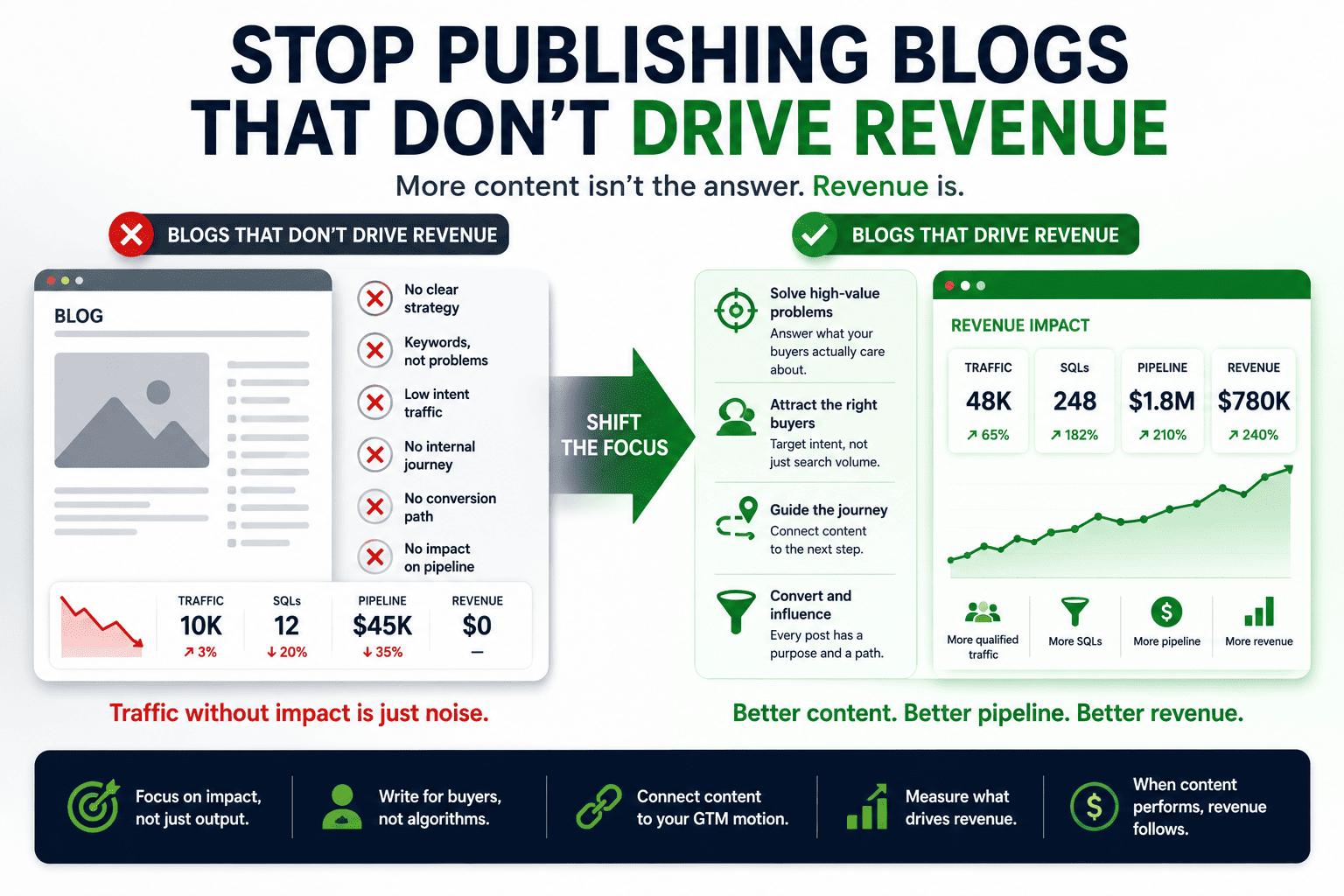
If your blog’s primary purpose is to “increase traffic” or “boost brand awareness,” you are playing a low-leverage SEO game that consumes budget, burns creative energy, and delivers zero pipeline. In an Australian B2B market where every dollar must drive measurable growth, publishing content that does not directly contribute to revenue is not just wasteful. It is a strategic failure.
According to McKinsey’s State of Marketing Europe research, only 3% of CMOs can demonstrate marketing ROI greater than 50% of marketing spend, highlighting how difficult it remains for many organisations to clearly connect marketing investment to measurable business outcomes.
As discussed in Harvard Business Review’s analysis of marketing metrics, relying only on campaign-level metrics can give executives an incomplete picture of marketing’s real contribution to business growth. When organisations focus only on engagement indicators instead of revenue outcomes, marketing’s impact becomes difficult to measure.
This is not a content problem. It is a measurement problem. When you measure traffic, you get traffic. When you measure revenue, you get revenue.
This guide explains why most B2B blogs fail to drive pipeline, how to escape the vanity-metric trap, and the three-step framework to turn your blog into a predictable revenue engine.
Vanity metrics such as page views, social shares and time on page are easy to track and feel gratifying. They create the illusion of progress. But they tell you nothing about whether your content is actually moving prospects toward a purchase decision.
In B2B, vanity metrics can become a distraction because they encourage high-volume, low-intent content that attracts browsers instead of buyers.
Modern B2B buying journeys are also far more complex than they once were. According to the McKinsey B2B Pulse Survey on how B2B winners keep growing, buyers interact with an average of 10 channels during the purchasing journey, highlighting how many touchpoints influence decisions before a deal is closed.
If your blog focuses only on top-of-funnel awareness content, you risk missing the moments when buyers are actively researching solutions and forming their decision criteria.
There are three structural reasons why B2B blogs fail to drive revenue.
Most B2B blogs target informational keywords such as “what is” or “how to.” These topics attract early-stage researchers who are not yet ready to buy. While these visitors may read your content, they rarely convert into pipeline because they are still exploring the problem rather than evaluating solutions.
Low-leverage blogs rely on generic advice that any competitor could publish. They fail to establish a unique perspective or demonstrate deep expertise. Without that authority, buyers have little reason to trust the brand behind the content.
Even when a blog attracts a qualified visitor, the call-to-action is often misaligned. Invitations to download an ebook or subscribe to a newsletter rarely move prospects toward a revenue conversation. The call-to-action must match both the intent of the content and the stage of the buyer journey.
The most effective B2B blogs do not publish more content. They publish smarter content. Each article is treated as a revenue asset rather than a traffic generator.
This means:
• Intent-first keyword selection that targets problems buyers are actively trying to solve
• Problem-led content architecture focused on real business challenges
• Pipeline-aligned calls to action that move readers closer to a sales conversation
When these elements align, blog content begins to function as a consistent pipeline driver rather than simply a marketing activity.
Review every blog post published over the past year. Categorise each by funnel stage and analyse which ones generate qualified conversations or influence deals. This helps identify the topics that genuinely drive the pipeline.
Instead of brainstorming topics based on what is interesting, start with your pipeline gaps. Identify services that are under-represented in your pipeline and create content that directly addresses those opportunities.
Match your call-to-action to the intent of the content. Early-stage content may introduce diagnostic tools or frameworks. Mid-stage content may invite readers to webinars or workshops. Late-stage content should guide readers toward direct conversations, such as consultations or growth audits.
Every call-to-action should be measurable and connected to pipeline outcomes.
Publishing blogs that do not drive revenue is the B2B equivalent of burning budget. It produces vanity metrics instead of a meaningful pipeline.
By shifting measurement from traffic to revenue, focusing content on real buyer intent, and aligning every article with a clear business objective, companies can transform their blog into a reliable growth engine.
The businesses that win are not those that publish the most content. They are the ones that publish the right content that captures buyer intent, builds authority, and supports revenue growth.
Ready to stop publishing blogs that do not drive revenue?
Our Growth Audit identifies the gaps in your content strategy and provides a roadmap to turn your blog into a predictable pipeline engine.


.png)
.png)
.png)