.png)
For most Australian B2B service businesses, "marketing-sales alignment" is treated as a cultural aspiration, a hope that the two departments will eventually "get along" and share a coffee. But while leadership waits for a cultural shift, the business is bleeding. When marketing and sales aren't aligned, it isn't a personality clash; it’s a structural failure. It is an operations problem that measurably erodes your bottom line.
Alignment failure kills growth. According to industry research, companies with inadequate marketing-sales alignment can lose up to 10-15% of their potential revenue. For a mid-sized firm turning over $10M, that’s a $1.5M "silo tax" paid every year. This loss isn't due to bad intent; it's due to isolated silos, divergent goals, and a lack of shared metrics. When you reframe alignment as an operational discipline, you stop chasing harmony and start building a revenue engine.
This insight piece explores why silos are an operational choice, quantifies the "Revenue Gap" created by misalignment, and provides a framework for connecting marketing and sales through the lens of Revenue Operations (RevOps).
The divide between marketing and sales isn't just frustrating; it’s expensive. When these teams work in isolation, they speak different languages. Marketing focuses on "brand awareness" and "lead volume," while sales focuses on "quota" and "deal size." Without a unified definition of success, the gap between them becomes a graveyard for potential revenue.
The symptoms of this gap are measurable and severe:
For an Australian service business, these aren't just statistics; they are the difference between scaling and stagnating. The "Revenue Gap" is the measurable cost of operational neglect.
Many founders attempt to fix misalignment with "team building" or shared meetings. While communication is important, it cannot fix a broken system. Misalignment persists because the underlying Revenue Operating Model is fragmented. If marketing is incentivized on lead quantity and sales on revenue, they are structurally designed to conflict.
True alignment is an operational state achieved through three pillars:
If marketing defines a "Qualified Lead" as anyone who downloads a whitepaper, but sales only wants to talk to people with a $50k budget, the system is broken. Alignment requires a single source of truth, a CRM where both teams agree on what a lead is, how it’s scored, and when it’s ready for a conversation.
In a mature RevOps model, marketing and sales operate under a Service Level Agreement (SLA). Marketing commits to delivering a specific volume of leads at a specific quality, and sales commits to contacting those leads within a specific timeframe (e.g., 4 hours). This turns "alignment" from a feeling into a contract.
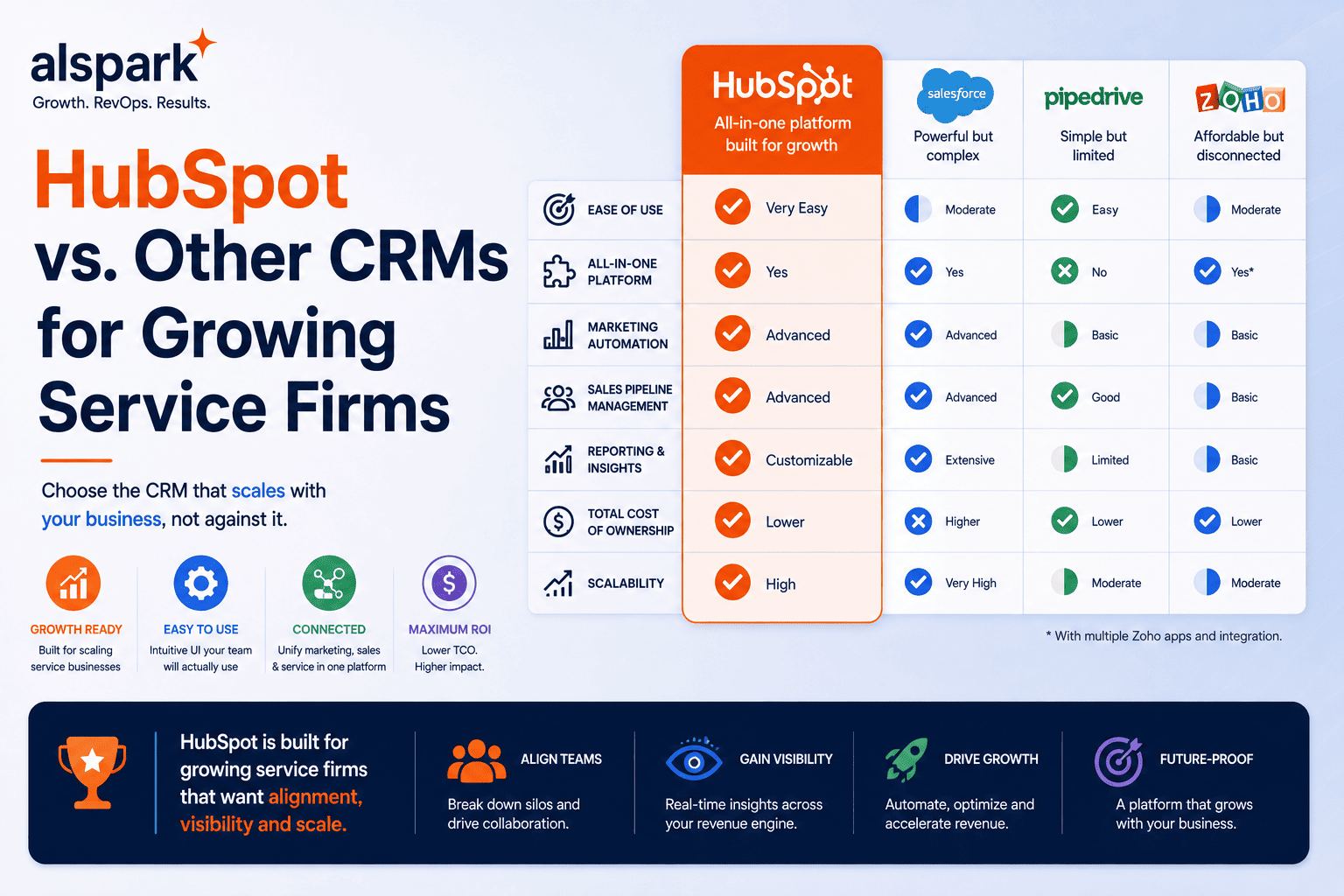
Silos are often reinforced by technology. If marketing lives in one tool and sales in another, data doesn't flow. An operational approach requires an integrated stack, typically centered around a platform like HubSpot, where every interaction is visible to both teams in real-time.
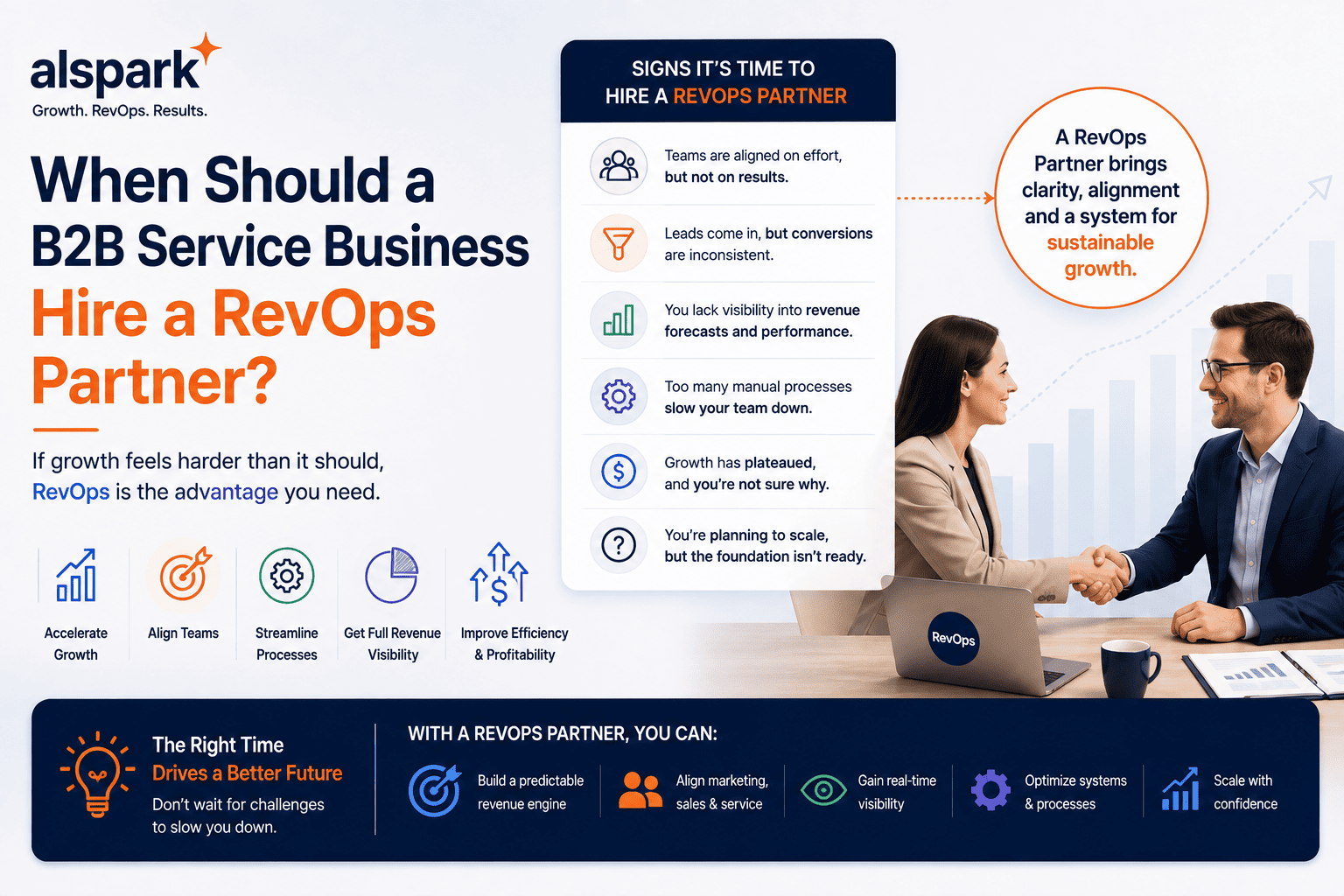
How do you know if your misalignment has reached a critical stage? Look for these symptoms in your weekly revenue meetings:
If you recognize more than three of these, your misalignment is no longer a friction point, it’s a growth blocker.
Fixing misalignment requires moving from departmental thinking to Systems Thinking. This is the core of Revenue Operations. Instead of managing marketing and sales as separate entities, you manage the Revenue Engine as a single, continuous process.
The RevOps framework for alignment involves:
By treating alignment as an operations problem, you remove the emotional weight of "fixing the culture" and replace it with the practical discipline of "optimizing the system."
The rewards for fixing this operational failure are significant. Research shows that even moderate improvements in marketing-sales alignment can lead to revenue growth of 5-10% within 6-12 months. Furthermore, companies with strong alignment see 38% higher sales win rates and 36% higher customer retention.
“At a time when customer acquisition is becoming increasingly expensive, optimizing marketing-sales alignment is the lever with the highest ROI that mid-sized companies can apply,” says Julia Mayer, Chief Revenue Officer at TechScale. For Australian B2B service firms, this isn't just about efficiency; it's about competitive advantage. While your competitors are fighting internal silos, you are focused on the customer.
Is your marketing-sales gap costing you revenue?
Download the Alspark RevOps Alignment Checklist to identify your silos and build a more predictable revenue engine.


.png)
.png)
.png)