.png)
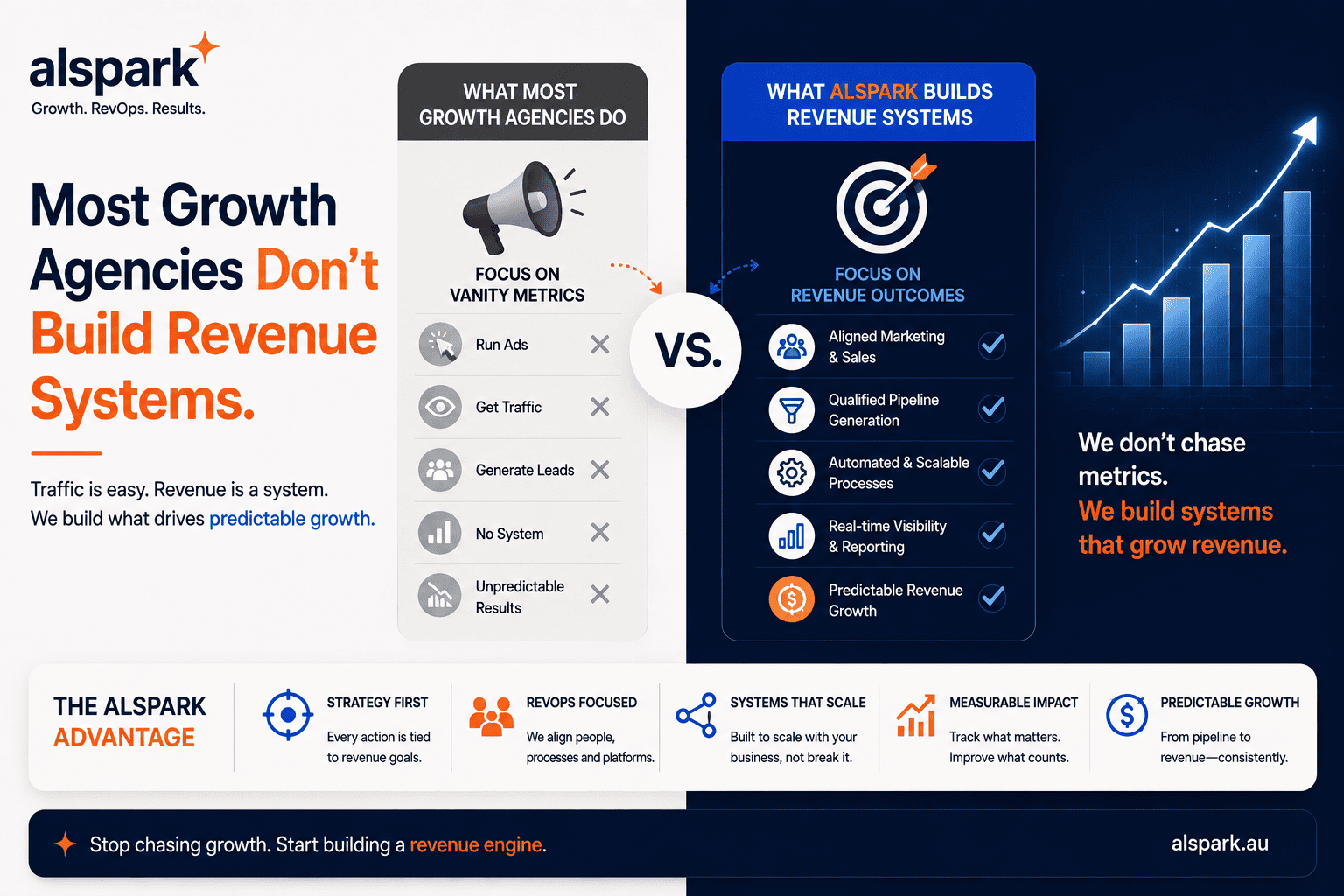
For Australian B2B service firms, implementing a CRM like HubSpot is often viewed as a technical hurdle, a task for the IT department or a junior marketing coordinator. But a CRM is not just a database. It is the central nervous system of your revenue engine.
When HubSpot is implemented correctly, it aligns your marketing, sales, and service teams around a single source of truth. When it is implemented poorly, it becomes an expensive digital filing cabinet that reinforces the silos it was meant to eliminate.
HubSpot implementation must align with revenue goals and commercial strategy. According to HubSpot’s 2025 announcement, the platform has been recognised as a Leader in the Gartner Magic Quadrant for B2B Marketing Automation Platforms for the fifth consecutive year. However, for service-based businesses in Australia, the challenge is not the software, it is the strategy. Implementation without a defined Revenue Operating Model simply digitises existing inefficiencies.
This commercial piece outlines the strategic pillars of a successful HubSpot implementation, explains why "revenue alignment" must precede technical setup, and provides a roadmap for Australian B2B firms to turn HubSpot into a high-performance growth platform.
The most common mistake in HubSpot implementation is focusing on features before outcomes. Businesses often rush to set up email templates, create custom properties, and import contact lists without first defining how revenue actually flows through the business. This "technical-first" approach leads to low adoption, fragmented data, and a lack of clear ROI.
According to Brixon Group, misalignment between marketing and sales leads to lost leads, inconsistent customer experiences, and measurable revenue leakage across the pipeline. Companies with poor marketing-sales alignment can lose 10–15% of their potential revenue due to inefficiencies and missed opportunities.
To avoid the implementation trap, Australian B2B firms must address three strategic questions before touching the software:
● What is our unified lead definition? If marketing and sales don't agree on what a "Qualified Lead" looks like, no amount of automation will fix the friction.
● What are our core revenue stages? Your HubSpot pipeline must mirror your actual buyer journey, not just a generic sales process.
● How will we measure success? Beyond "more leads," you need to define the specific KPIs, such as MQL-to-SQL conversion or Sales Velocity, that HubSpot will track.
HubSpot is designed to unify data and processes across teams, but only when the underlying strategy is clearly defined from the start.
For B2B service businesses, where sales cycles are long and relationships are complex, HubSpot implementation should be built on five pillars:
Your CRM is only as good as the data inside it. A successful implementation starts with a clean data migration and a strict schema for custom properties. This ensures that every contact record provides a 360-degree view of the customer, from their first website visit to their most recent service ticket.
One of HubSpot’s greatest strengths is its ability to automate the transition between lifecycle stages (Subscriber > Lead > MQL > SQL > Opportunity > Customer). By automating these handoffs, you ensure that no lead falls through the cracks and that sales is only spending time on the most qualified prospects.
HubSpot Sales Hub should be configured to remove friction for your sales team. This includes setting up automated sequences, meeting scheduling links, and playbooks that guide reps through the sales process. A well-configured pipeline provides managers with real-time visibility into deal health and forecasting.
Implementation must include the "closed-loop" reporting that allows marketing to see which campaigns are actually driving revenue. By connecting Marketing Hub and Sales Hub, you can attribute every dollar of revenue back to the specific touchpoints that generated it.
For businesses operating in the Australian market, implementation should account for local nuances, from ABN verification fields to Australian privacy laws (Privacy Act 1988) and time-zone-specific automation. A "one-size-fits-all" global setup often misses these critical local requirements.
Successful implementation is increasingly being driven by Revenue Operations (RevOps). RevOps is the function responsible for the strategy, process, and technology that powers the revenue engine. Instead of having a "HubSpot Admin" sitting in marketing, mature businesses have a RevOps lead who ensures that HubSpot serves the entire commercial team.
McKinsey highlights that high-growth B2B companies invest more heavily in sales operations and use data-driven approaches to improve targeting, prioritisation, and pipeline performance. McKinsey also notes that high-growth companies invest in sales operations at 1.4 times the rate of lower-growth peers, reinforcing the importance of structured processes and operational discipline.
Data-driven targeting and prioritisation can significantly improve pipeline performance, with organisations able to expand pipeline scale through better use of analytics. McKinsey also highlights that effective targeting and analytics can double pipeline size and contribute 10% or more to annual growth when executed correctly.
RevOps provides the discipline. HubSpot provides the technology.
Because HubSpot is so powerful, most Australian firms only use a fraction of what it can do. Partnering with a specialist who understands the B2B service landscape in Australia can accelerate your time-to-value. The right partner will not just set up the tool. They will help you design the revenue processes that the tool will automate.
Look for evidence of past work with comparable service businesses, not certifications alone: how they structured lifecycle stages, and whether the engagement started with a RevOps discovery phase before any configuration began.
The technology was never the hard part. The businesses that get real value from HubSpot are the ones that define their revenue model first and let the platform automate it, rather than hoping the platform will produce a revenue model on its own. Treat implementation as a RevOps decision, not an IT ticket, and the software finally does what it was bought to do.
Book a HubSpot Strategy Call with alspark. We'll align your CRM with your revenue model, identify gaps in your current setup, and build a system designed to generate predictable, scalable growth for your business.
Most B2B service implementations take 6 to 12 weeks, depending on how many lifecycle stages, pipelines, and integrations are involved. Firms migrating from another CRM with years of historical data typically sit at the longer end of that range.
Before. Defining lead stages, pipeline structure, and success metrics first means HubSpot gets configured around your actual revenue process instead of a generic default.
The two Hubs cover different parts of the process:
● Marketing Hub: campaigns, lead capture, and nurture sequences
● Sales Hub: pipeline stages, sequences, and deal tracking for reps
For service businesses, the real value comes from connecting the two, so a lead's marketing history is visible to the sales rep working the deal.
No. HubSpot provides the fields and workflow tools needed to support Privacy Act 1988 requirements, such as consent tracking and ABN verification fields. These need to be configured deliberately during implementation, not assumed to be set up by default.
Around 20%, based on patterns seen across the Australian B2B service market. The gap is rarely a training issue. It usually reflects an implementation that was never mapped to the business's actual revenue stages in the first place.
1. HubSpot. HubSpot Named a Leader in the 2025 Gartner® Magic Quadrant™ for B2B Marketing Automation Platforms.
https://www.hubspot.com/company-news/hubspot-named-a-leader-in-the-2025-gartner-magic-quadrant
2. Brixon Group. The Revenue Gap 2026: How Silos Between Marketing and Sales Measurably Cost Revenue.
3. McKinsey & Company. Growth Amid Uncertainty: Jump-Starting B2B Sales Performance.



.png)
.png)
.png)