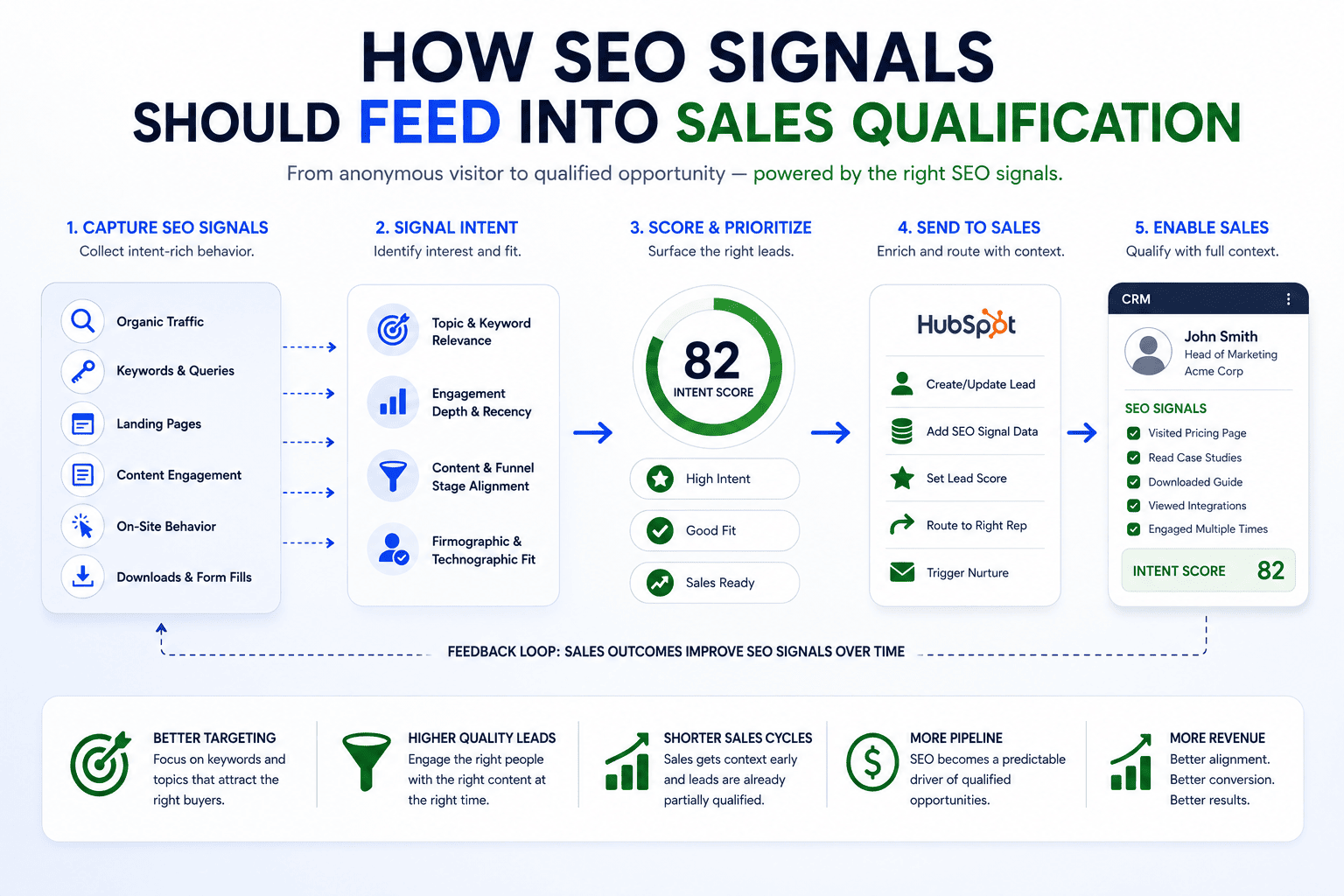
For Australian B2B service firms, SEO is no longer just about traffic, it's about intent. Every search query, every page view, and every download is a signal of a buyer's journey. Yet most companies treat these signals as marketing metrics, not sales‑qualification data. The result? Revenue left on the table.
When SEO signals aren't feeding into sales qualification, companies lose visibility into much of the buyer journey. Martal notes that buyers can be 57% through their purchasing process before engaging with sales teams, highlighting how early intent signals shape purchasing decisions.
According to Martal Group, AI‑powered scoring models that incorporate intent signals deliver 78% higher conversion rates. If you're not using SEO signals to qualify leads, you're losing deals to competitors who are.
This piece explains the signal‑to‑revenue gap, identifies the three SEO signals that matter most for qualification, and provides a tactical framework to turn organic intent into a bankable pipeline.
In most B2B organisations, SEO performance is measured by top‑of‑funnel metrics: organic traffic, keyword rankings, and bounce rates. These numbers are reported to marketing leadership, celebrated in team meetings, and then filed away. They rarely make it into the CRM, and they almost never inform sales conversations.
This disconnect creates a costly blind spot. Whitehat SEO research reveals that 84% of B2B deals are won by the first vendor a buyer contacts. If your sales team doesn't know which leads have been researching your pricing page for three weeks, they can't prioritise them. That lead will contact your competitor first, and you'll lose the deal before you even know it was there.
The average MQL‑to‑SQL conversion rate across industries is just 13%. However, companies that use behavioural scoring, including SEO signals, achieve conversion rates of 39‑40%, nearly triple the baseline. That gap represents millions in lost pipeline for a typical mid‑market Australian firm.
Not all SEO data is equally valuable. To qualify leads effectively, focus on these three signal categories.
The keywords a visitor uses reveal their stage in the buying journey. A search for "best CRM for Australian SaaS" indicates early research. A search for "HubSpot vs Salesforce pricing 2026" indicates they're comparing solutions and are likely closer to a purchase.
Action: Integrate your search console data with your CRM. Tag leads based on the intent level of the keywords that brought them to your site.
Page views, time on site, and content downloads show how interested a prospect is. A visitor who reads your pricing page, then your case studies, then requests a demo is sending a much stronger signal than one who bounces after a blog post.
Action: Implement behavioural scoring in your CRM. Award points for high‑value actions like pricing‑page visits, demo requests, and repeat visits.
Demographic and firmographic data (company size, industry, location) can be inferred from SEO traffic via IP‑matching or form fills. This helps determine whether a lead fits your Ideal Customer Profile.
Action: Enrich lead records with firmographic data as soon as they hit your site. Use this to prioritise follow‑up.
Turning SEO signals into a sales‑ready pipeline requires three tactical steps.
Your CRM must automatically score leads based on the signals above. For example:
Set a threshold (e.g., 50 points) that automatically triggers a sales alert. This ensures that sales only spend time on leads that have demonstrated clear buying intent.
Martal Group notes that 78% of buyers purchase from the vendor who responds first. When a lead hits your scoring threshold, your sales team should receive an immediate notification via Slack, email, or CRM task with the lead's signal summary.
This allows sales to reach out while the intent is still hot, dramatically increasing conversion odds.
You must be able to trace every closed‑won deal back to the SEO signals that started it. This requires:
With this data, you can double down on the SEO efforts that actually generate pipeline, and stop wasting budget on topics that don't convert.
When SEO signals feed directly into sales qualification, you solve the perennial tension between marketing and sales. Sales stops complaining about lead quality because they can see the intent behind every lead. Marketing can prove the ROI of their SEO investment with closed‑won revenue data.
The benefits extend beyond conversion rates:
SEO is no longer a vanity metric. Every organic visitor is a potential buyer sending you signals about their readiness to purchase. If you're not capturing those signals and feeding them into your sales‑qualification process, you are leaving revenue on the table for your competitors to collect.
The gap between SEO and sales is not a technical problem, it's a process problem. By implementing signal‑driven lead scoring, real‑time alerts, and closed‑loop attribution, you turn organic intent into a qualified pipeline that your sales team can act on with confidence.
Are you ignoring the signals that could 3x your SQL conversion?
Request a Funnel Review today. At alspark, we specialise in building signal‑driven qualification engines that turn SEO traffic into predictable revenue for Australian B2B firms.

.png)
.png)
.png)